
|
Defence Foreman 4851416 Harry Adcock |
|
1/5th Bn, Leicestershire Regiment. Previously Private 3541, 1st Battalion. Died 1968 Loughborough, Aged 91. |
|
|
Harry Adcock was born in Loughborough on 24th March 1877 and baptised on 3rd March 1878 at Emmanuel Church, Loughborough. He was the son of William Adcock and his wife Mary (née Wade) who were married on 9th February 1874 at Loughborough Register Office. Harry had six brothers Frank, Albert, George, William, Frederick and Bernard and four sisters Eliza, Ellen, Gertrude and Emma. George, however, died aged 13. Harry’s father was initially an overlooker in a hosiery factory but he later became a labourer at an engineering works. In 1891 the family lived at 32 Russell Street, Loughborough, but later moved to 76 Cobden Street. Harry enlisted with the Leicestershire Regiment in 1892, aged 15, but claiming to be 18. He joined the 1st Battalion as Private 3541. The 1st Battalion was stationed at Glencoe, in the north of Natal, South Africa, when the 2nd Boer War broke out. It thus formed part of the brigade of General Penn Symons, the other battalions being the 1st King's Royal Rifles, 1st Royal Irish Fusiliers, and 2nd Dublin Fusiliers. There were also at Glencoe the 18th Hussars and the 13th, 67th, and 69th Batteries of the Royal Field Artillery. Fighting commenced on 20th October 1899. A force led by General Sir William Penn Symons attacked the Boer position on Talana Hill. Then came the hurried retirement on Ladysmith. For four months the Battalion fought splendidly throughout the stubborn defence of Ladysmith, during which the garrison was reduced to almost starvation rations. After the siege began the Leicesters occupied posts on the north side. On 24th January 1900 Harry went missing. He had been taken prisoner by the Boers at Spion Kop. He was held at Waterval until released by a British force on 6th June 1900. After recovering he rejoined his battalion which took part in the operations that carried the war into the Orange Free State, and the Transvaal. Towards the end of the war the battalion did garrison duty on the Standerton-Ermelo road. Harry was awarded the Queen’s South Africa medal with clasps for the Transvaal, Tugela Heights and Ladysmith and the King’s South Africa Medal with clasps for 1901 and 1902. Harry returned to England and in 1904 was transferred to Army Reserve until 1908. He took a job as an iron moulder and on 12th November 1904 he married Florence Bassford at All Saints Church, Loughborough. In 1911 the couple were living at 111 Storer Road and had two daughters Lilian and Ivy. Harry now had a job as a labourer for a heating engineer. When war broke out in 1914 Harry reenlisted on 18th September and was initially sent for training with the 3rd Battalion of the Leicestershire Regiment as Private 12543. On 11th January 1915 he was sent to France to join the 1st Battalion of the Leicesters and shortly afterwards appointed a Lance Corporal. In the spring of 1915 the 1st Leicesters were stationed near Armentières, and were involved in an attack intended to divert the enemy from the area of Neuve Chapelle. On 13th April Harry was posted to the Headquarters of the 3rd Corps for duty and in May was on Bailleul guard. On 21st July he was transferred to the 1st Division Sanitary Section and two months later reverted to the rank of Private at his own request. Between October 1915 and February 1916 he was hospitalised. In February 1916 he joined the Sanitary Section of the 6th Division. In July 1916 he was transferred to the Headquarters of the 14th Corps. At some point he is known to have been gassed. In September 1916 he suffered from rheumatism and on 15th October was sent to the base at Calais. On 31st October 1916 he was posted to the Depot in England and discharged from the Army eleven days later. He was awarded a Silver War Badge. Between 1919 and 1922 Harry and his wife had two more children Henry and Joyce. Harry re-enlisted with the 1/5th Battalion of the Leicestershire Regiment in 1921 for a year and was numbered 4851416. He was appointed to the position of Defence Foreman at Donnington. During his time with the Leicesters Harry played football for the Regiment. In 1922 Harry became Town Hall Keeper and Mace Bearer for Loughborough Corporation, a position he held for 21 years. In 1939 Harry and his wife were living at 44 Frederick Street. Harry died in Loughborough in 1968, aged 91. |
|
|
Company Sergeant Major 240358 |
|
|
1/5th Bn, Leicestershire Regiment. |
|
|
|
|
|
Private 13296 George Barson |
|
|
3rd Bn, Leicestershire Regiment. |
|
|
|
|
|
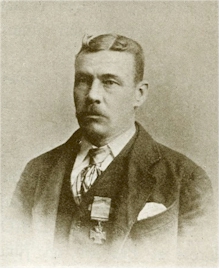
Private M1/08343 William Dolman Bees VC |
|
Royal Army Service Corps. Previously Private 33416, Durham Light Infantry, and Corporal, 1st Battalion, Sherwood Foresters (Notts & Derby Regiment). Died in Coalville, 20th June 1938, Aged 66. The London Gazette. Issue 27388. 17 December 1901. p. 8915. |
 |
|
William Dolman Bees was born in Midsomer Norton, Somerset, on 12th September 1871. He was the son of William Bees (Senior) and his partner Jane Dolman. His mother called herself Mrs. Bees but no evidence of an official marriage has been found. William (Senior) was a farm labourer from Somerset and Jane Dolman Bees came from Repton, Derbyshire. William (Junior) had one brother John who died at Thornbury, Gloucestershire, shortly after birth in 1869. By 1880, when William (Senior) died the family had moved to Burton-upon-Trent, Staffordshire. William (Junior)’s mother took a job aa a live-in cook at the Borough Hospital, Branstone Road, Burton-upon-Trent and William, aged 10, became a boarder in the household of John and Eunice Hawley at 45 Union Street. William’s mother subsequently moved to 5 Court C, Bridge Street, Loughborough, as a housekeeper to William Alvey, an agricultural labourer. She died in Loughborough in 1891. On 7th March 1890 at Normanton Barracks, Derbyshire, William enlisted into the Sherwood Foresters (Nottinghamshire and Derbyshire Regiment). He joined their 2nd Battalion in India, serving by Afghanistan's borders and receiving the India Medal with Punjab Frontier and Tirah 1897-98 clasps. He transferred to the Army Reserve on January 25th January 1898 but rejoined the colours in August 1898, and was stationed with the 1st Battalion in Malta when the 2nd Boer War began on October 12th 1899. Citation
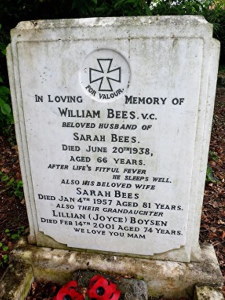
'The King has been graciously pleased to signify His intention to confer the decoration of the Victoria Cross on the under mentioned soldier, whose claims have been submitted for His Majesty's approval, for his conspicuous bravery in South Africa, as stated against his name: Private W Bees, 1st Battalion of the Derbyshire Regiment. ‘Private Bees was one of the Maxin Gun detachment, which at Moedwil, on the September 30th 1901, had six men hit out of nine. Hearing his wounded comrades asking for water, he went forward, under heavy fire, to a spruit held by Boers about 500 yards ahead of the gun, and brought back a kettle full of water. On going and returning he had to pass within 100 yards of some rocks also held by the Boers, and the kettle which he was carrying was hit by several bullets'. He served throughout the War, receiving the Queen’s South Africa Medal with three clasps, and the King’s South Africa Medal with two clasps, and was instantly promoted to Corporal on the field of battle following the action which also saw him recommended for the Victoria Cross. He was gazetted on the 17th December 1901 for his actions at Moedwil on 30th September that year. He was presented with his VC on 30th July 1902 in Pretoria by the Commander in Chief, South Africa, Lord Kitchener. Shortly afterwards, on 18th September 1902, he was discharged from service. His heroism caught the public's imagination and songwriter, Mary Bradford Whiting, composed a popular music hall ballad ‘The Old Kettle; A Ballad of The War’. William returned to Loughborough and was employed as an engine driver at the Gas Works. He then lived at 26 Bridge Street. On 25th April 1903 he married Sarah Freeman at All Saints Church, Loughborough. His best man was Harry Churchill Beet VC; they had served together in the Army. William and Jane’s son Charles William (known as ‘Billy’) was born in 1904 and their daughter Lillian Elizabeth in 1907. William was a crane driver at an engineering works in 1907 and the family was living at 22 Freehold Street. By 1911 they had moved to 5 Bull Street, New Bilton, Rugby, Warwickshire, and William was employed as a moulder’s labourer. Between 1911 and 1914 the family moved to 72 Albert Street, Coalville, Leicestershire, and William was employed down the mines. In a seam collapse he received a serious spinal injury and this affected his future aspirations. Just after the Great War began Lord Kitchener called for volunteers and ex-Corporal William Bees VC offered his services, On 2nd October at Glen Parva Barracks, Leicester, he joined the Army Reserve. Passing his first medical he joined the 12th Battalion of the Sherwood Foresters, but on 7th October at Shoreham Camp, he was re-examined and discharged as unfit for duty due to a spinal injury. Undaunted, he tried to join the Royal West Surrey Regiment, but failed the medical. Finally, on 6th April 1915, he re-enlisted into the Sherwood Foresters and served at Whitburn, Sunderland, before transferring on 28th October to the 1st Garrison Battalion of the Durham Light Infantry stationed at Blyth and South Shields. After 498 days with the Colours he transferred to Class W to become a miner, and was discharged on 31st October 1916 as of ‘good character’ but no longer physically fit for war service. William received the Silver War Badge, awarded to service personnel who were wounded or sustained a disability in the course of war and invalided out of the services. His spinal injury had worsened and he was no longer fit for the collieries. Despite this, he enlisted on 30th January 1918 into the Royal Army Service Corps- only to be transferred to ‘Class Z’ of the Army Reserve and discharged on 6th February 1919. He returned to Coalville, moving to 78 Margaret Street, where he became a road-sweeper. He lived the majority of the rest of his life in Leicestershire, where on 20th June 1938, aged 66, he died at his home. He was buried in London Road Cemetery, Coalville, Grave 3040 on 25th June 1938. A huge crowd lined the streets to pay their respects as the cortege slowly passed. Representatives of the Sherwood Foresters and 5th Leicestershire Territorial Battalion headed the procession, followed by the Hugglescote Band. The headstone was restored in 2005. |
|
 | |
|
Company Sergeant Major 12487 John Birch |
|
1/5th Bn, Leicestershire Regiment. Previously 1804 and 1739, 3rd, 1st and 1/5th Bns. Died Loughborough 3rd November 1942, Aged 74. |
|
|
John Birch was born in Ibstock, Leicestershire, on 29th July 1868. He was the son of John Birch (Senior) and his wife Mary (née Richards) who were married at St. Matthew’s Church, Worthington, Leicestershire, on 8th March 1859. John (Junior) had one brother Albert and five sisters Jane, Lydia, Harriet, Emma and Alice. Another brother Thomas died in infancy. John (Junior’s) father was a collier and the family lived in various locations in Leicestershire: Ibstock, Ashby de la Zouch, Thringstone and Coleorton, and for a short time in Staincross, Barnsley, Yorkshire. On 11th July 1885 John (Junior), who had initially become a collier like his father, enlisted at Ashby de la Zouch. He joined the 3rd Battalion of the Leicestershire Regiment as Private 1804. After undergoing two years of training at York, during which he was hospitalised twice, firstly for jaundice and secondly for pneumonia, on 7th September 1888 he was posted to the 1st Battalion in Bermuda, West Indies. John remained in Bermuda until 27th February 1891 when the 1st Battalion was transferred to Halifax, Nova Scotia, Canada. The battalion returned to the West Indies on 25th March 1893, a month after John had been promoted to the rank of Corporal. On 25th October 1893 John married Mabel Ethel Graydon at the Bethel Wesley Chapel, Barbados. In 1894 their first son John Reginald was born in Barbados. On 14th April 1895 John was promoted to Lance Sergeant’ In December 1895 John was posted to Cape Colony, South Africa, and Laurence, John and Mabel’s second son was born in Simon’s Town in 1897. Their third child died young. On 12th March 1897 John was promoted to Sergeant. He was re-engaged by the Leicestershire Regiment at Maritzburg on 8th February 1898 and appointed Canteen Sergeant on 1st May 1899. His conduct was described as ‘Exemplary’ and he had been awarded five Good Conduct badges. John remained in South Africa for the duration of the 2nd Boer War but his wife Mabel returned to England with the children and in 1901 was living in the Glen Parva Barracks near South Wigston, Leicestershire. The 1st Battalion of the Leicesters was stationed at Glencoe, north of Natal, when the 2nd Boer War broke out in 1899. It thus formed part of the brigade of General Penn Symons, the other battalions being the 1st King's Royal Rifles, 1st Royal Irish Fusiliers, and 2nd Dublin Fusiliers. There were also at Glencoe the 18th Hussars and the 13th, 67th, and 69th Batteries of the Royal Field Artillery. Fighting commenced on 20th October 1899. A force led by General Sir William Penn Symons attacked the Boer position on Talana Hill. Then came the hurried retirement on Ladysmith. For four months the Battalion fought throughout the stubborn defence of Ladysmith, during which the garrison was reduced to almost starvation rations. After the siege began the Leicesters occupied posts on the north side. After Ladysmith had been relieved, Sir Redvers Buller moved north and the Leicesters were brigaded with the 1st Liverpool, 1st Royal Inniskilling Fusiliers, and 1st King's Royal Rifles. The 1st Battalion took part in the operations that carried the war into the Orange Free State, and the Transvaal, and was present at the storming of Laing’s Nek and the capture of Amersfort, Ermelo and Belfast, and in the operations around Lyndenberg. Towards the end of the war they did garrison duty on the Standerton-Ermelo road. On 1st October 1902 John was promoted to Colour Sergeant. He was awarded the Queen’s South Africa medal with clasps for Talana, the Defence of Ladysmith, Laing’s Nek and Belfast and the King’s South Africa Medal with clasps for 1901 and 1902. Following the end of the 2nd Boer War the 1st Battalion of the Leicesters was transferred to Fort St. George, Madras, India. They left Port Natal on 7th November 1902 on the SS Ortona and arrived in Madras in late November. After two years in Madras the battalion moved to Belgaum, Karnataka. While in India John qualified at the School of Musketry in Bellary. Whether John’s wife and sons joined him in India is unknown. John returned to Shorncliffe, England with the 1st Battalion in November 1906. John was permitted to continue in the Army. In early 1909 he was posted to the 1/5th Battalion of the Leicesters. He was discharged on 30th June 1912 and became a storekeeper. In 1911 the Birch family was living at Hawcliffe Road, Mountsorrel. John Reginald, however, was not with them- he had just enlisted at Lichfield. John and Mabel later moved to Kimberley Lodge, 131 Byron Street, Loughborough. When the 1st World War broke out John re-enlisted and was posted to the 9th Battalion of the Leicestershire Regiment as 12487 Company Sergeant Major with a training role in the UK. In February 1915 he transferred to the 10th Battalion and in September 1916 to the 1/5th Battalion. He was discharged from the Army to Class Z reserve on 7th March 1919. John and Mabel’s elder son John Reginald was killed in Mesopotamia in the 1st World War. John died in Loughborough on 3rd November 1942, aged 74. |
|
|
Lance Corporal 22490 David Francis Brandon |
|
|
2/8th Bn, Sherwood Foresters (Notts & Derby). |
|
|
|
|
|
Quartermaster Sergeant 5578 Peter Gregory Chambers |
|
|
2nd Bn. Royal Scotts Fusiliers. |  |
|
|
|
|
Quartermaster Sergeant 12037 William Tempest Cockain |
|
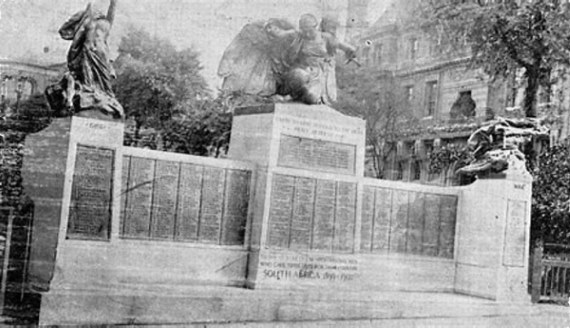
65th (2nd Leicestershire) Company, 17th Battalion Imperial Yeomanry. Died of pneumonia in Loughborough 17th December 1900, Aged 41. Commemorated on the Boer War Memorial, Leicester. |
|
|
William Tempest Cockain was born in Duffield, Derbyshire, in 1859 and baptised on 28th June 1859 at St. Paul’s Church, Quarndon, Derbyshire. He was the son of Thomas Cockain and his wife Rosanna (née Tempest) who were married at St. Alkmund’s Church. Duffield, on 2nd October 1858. William had three brothers Walter, Thomas and Frank and one sister Christiana. He also had a half-sister Sarah Ault Tempest, born before his mother’s marriage to Thomas Cockain. William’s father was a butcher and the family lived in Quarndon, Derbyshire. Between 1871 and 1879, however, William’s father became innkeeper of the Nelson Inn, 35 Market Place, Loughborough, but died in 1879, aged 47. William’s mother took over the running of the inn, assisted by William. Around this time William also joined the Leicestershire Yeomanry. In the early 1880s William played football for the Loughborough Athletics Club. He later became a trainer for the Football Club during the time they defeated Aston Villa. On 11th September 1883 William married Harriett Taylor at All Saints Church, Loughborough. Between 1883 and 1891 William and his wife moved to Derby and took over the running of the Half Moon Inn, Sadler Gate, Derby. When this inn went out of business in 1891 William and Harriett returned to Loughborough to live with William’s mother and family at 74 Derby Road and William and his brother Thomas became butchers. By 1899, however, William was the innkeeper of the Stag and Pheasant in Nottingham Road. The Leicestershire Yeomanry was not intended to serve overseas but in December 1899, not long after the start of the 2nd Boer War, the British government realised they were going to need more troops than just the regular army. A Royal Warrant was issued on 24th December 1899 to allow volunteer forces to serve. The Royal Warrant asked standing Yeomanry regiments to provide service companies of approximately 115 men each for the Imperial Yeomanry. The Leicestershire Yeomanry provided the 7th (Leicestershire) Company for the 4th Battalion and the 65th (Leicestershire) Company for the 17th Battalion in 1900. On 21st February 1900 William attested for the Imperial Yeomanry. He joined the 65th (2nd Leicestershire) Company, 17th Battalion Imperial Yeomanry as Sergeant 12037. On 6th April 1900 he went to Beira, Mozambique, Africa and on to Rhodesia as part of the Rhodesian Field Force. He was placed on the staff of the remount depot at Marandellas and officiated as Aide-de-Camp to one of the officers. Unfortunately, William contracted dysentery. He recovered and was raised to the rank of Quartermaster Sergeant. Falling ill again he was invalided home, with 89 others, in the middle of August. He was detained at Cape Town as not being well enough to stand the long voyage but eventually reached Loughborough on 24th October. He then appeared in fair health but a week or so later caught a chill which developed into pneumonia. He died, aged 41, on 17th December 1900. William was accorded a funeral with full military honours. He was awarded the Queen’s South African Medal with a clasp for Rhodesia. His marriage was without issue. |
|
 |
|
|
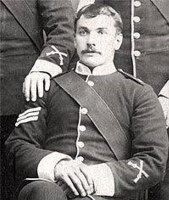
Colour Sergeant 240826 Joseph Collins |
|
1/5th Bn, Leicestershire Regiment. Previously 2894 and 773 3rd (Militia) Bn and 1st Bn. Died of heart failure 24th April 1940 Thrussington, Leicestershire, Aged 72. |
 |
|
Joseph Collins (known as ‘Joe’) was born on 4th June 1867 in Loughborough and baptised on 7th July 1867 at All Saints Church, Loughborough. He was the son of Joseph Collins (Senior) and his wife Lydia (née Randall) who were married on 3rd August 1863 at All Saints Church, Loughborough. Joe was one of nine children; he had two brothers William and John Charles and six sisters Elizabeth, Mary, Lydia, Florence, Alice and Edith. Only six of the children, including Joe, were still alive in 1911. Joseph (Senior) was for many years a gardener. In 1871 the family lived at 1 Conery Passage, Loughborough, but by 1881 had moved to 1 Dead Lane. In 1881 Joe, aged 13, was a waiter at a coffee house. By 1891 the family had moved to The Dog and Gun Public House, 59 Ward’s End, and Joseph’s father had become an inn keeper. Joe enlisted on 2nd November 1883 and declared he was eighteen years old when in fact he was only sixteen. His occupation at the time was ‘Engine fitter’. He joined the 3rd Battalion of the Leicestershire Regiment as Private 773. After undergoing training he was posted to the 1st Battalion in Bermuda, West Indies, on 7th September 1888 and promoted to the rank of Corporal. Joe remained in Bermuda until 27th February 1891 when his battalion was posted to Halifax, Nova Scotia, Canada. On 18th February 1892 he was promoted to the rank of Lance Sergeant and on 12th October 1892 to the rank of Sergeant. He returned to the West Indies on 25th March 1893. On 23rd December 1895 he was sent to Cape Colony, South Africa. Joe returned to England on 24th June 1897 and remained there for nearly five years as Sergeant on the Permanent Staff of the 3rd Battalion in Curragh Camp, Kildare, Ireland, and at Glen Parva Barracks near South Wigston, Leicestershire. On 2nd January 1899 Joe married Catherine Grace Lock Duffy-Mason Bruce at the Church of St. Thomas the Apostle, Glen Parva. Their daughter Evangeline was born on 6th August 1900 in Kildare. Catherine unfortunately died in late 1901. Joe returned to South Africa on 25th March 1902, this time with the 3rd Battalion and remained there until 2nd October 1902. On 22nd August 1902 he was promoted to the position of Colour Sergeant. He was awarded the Queen’s South Africa Medal, with clasps for Cape Colony, Orange Free State and South Africa 1902. In 1904 Joe was discharged from the Army after 21 years service and became a licensed victualler and landlord of The Dog and Gun pub, Whetstone, Blaby, Leicestershire. On 23rd November 1906 he married Jenny Russell at All Saints Church, Blaby and by 1911 they had three children Joseph, William and Katherine in addition to Evangeline from Joe’s first marriage. Joe re-enlisted on 6th October 1914 after war broke out. He was posted to the 1/5th Battalion of the Leicestershire Regiment as Acting Sergeant 2894 (later re-numbered as 240826) and became Mess Sergeant. After a training period in Luton, Bishop's Stortford, Ware and Sawbridgeworth the battalion entrained at Harlow for Southampton on 25th February 1915. The battalion sailed for France on the SS Duchess of Argyll and the SS Atalanta on the following day in very rough seas. After arriving in Le Havre on 28th February they travelled by train via Rouen, Abbeville and St. Omer to Arneke where they detrained for Hardifort. Between 5th and 9th March the battalion was in the trenches near Armentières. On 10th and 11th March the battalion, which had moved to Strazeele, was in training. The battalion then proceeded to Sailly-sur-la-Lys and was held in reserve for, but did not take part in, the Battle of Neuve Chapelle (10th-13th March 1915). Training continued at Doulieu and Bailleul until 3rd April. On 4th April the battalion went into the trenches near Wulverghem where they were subjected to shelling and continual sniping by the enemy. Relieved on 9th April they proceeded to Dranoutre. They returned to the trenches near Hill 60 on 13th April, and then moved on to Zillebeke, followed by a tour in the area of Mount Kemmel. From June to September 1915 the battalion remained in the area of Zillebeeke and Ouderdom, before being ordered to proceed towards Loos in October. On 12th October 1915 the battalion travelled to the Hohenzollern Redoubt, arriving in Vermelles at 10.00pm. They spent the next eight hours in communication trenches. On 13th October 1915 during the attack on the Redoubt, part of the final stages of the Battle of Loos, the 1/5th Battalion was in reserve until just after midday, when they 'went over the top' and came under intense machine gun fire. After the battle the battalion was reorganised at La Couture, Merville and Thuenne. January 1916 was taken up with a potential move of the 1/5th Leicesters to Egypt which was aborted at Marseilles, the battalion being returned to Candas, and the area of Vimy Ridge. In mid-February 1916 the 1/5th Battalion took over the line north of the River Ancre opposite Beaumont-Hamel in France. On 29th February the battalion moved to the area of Doullens where the men worked on improving the trenches despite being subjected to a considerable bombardment from the enemy with mines and craters being blown. From 9th March 1916 the 1/5th Leicesters were in the area of Vimy Ridge, Pas de Calais, either in the front line, in support, in reserve or at rest. On 27th April the battalion was sent to the neighbourhood of Neuville St. Vaast to work with the French and English tunnellers and then to billets in Luchaux for bayonet training. This was followed by a period at Souastre digging cable trenches, and constructing bomb stores and gun pits in preparation for a 'big push'. On 4th June 1916 the battalion was moved up to trenches near Gommecourt. This was followed by further training at Warlincourt. On 30th June the battalion assembled in a trench near Foncquevillers Church ready for the diversionary attack at Gommecourt on the first day of the Somme Offensive planned for 1st July. In the attack at Gommecourt the 46th Division of the Army, of which the 1/5th Leicesters were part, suffered 2445 casualties. On 7th July the battalion relieved the 4th Lincolnshires in the trenches opposite Essarts-lès-Bucquoy. The battalion remained in the area of Monchy-au-Bois until 29th October, either in the trenches or resting at Bienvillers or Pommier. The battalion's next move was to Millencourt for intensive battle training, returning to Halloy and then Souastre at the beginning of December. The battalion remained at Souastre until 11th March 1917 and then moved once more up to the line taking over 2,600 yards of frontage from the La Brayelle road to the Hannescamps-Monchy road. On 17th March they moved into Gommecourt for road mending before moving to Bertrancourt, Raincheval and then Rainvillers not far from Amiens. On 28th March the battalion marched to Saleux, entrained for Lillers in the north, and marched to Laires. Training took place until 13th April and continued for three further days at Manqueville. By this point Joe’s health had begun to suffer and he was sent back to England on 15th April 1917 and discharged on 29th May. He was mentioned several times in Captain J.D.Hills book The Fifth Leicestershire Regiment. Joe returned to running the Dog and Gun pub in Whetstone. He later, with his son William, ran Grange Farm at Thrussington until he retired. He died at Thrussington on 24th April 1940 of heart failure. |
|
|
Private 5136 Bernard Cooper |
|
1st Bn, Leicestershire Regiment. Previously 2nd Bn. |
|
|
Bernard Cooper was born in Loughborough in 1879. He was the son of Henry Bernard Cooper and Frances (known as ‘Fanny’, née Fisher) who were married at Emmanuel Church, Loughborough, on 22nd July 1872. Bernard had two brothers Henry and Thomas and one sister Fanny. In 1872 Bernard’s father was a factory warehouseman but by 1881 he had become an advertising agent for a newspaper. In 1881 the family lived at 57 Mill Street, Loughborough. After Bernard’s mother died in 1887 the family moved to 13 Abbey Park Road, Leicester, and Bernard’s father became a photographer. On 6th November 1897 Bernard enlisted at Leicester and joined the Leicestershire Regiment as Private 5136. He gave his occupation as ‘Engineer’.He was posted to the Depot until 7th April 1898 when he was transferred to the 2nd Battalion which was at Kilworth Camp, Munster, County Cork, Ireland. The battalion then moved to The Curragh Camp, County Kildare. On 19th September 1899 Bernard was posted to the 1st Battalion in South Africa. The 1st Battalion of the Leicesters was stationed at Glencoe, north of Natal, when the 2nd Boer War broke out in 1899. It thus formed part of the brigade of General Penn Symons, the other battalions being the 1st King's Royal Rifles, 1st Royal Irish Fusiliers, and 2nd Dublin Fusiliers. There were also at Glencoe the 18th Hussars and the 13th, 67th, and 69th Batteries of the Royal Field Artillery. Fighting commenced on 20th October 1899. A force led by General Sir William Penn Symons attacked the Boer position on Talana Hill. Then came the hurried retirement on Ladysmith. For four months the Battalion fought throughout the stubborn defence of Ladysmith, during which the garrison was reduced to almost starvation rations. After the siege began the Leicesters occupied posts on the north side. After Ladysmith had been relieved, Sir Redvers Buller moved north and the Leicesters were brigaded with the 1st Liverpool, 1st Royal Inniskilling Fusiliers, and 1st King's Royal Rifles. The 1st Battalion took part in the operations that carried the war into the Orange Free State, and the Transvaal, and was present at the storming of Laing’s Nek and the capture of Amersfort, Ermelo and Belfast, and in the operations around Lyndenberg. Towards the end of the war they did garrison duty on the Standerton-Ermelo road. Bernard was awarded the Queen’s South Africa medal with clasps for Talana, the Defence of Ladysmith, and Laing’s Nek and Belfast and the King’s South Africa Medal with clasps for 1901 and 1902. On 6th June 1901, while Bernard was in South Africa, his father, aged 50, was remarried to Nelly Perry, aged 26 and his photographic assistant, at St. Peter’s Church, Leicester. Nelly had a natural born daughter Mabel Perry who changed her surname to Cooper. Bernard’s father and Nelly had a daughter Dorothy in 1903, a half-sister to Bernard. Following the end of the 2nd Boer War the 1st Battalion of the Leicesters was transferred to Fort St. George, Madras, India. They left Port Natal on 7th November 1902 on the SS Ortona and arrived in Madras in late November. While in Madras Bernard was twice hospitalised with syphilis. In December 1904 he was also confined to barracks for seven days for neglect of duty and making a false statement to the Garrison Sergeant Major. After two years in Madras the battalion moved to Belgaum, Karnataka. Here Bernard was again disciplined on 26th September 1905. Bernard returned to England on 27th October 1905 and was transferred to Army Reserve. He was finally discharged from the Army on 5th November 1909. In 1911 Bernard was living with his brother Henry William at 51 Merridale Road, Humberstone, Leicester. Like his father he had become a photographer. Details of his subsequent life are unknown. His brother Henry William was killed in the First World War. |
|
|
Private 12306 Frederick Oliver Cooper |
|
2nd Bn, Leicestershire Regiment. |
|
|
|
Regimental Quartermaster Sergeant 4316 |
|
6th Bn, Leicestershire Regiment. Previously 1st Bn and 3rd Bn. Died 1922 Ullesthorpe, Leicestershire, Aged 47. |
|
|
Ernest Edward Cragg was born in Loughborough in 1874. He was the son of Edward Cragg and his wife Alice (née Jeffcoat) who were married on 21st June 1874 at All Saints Church, Loughborough. Ernest had six brothers William, George, Joseph, Fred, Edward and Thomas and three sisters Phoebe, Ada and Daisy. By 1881 the family had moved to 6 Bishop Street, Melton Mowbray, Leicestershire, and by 1891 to 7 Sidney Street. Ernest’s father was initially a labourer but by 1901 he had become the publican of The Marquis of Granby, 22 Street, Melton Mowbray. In 1891 Ernest, aged 16, was a blacksmith’s apprentice. Ernest’s first attempt to join the Army was blocked as he failed the medical on account of a weak chest. His second attempt, on 7th January 1896, was, however, successful and he joined the 3rd Battalion of the Leicestershire Regiment as Private 4316. After initial training he was posted to the 1st Battalion which was on duty in Cape Colony, South Africa. The 1st Battalion was stationed at Glencoe, in the north of Natal, South Africa, when the 2nd Boer War broke out. It thus formed part of the brigade of General Penn Symons, the other battalions being the 1st King's Royal Rifles, 1st Royal Irish Fusiliers, and 2nd Dublin Fusiliers. There were also at Glencoe the 18th Hussars and the 13th, 67th, and 69th Batteries of the Royal Field Artillery. Fighting commenced on 20th October 1899. A force led by General Sir William Penn Symons attacked the Boer position on Talana Hill. Then came the hurried retirement on Ladysmith. For four months the Battalion fought splendidly throughout the stubborn defence of Ladysmith, during which the garrison was reduced to almost starvation rations. After the siege began the Leicesters occupied posts on the north side. After Ladysmith was relieved the battalion took part in the operations that carried the war into the Orange Free State, and the Transvaal, and was present at the storming of Laing’s Nek and the capture of Amersfort, Ermelo and Belfast, and in the operations around Lyndenberg. Towards the end of the war they did garrison duty on the Standerton-Ermelo road. Ernest was awarded the Queen’s South Africa medal with clasps for Belfast, Orange Free State, Talana, Defence of Ladysmith and Laing’s Nek and the King’s South Africa Medal with clasps for 1901 and 1902. While in South Africa he was promoted to Corporal. Following the end of the 2nd Boer War the 1st Battalion of the Leicesters was transferred to Fort St. George, Madras, India. They left Port Natal on 7th November 1902 on the SS Ortona and arrived in Madras in late November. In 1903 Ernest was given six months leave and during his time in England he married Laura Eliza Kirk in Melton Mowbray. Ernest’s wife accompanied him back to India. After two years in Madras the battalion moved to Belgaum, Karnataka. When Ernest returned to England he was put on the permanent staff at the Glen Parva barracks and he and his wife lived there. Ernest qualified at the School of Musketry, Hythe, Kent, on 5th June 1906. He was awarded the Medal for Service and Good Conduct in 1913. When war broke out in 1914 Ernest was engaged in connection with the organisation of Kitchener’s Army. As Regimental Quartermaster Sergeant of the 6th (Service) Battalion of the Leicesters (part of the 37th Division) he went to France with them on 29th July 1915. By 2nd August all units of the Division were concentrated near Tilques not far from St. Omer in the Nord-Pas-de-Calais. In September the battalion was sent to the area of Berles-au-Bois, south-west of Arras. The battalion remained in this area around Bienvillers and Bailleulmont until July 1916 and was engaged in trench tours and localised operations seeking a tactical advantage. On 1st July 1916 the 6th Battalion moved from Saulty to Humbercamps, where it was held in reserve for the Somme Offensive which had just begun. On 6th July the battalion marched to Talmas to join the Army's 21st Division. From 7th to 10th July the battalion was in Hengest-sur-Somme, and from there on 10th marched to Ailly, entrained for Méricourt, took buses to Méaulte, and then proceeded to Fricourt. Between 14th and 17th July the battalion took part in an attack on and successfully captured Bazentin-le-Petit Wood and village. On 20th July the battalion entrained at Ribemont and detrained at Saleux, after which they marched to Hengest. Travelling part of the way in lorries and part of the way on foot they reached Arras on 27th July and relieved the 8th Leicesters in the trenches on 7th August. The remainder of August was spent in the trenches and in billets in Arras. On 4th September the battalion left Arras for Liencourt and after a week there for training moved to Fricourt and Bernafay Wood, east of Montauban-de-Picardie. Here from 19th to 24th September the men were employed in the improvement of communication and support trenches in preparation for a forthcoming attack on Gueudecourt. On 25th September the 6th Leicesters moved up to the assembly trenches in order to be ready to support the 8th and 9th Leicesters as they advanced. Progress was made north and east of Gueudecourt but as the Leicesters consolidated their position the village itself and its approaches were heavily bombarded by the enemy. This situation remained the same over the next few days. After the attack the battalion returned to bivouac at Bernafay Wood. On 4th October the battalion began a three-day transfer by train and route march to Sailly La Bourse and began trench tours in the Hohenzollern Sector near Vermelles. They remained in the front line, in the support trenches or in Reserve until mid-December when they moved to Auchel. From 21st December 1916 to 28th January 1917 the battalion was in training at Auchel. Training was continued at Houtkerque until mid-February. Ernest’s health began to fail and on 30th March 1917 he was discharged from the Army and awarded a Silver War Badge. He then became the licensee of the Crown Hotel, Ullesthorpe, Leicestershire. Ernest died in 1922, aged 47, and was buried at Melton Mowbray. |
|
|
Private 12090 Harry Cunnington |
|
|
2nd Bn, Leicestershire Regiment. |
 |
|
|
|
|
Private 12611 Albert James Darter |
|
2nd Bn, Leicestershire Regiment. |
|
|
|
Sergeant Major 324 George Davis Diggle |
|
1/1st and 2/1st Leicestershire Yeomanry. Also 12137 Imperial Yeomanry. Died 1929 in Loughborough, Aged 68. |
|
|
George Davis Diggle was born in Loughborough in 1861 and baptised on 25th March 1861 at All Saints Church, Loughborough. He was the son of Samuel Hunt Diggle and his wife Salome (née Davis) who were married at Emmanuel Church, Loughborough, on 4th July 1859. George had one sister Elizabeth. In 1861 George’s father was a wine merchant in Swan Street, Loughborough. By 1871 the family had moved to 42 Woodgate and his father was a bleacher and dyer. Ten years later George’s father was a beer house keeper and the family lived at the Hare and Hounds Inn, 53 Ward’s End. In 1881 George, aged 19, was a hosiery trimmer but by 1885 he had joined his father at the Hare and Hounds Inn. On 2nd February 1885 George married Ellen Shaw at Emmanuel Church, Loughborough. George’s father had died in December 1884 and his mother Salome died in 1887. George and Ellen had two sons Bertie and George (Junior) and three daughters Constance, Dorothy and Hilda. Another son Samuel and another daughter Salome died young. The precise date when George (Senior) joined the Leicestershire Yeomanry (Prince Albert’s Own) is unknown but by the time the 2nd Boer War broke out he had achieved the rank of Sergeant No. 214 (renumbered in the Imperial Yeomanry as 12137). The Leicestershire Yeomanry began recruiting men for the 65th Company, 17th Battalion of the Imperial Yeomanry on 21st February 1900. They left Leicester in April and sailed from Southampton on the transport ship Galeka, calling briefly in Tenerife before sailing directly on to Beira, Portuguese East Africa. They landed at Beira in early May, joining with other volunteer mounted infantry (not to be confused with cavalry) from Australia and New Zealand to form the Rhodesia Field Force (RFF) under General Sir Frederick Carrington. The RFF was tasked to cut inland from Beira to Marandellas, Rhodesia, via Bamboo Creek and Umtali to create a second front to the north of the Boer forces. Once in Marandellas the force would split, some heading south to help relieve the siege at Mafeking, while others (including 65th Company) would initially maintain a presence in the north to deter Mashonaland natives who were again becoming restive while Britain was involved with the Boers. Unfortunately the railway from Beira to Umtali had not yet been completed in early May. Due to different rail gauges, a change of trains and a wait for the onward transportation was necessary at Bamboo Creek. This resulted in a slow transit of a couple weeks through the swampy jungles along the Pungwe River of Portuguese East Africa, during which many members of the RFF contracted malaria, dysentery and other tropical diseases. Consequently some members of 17th and 18th Battalions were invalided directly home due to sickness before ever facing the enemy, and an unlucky handful died of disease. George served in Africa until June 1901 when he returned to England on the ship Hawarden Castle. He was awarded the Queen’s South Africa Medal with clasps for Cape Colony, Rhodesia, Orange Free State, and South Africa 1901. While George was in South Africa his wife lived with the children at 33 Selborne Road in Loughborough. In 1901 the Leicestershire Yeomanry was reorganised as mounted infantry as the Leicestershire (Prince Albert’s Own) Imperial Yeomanry. In 1908 it was transferred into the Territorial Force, returning to a cavalry role and equipping as hussars, under the new title of The Leicestershire (Prince Albert’s Own) Yeomanry. In 1911 George was the licensee of the Half Moon Public House in Pinfold Street. When the 1st World War broke out George was Staff Quartermaster Sergeant 214 with the 2/1 Leicestershire Yeomanry. He went to France with the 1/1st Leicestershire Yeomanry on 2nd November 1914. From Le Havre on 4th November the yeomanry entrained for St. Omer and marched to Esquerdes where they remained for four days to carry out bayonet and entrenching exercises. On 11th November they marched to Eecke to join the 3rd Cavalry Division and on the following day proceeded via Poperinghe to Bellewaarde Farm on the Hooge Road east of Ypres. Here they joined the 7th Cavalry Brigade and were sent to the support and reserve trenches . On 16th they moved to billets in Ypres where they were heavily shelled. From 17th - 21st November A and C Squadrons were in the advance, support and reserve trenches east of Zillebeeke and B Squadron was in dugouts near the Menin-Ypres road. From 22nd November to 4th December they were at St. Sylvestre near Caestre refitting and exercising while being on duty in General reserve. On 3rd December they paraded with the 7th Cavalry Brigade for an inspection by His Majesty the King. From 7th -17th December they were based at Oxlaere and then Berthen for drill and entrenching practice while again being in General reserve. On 18th December they moved to an area south of Hondeghem and the Caestre road. Here classes for reserve stretcher bearers and machine gunners took place. On 22nd December they moved to La Brearde where they remained until 2nd February 1915 for training in an advanced guard scheme, hand grenade and entrenching instruction, route marches and inspections. On 3rd February they were transported by bus to Ypres and marched to Zillebeke where they took over the front line trenches. They spent several days draining and improving the trenches amid enemy sniping. Relieved on 8th February they moved to billets in Ypres as part of the General reserve. On 11th February there was heavy shelling near their billets and on the following day they moved by bus back to La Brearde. Training took place there until 11th April. On 12th April they moved to Renescure and on 23rd April marched via Abeele to Godewaersvelde. On 24th they proceeded to Vlamertinghe before moving at night to Reninghelst. On 25th and 26th April they moved via Poperinghe and Watou to Forge, where they left the horses, and returned to Vlamertinghe. On 27th they were shelled out of their huts and bivouacked in a field. On 28th they moved to Abeele and over the next three days met up with the Brigade at Forge. In early May they left the horses at Vlamertinghe and marched to Hazebrouck before going by bus to Brielen near Ypres. On 12th May, as dismounted infantry, they took over the trenches north of the railway near Bellewaarde Farm and immediately became involved in the Battle of Frezenberg Ridge (otherwise called the 2nd Battle of Ypres). During this battle on 12th and 13th May the Leicestershire Yeomanry suffered 186 casualties. George’s son Bertie and his son-in-law Henry Keeley (the husband of George’s daughter Constance) were both killed in the battle. After the battle the Yeomanry moved to billets at Wittes, Ypres. Throughout June and July 1915 the Yeomanry remained in Wittes, providing working parties for digging trenches at Neuve Eglise, Sailly sur la Lys and Elverdinghe. On 6th August they moved to new billets in villages near Hervarre while they dug trenches at Armentières, and on 29th September moved on again to Le Nieppe. In mid-October they moved to Noordpeene and then Fruges. Early November was spent digging trenches at Lynde, Ouderdom, Zillebeeke lake and north of Bielen. From there they moved to Wicquinghem on November 16th and dug trenches at Ebblinghem and Lynde. The regiment remained at Wicquinghem until 14th March 1916. From 14th March until 6th May 1916 the Leicestershire Yeomanry was in billets at Herly and Rollez before moving to Bourthes. From 15th to 20th May they were in training at Neuilly l'Hôpital, returning afterwards to Bourthes until 24th June. Between 24th June and 4th July the regiment transferred via Crécy en Ponthieu, Berteaucourt-les-Dames and Corbie to Fontaine-sur-Somme, where on 5th July they were sent to clear the battlefield. From 8th July to 1st August and back at Corbie they provided working parties to mend the roads at Henencourt and to clear the battlefield at Bécourt. The first five days of August were spent moving back to Bourthes where they remained until 11th September, providing working parties and sniping parties. From 11th September the regiment was continually on the march, which ended when squadrons moved into billets at Lebiez, Torcy and Rimboval in the Pas de Calais on 24th September. Here a group of 8 Officers and 256 Ordinary Ranks proceeded to form part of the 7th Cavalry Pioneer battalion. They did not move again until 1917. George’s health had begun to fail in 1916 and he was discharged from the Yeomanry on Boxing Day 1916, having achieved the rank of Sergeant Major. He was awarded a Silver War Badge. George then became licensee of The Nag’s Head Inn, Swan Street, Loughborough, and in 1920 was Chaiman of the Loughborough and District Victuallers Association. George died in Loughborough in 1929, aged 68. He was accorded a funeral with full military honours. |
|
|
Second Lieutenant Lionel Dowding |
|
|
2nd Bn. Leicestershire Regiment. |
 |
|
|
|
|
Company Quartermaster Sergeant |
|
1/5th Bn Leicestershire Regiment. Previously 6129 1st Bn. Died 9th April 1934 Loughborough, Aged 53. |
|
|
The birthplace and parentage of John William Evans are currently unknown but he is believed to have been born in 1881. He first appears in records as Private 6129 serving with the 1st Battalion of the Leicestershire Regiment in 1901-1902 during the 2nd Boer War. The 1st Battalion took part in the operations that carried the war into the Orange Free State, and the Transvaal, and was present at the storming of Laing’s Nek and the capture of Amersfort, Ermelo and Belfast, and in the operations around Lyndenberg. Towards the end of the war they did garrison duty on the Standerton-Ermelo road. John was awarded the Queen’s South Africa Medal with clasps for the Transvaal and South Africa 1901 and 1902. Following the end of the 2nd Boer War the 1st Battalion of the Leicesters was transferred to Fort St. George, Madras, India. They left Port Natal on 7th November 1902 on the SS Ortona and arrived in Madras in late November. After two years in Madras the battalion moved to Belgaum, Karnataka. John returned to Shorncliffe, England with the 1st Battalion in November 1906. John continued to serve with the 1st Battalion. On 17th December 1911 John was promoted to the rank of Lance Sergeant and was subsequently promoted to Sergeant Master Cook of the battalion. On 3rd February 1914, while stationed in County Cork, Ireland, he was married to Elizabeth Ann Donovan (the daughter of Sergeant Edmund Donovan, Royal Irish Regiment) at Christ Church, Fermoy. Their first daughter Alice was born in Fermoy in late 1914 but died a few weeks later. John never saw his first-born daughter, however, as war had broken out and on 19th August his battalion had moved to Cambridge. John went with the British Expeditionary Force to France on 9th September 1914, landing at St. Nazaire, Brittany, on the following day. From St. Nazaire the battalion travelled by train to Mortcerf, east of Paris, arriving early in the morning of 13th September and then began a long march to the British Army in the line at Courcelles, on far side of the Aisne. On 14th September the 1st Leicesters relieved the Worcesters and Royal Irish Rifles in the trenches at La Fosse Marguel where they came under constant shell fire and sniping until they in turn were relieved on 12th October by 106th French Infantry Regiment. On 13th October the Battalion entrained at Fismes, 40 men crammed to each horse box. Some slept on the roof, although it was bitterly cold. They detrained on 17th October at Cassel and marched to take up defensive positions at Croix Blanche. From there, two days later, they marched to Rue de Bois, Armentières, and Bois Grenier, the day on which the First Battle of Ypres began. In the spring of 1915 the battalion was stationed near Armentières, and was involved in an attack intended to divert the enemy from the area of Neuve Chapelle. In June and July 1915 they were fighting again at Hooge. Between January and July 1916 the 1st Leicesters were on the Ypres Salient. On 1st August 1916 they left the trenches at Potizje and entrained at Proven for France. They reached billets at Lealvillers, Somme, on 4th August and on the following day marched to camp in Mailly-Maillet Wood. A period of training and working parties followed. On 14th August they went into the trenches opposite Beaumont-Hamel, where they remained until 19th when they returned to the Mailly Wood camp. On 27th August they left for Flesselles. Here additional training took place. On 8th September they occupied former German trenches in the area of Trônes Wood on the northern slope of the Montaubon Ridge while in the following days the build-up for a major battle, the Battle of Flers-Courcelette, took place. The battle began on 15th September and lasted seven days and the battalion incurred grievous losses. The battalion was also in action in the Battle of Morval (25th-28th September). During part of the Battle of Le Transloy (1st October-5th November 1916) the 1st Leicesters were employed carrying up stores and providing stretcher and other parties for the front line troops. By 21st October the battalion was back in billets at Corbie where it entrained three days later for Sorel before moving over several days to Fouquières-les-Béthune in the La Bassée sector. Most of November was spent in training with one brief trench tour and December in the trenches at Cuinchy, with breaks at Beuvry and Christmas Day at Noeux-les-Mines. January 1917 was spent in turns in the trenches and at rest in Mazingarbe. From 1st to 21st February many raids on the enemy were carried out after which the battalion marched via Sailly Labourse to the Montmorency Barracks at Béthune. In March and April the battalion did trench tours on the front line north of the Double Crassier, Loos, before being withdrawn to billets at Maroc on 22nd April. May brought more trench tours in the front line at Loos, with breaks in billets at Les Brebis or Philosophe. In June the battalion was instructed, while in training at Verquin, to mount a series of small operations to give the enemy the impression that an attack was about to take place. In July Canadian forces took over in the area to attack Hill 70 and the battalion was withdrawn to the area of Monchy-Breton, proceeding by lorries to Magnicourt-en-Compte. After being briefly ordered to assist at the time of the gas shelling of Armentières, a brief period at Fleubaix, and time in the reserve line at La Boutillerie the battalion returned to Magnicourt on August 5th. At the end of August the Division returned to the Hill 70 front and went into reserve at a camp in Houchin. In September there were front and support line trench tours at Hill 70, Les Brebis and Cité St. Pierre. At the end of September the battalion was in south Maroc and early in October at Noeux les Mines before going into the trenches in the St. Emile sector. From Mazingarbe on 21st October the battalion moved to Ligny-lez-Aire and then to Manin for training until 14th November. On 15th November the battalion entrained at Frevent for Péronne and marched to Moislains. After a couple of days under canvas at Dessart Wood the battalion moved forward to the front line at Beaucamp and on 20th November, the first day of the Battle of Cambrai, successfully attacked part of the Hindenburg Line. The battalion was relieved on 26th November and moved to another section of the front line near Noyelles where they suffered heavy enemy bombardment and shelling but nevertheless helped to achieve an advance to Gouzeaucourt. On 1st December the battalion was at Nine Wood and was heavily shelled before being relieved and moving to new positions on the Premy-Flesquières Ridge. On 5th December the battalion moved again to positions in the front line on the Hindenburg support system where they remained until 13th December. From 14th December until the end of the year the battalion was at Bellacourt undergoing training. In the early part of January 1918 the battalion was at Courcelles but on 18th went into the trenches on the Moeuvres front. Rest periods were taken at Luck and Lindop Camps near Fremicourt. On February 19th and 20th the battalion moved to the Lagnicourt area, where, when out of the line, they provided large working parties for work on the defences. There were now strong rumours that the enemy was preparing a large offensive and great efforts were made to obtain information through patrols and raids. On 15th March the front line company of the battalion managed to capture a propaganda balloon laden with ten copies of the Gazette des Ardennes, a paper published in French by the Germans for distribution among the inhabitants of occupied territory. On 17th March the battalion had gone back into Brigade Reserve. On 21st March 1918 the enemy launched their Spring Offensive. When the order to 'Stand To' in battle positions early on 21st March came through to the 1st Leicesters some of the men could not immediately be reached as they were detached on work elsewhere. The battalion nevertheless put up a determined defence. By the evening of 21st March, however, C Company had only 1 Officer and 37 Other Ranks left. On 22nd March the enemy put down a very heavy barrage and increased pressure all along the line. When the Germans advanced rapidly between the Lagnicourt to Maricourt Wood road and Vaulx Wood both C and D Companies of the battalion were practically destroyed. The battalion was then withdrawn to Berkeley Camp, Bihucourt, and then to Puisieux-au-Mont where, on 24th March, they entrained for Doullens. After a night at J Camp the battalion entrained for Proven. On 27th March the battalion moved to Winnizeele where reorganisation and training took place until 1st April. On 2nd April the battalion travelled via Ypres Asylum to Belgian Chateau Camp and on the next day proceeded into the front line in the Reutel sub-sector. This area was chiefly duckboard tracks, water, shell-holes and mud and much work was done on the trenches. On 11th April the battalion entrained for a camp at Belgian Battery Corner where they remained for two days. On 13th April the battalion moved, partly by bus, to Dranoutre and into the front line. After being heavily shelled for two days the battalion was withdrawn to a support position in a valley on the west side of Mount Kemmel. On 19th they moved into the front line for two days before being relieved and moving via Westoutre to Vancouver Camp, Vlamertinghe. Here they provided working parties. On 27th April the battalion moved to a new position at Kemmel from where the enemy was heavily defeated on the following day. On 1st-11th May the battalion was in Divisional reserve at Vlamertinghe for work on the Switch line. From 12th-16th May they were at Belgian Chateau carrying wire and stakes to the front line, but during this time a lot of the men were falling sick. The remainder of the month was spent in the support and front lines at Chateau Segard near Vormezeele where they suffered a heavy bombardment of enemy gas shells. On 18th May the battalion was sent to the front and support lines in the Chateau Ségard sector, near Voormezeele. During this trench tour they experienced enemy gas shelling and heavy artillery fire at night. On 26th May they moved to the Ravine in Brigade support and on the following day the enemy began a heavy bombardment, including gas shells, of the support lines and back areas. From 30th May - 6th June the battalion was back in the front and support lines at Chateau Ségard. The enemy restarted shelling, including ordinary gas shells as well as those containing sneezing gas. Hostile aeroplanes were also very active. The battalion was relieved on 6th June, their relief being hampered by another hostile gas shelling attack, and moved to Dirty Bucket Camp, about two miles north-west of Vlamertinghe. Here, after inspections and cleaning up, the battalion provided working parties for the Vlamertinghe, Brandhoek and Poperinghe lines and also attended Lewis gun classes. On 13th June 120 men became sick with influenza and on the following day 60 men were sent to hospital. The battalion was moved to School Camp near Poperinghe for further training and cases of flu continued to appear. The sickness is likely to have been the so-called 'Spanish flu', the first cases of which appeared in Belgium around this time. On 20th June the battalion entrained at Proven for St. Omer and marched to Musketry Camp, Cornette. Here the men had four days' practice in rapid loading, trigger pressing and field firing. On 25th June the battalion entrained at St. Omer for Mendighem and marched to Rainsford Camp near Watou where training continued. Additional training took place in the Hagebaert area near Poperinghe until 5th July. On 6th July the battalion went into the trenches in the front line of the Dickebusch Lake sector. The trenches here were in a very bad condition and owing to the proximity of Mount Kemmel all movements were easily observed by the enemy. All available men were used carrying materials to the front line, often amid enemy action. A trench tour on the Vyverbeek line followed. On 25th July the battalion withdrew to positions in the right sector of Westoutre and worked at night on cable burying. From 3rd August the battalion was in support in the Dickebusch Lake sector, and from 6th-16th August held the front line. After being relieved they moved to Brigade reserve in the Dickebusch sector and were employed in working parties until 22nd August. On 23rd August the battalion entrained at Wellington Junction near Ouderdom, travelled by light railway to Winnezeele, changed trains for St. Momelin, and marched from there to Tilques. Training began on 26th and included practice in marshalling and escorting prisoners. On 29th August the battalion marched to Mentque for sports. From Mentque on 1st September the battalion entrained at St. Omer for Corbie and marched to Franvillers. From 3rd-10th September there was training in attack technique and open warfare. On 11th they moved to Daours and three days later to Monchy-Lagache by bus. Preparations were now made for an attack. On 17th September the battalion moved to the concentration area in Jean Devaux Wood where they were shelled twice and then through heavy rain, dense mist and shelling to Holnon Wood. During the concentration of troops on 18th September preparatory to an attack 50 casualties were sustained. The attack near Holnon began on 19th September, continued in stages until 24th September, and was very successful. After the attack the battalion went into reserve in the Fresnoy sector. On 29th September the battalion moved to the Bouvincourt- Vraignes area and on 4th October proceeded by bus and route march to Magny-la-Fosse. An attack was now planned on the Méricourt Ridge and this took place between 9th and 11th October amid very heavy enemy machine gun fire. The battalion was then relieved and had two days rest in huts north of Bohain. Back at the front between 14th and 17th October they were still unable to dislodge the enemy from the ridge. On 23rd another attack was made and the enemy began to retire across the Sambre Canal. The allies then crossed the canal and the battalion was able to rest at St. Souplet and Fresnoy-le-Grand. The battalion was in Bohain when the Armistice was declared. Between 14th November and 15th December the battalion moved through Belgium into Germany. Demobilisation began at Wesseling, near Cologne, on 29th December 1918. John was a recipient of the Long Service and Good Conduct Medal. After he was discharged from the 1st Battalion he obtained a position with the 1/5th Battalion, was promoted to Company Quartermaster Sergeant and was still serving with them in 1933. In 1926 he and his wife were living at the Drill Hall, Loughborough, with their two children Marjorie and John (Junior). The family later moved to ‘Hindoostan’, Beeches Road, Loughborough. John died in Loughborough on 9th April 1934, aged 53. |
|