
|
Private 6793 William Arthur Fletcher |
|
1st Bn, Leicestershire Regiment. Died 1st September 1932 Loughborough, Aged 55. | 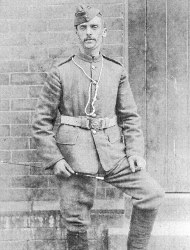 |
|
William Arthur Fletcher was born on 1st October 1876 in Langley Mill, Derbyshire, and baptised on 27th November 1876 at Ilkeston, Derbyshire. He was the son of Joseph Fletcher and his wife Lois (née Belton) who were married at the General Baptist Church, Baxtergate, Loughborough, on 19th September 1870. William had three brothers Joseph (Junior), John and Sidney and one sister Annie. Two other siblings died young. William’s father was a joiner and in 1881 the family was living at 82 Freehold Street, Loughborough. By 1891 they had moved to 11, The Avenue and Joseph’s father had become a wheelwright as well as a joiner. They later moved to 7 Fennel Street. On 21st April 1900 William, who had become a joiner like his father, enlisted at Leicester. He joined the Leicestershire Regiment as Private 6793. On 11th May 1900 he was posted to the 1st Battalion in South Africa. William joined the battalion as it was taking part in the operations that carried the war into the Orange Free State, and the Transvaal, and was present at the storming of Laing’s Nek and the capture of Amersfort, Ermelo and Belfast, and in the operations around Lyndenberg. Towards the end of the war they did garrison duty on the Standerton-Ermelo road. William was awarded the Queen’s South Africa Medal with clasps for the Transvaal and Natal. William was discharged from the Leicesters on 30th May 1901 on his return from South Africa. On 28th April 1904 he married Alice Mary Needham at All Saints Church, Loughborough. William and Alice went to Canada later that year but did not stay there. In 1911 they were living at 50 Derby Road, Loughborough, with a son Joseph and William was a joiner and wheelwright. William was 37 when the First World War broke out and whether he served again is unknown. By 1923 he and Alice were living at 54 Derby Road had five more children: Herbert, Margaret, Richard, Dorothy and Stanley. William died in Loughborough on 1st September 1932, aged 55. |
|
|
Private 240140 Charles Friday |
|
1/5th Bn, Leicestershire Regiment. |
|
|
|
Private 24322 George Harris |
|
17th Bn, Imperial Yeomanry |
|
George Harris was born on 15th September 1880 in Diseworth, Leicestershire, and baptised on 6th September 1885 at the Church of St. Michael and All Angels, Diseworth. He was the son of George Harris, a farmer, and his wife Ellen (née Walker) who were married at All Saints Church, Thorpe Acre, Loughborough, on 25th September 1877. George Junior had four brothers William, Thomas, John and Charles and four sisters Lucy, Lydia, Gertrude and Hilda. The family lived at Hall Gate, Diseworth. George Junior enlisted for the Boer War on 9th February 1901. He joined the Imperial Yeomanry as Private 24322. At the time he enlisted he was living at 5 Albert Street, Loughborough, and was a farmer. George was sent to South Africa with the second contingent of yeomanry to join the 17th Battalion. The second contingent or ‘new’ yeomanry were a totally different force from that of the original. Gone were the patriotically motivated educated men. The new yeomanry came to South Africa as very poor soldiers with none of the hard won skills of the original contingent. For a few months the small remainder of the original contingent served alongside the second, long enough for the veterans to be filled with a sense of foreboding that proved more than accurate. The second contingent saw its first action at Vlakfontein on 29th May 1901, when four companies of Imperial Yeomanry were, along with a company of regular infantry and two guns of the Royal Artillery, part of a rear guard commanded by Brigadier-General H. G. Dixon. An attack by 1,500 Boers caused a significant portion of the yeomanry to break and fall back on the infantry, causing confusion and casualties, before a counter-attack by the infantry and one company of yeomanry forced the Boers to retire. Although only one 200-strong company of yeomanry was involved in the counter-attack, suffering nine casualties, the yeomanry suffered in total 30 per cent casualties, while the regular infantry suffered very heavily, losing 87 out of an estimated strength of 100. The yeomanry's inexperience in defence and convoy protection was repeatedly exposed in Boer attacks. At Moedwil (also known as Rustenburg) on 30th September, the Boers inflicted nearly twice as many casualties as they sustained and killed or wounded all of the yeomanry's horses. Eventually in June and July 1901 the veterans, bar those who had re-enlisted with the new force (including a lot of enlisted men who were commissioned) returned to England. George was killed in action on 14th December 1901 at Dewetsdorp, Orange Free State, aged 21. He was awarded the Queen’s South Africa Medal with clasps for Orange Free State, Transvaal, and South Africa 1901. |
|
Private 3218 Samuel Hewitt |
|
1st Bn, Leicestershire Regiment. Previously 2nd Bn, and 23839, 3rd Bn. Died 8th October 1932 Loughborough, Aged 58. | 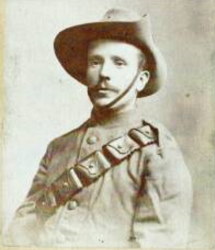 |
|
Samuel Hewitt was born in Loughborough in 1874 and baptised at Emmanuel Church, Loughborough, on 4th February 1883. He was the son of James Hewitt and his wife Annie (née Hubbard) who were married in Loughborough in 1870. Samuel had one brother Edward Oliver and two sisters Elizabeth and Mary Ann (known as ‘Polly’). Samuel’s father was a framework knitter and in 1881 the family lived at 23 Ward’s End, Loughborough. After Samuel’s father died in 1883 it appears that the two oldest children Samuel and Elizabeth went to live with their paternal grandparents Samuel (Senior) and Sarah Hewitt at 88 Nottingham Road, Loughborough. By 1891 young Samuel, aged 17, was a labourer and on 24th October in the previous year 1890 he had joined the 3rd Battalion (Leicestershire Militia) as Private 3839. On 29th September 1891 Samuel attested to join the Leicestershire Regiment full-time. He was sent to the Depot and then posted to the 2nd Battalion as Private 3218. On 17th January 1894 Samuel was posted to Jamaica, West Indies. He remained there for two years and was then sent to South Africa for three and a half years. On 28th September 1897, while in South Africa, he was transferred to the 1st Battalion. Samuel returned to England for six months in June 1899. He rejoined the 1st Battalion in South Africa in January 1900 when the Defence of Ladysmith was in progress. After Ladysmith was relieved the battalion took part in the operations that carried the war into the Orange Free State, and the Transvaal, and was present at the storming of Laing’s Nek and the capture of Amersfort, Ermelo and Belfast, and in the operations around Lyndenberg. Towards the end of the war they did garrison duty on the Standerton-Ermelo road. Samuel was awarded the Queen’s South Africa medal with clasps for Belfast, Defence of Ladysmith and Laing’s Nek and the King’s South Africa Medal with clasps for 1901 and 1902. Samuel returned to England on 24th August 1902 and remained with the Leicestershire Regiment until 27th September 1903. On 1st June 1903 he married Dinah Ward at Holy Trinity Church, Barrow-on-Soar, Leicestershire. By 1911 Samuel and Dinah were living at 101 Meadow Lane, Loughborough, with a son Frederick and daughter Elsie. Another daughter Ethel, born in 1906, had died in infancy. Samuel was employed as a blacksmith’s striker. Samuel and Dinah subsequently lived at various addresses in Loughborough: 103 Meadow Lane, 24 Charles Street, 23 Gladstone Street and Hazelmere, 98 Beacon Road. Samuel died in Loughborough on 8th October 1932, aged 58. His medals are held in the collections of the Loughborough Carillon Tower and War Memorial Museum. |
|
|
Colour Sergeant 202449 Maurice Higgins |
1/4th Bn, Leicestershire Regiment. Previously 6709, 1st Bn. Died 1938 Loughborough, Aged 65. |
|
The family background of Maurice Higgins is not clearly documented but it appears that Maurice was born between 1872 -1874 in Southwark, Surrey. He was probably one of nine children of Maurice Higgins (Senior) and his wife Bridget (née McCarthy) from Limerick, Munster, Ireland. This family lived in Noah’s Ark Alley, Southwark, in 1881 and Maurice (Senior) was a labourer. If this is correct Maurice (Junior), his brother Michael and his sister Catherine were admitted to the workhouse in 1884 and the two boys were sent to St. Saviour’s Union Poor Law School. 1884 may have been the year their father Maurice (Senior) died. Their mother Bridget was certainly widowed by 1891 and living with only five of her children at 10 Fisher Buildings, Southwark. By 1891 Maurice (Junior) was a boarder in the White household at 6 Pellant Road, Fulham, Middlesex, and described as an ‘electrical engineer’. In 1892 he joined the Middlesex Volunteers and served as a bugler. He subsequently moved to Loughborough and lodged with Miss Webb of 52 Storer Road, Loughborough, and was employed as a brass turner. On 22nd January 1900 Maurice enlisted with the Volunteer Service Company of the Leicestershire Regiment. From the depot he was posted to the 1st Battalion in South Africa on 17th February 1900 as Private 6709. Maurice took part in the operations that carried the 2nd Boer War into the Orange Free State and the Transvaal, and was present at the storming of Laing’s Nek and the capture of Amersfort, Ermelo and Belfast, and in the operations around Lyndenberg. Maurice was discharged on 30th May 1901 and was awarded the Queen’s South Africa medal with clasps for Belfast and Laing’s Nek. In 1908 Maurice married Florence May Rudkin in Loughborough. In the same year he reenlisted with the Leicestershire Regiment and joined the 1/4th Battalion of Territorial Reserves. By 1911 Maurice and his wife Florence were living at 87 Leopold Street with a young son Maurice Herbert. Between 1912 and 1926 they had four more children: Dorothy, Kathleen, Leslie and Terence. When war broke out in 1914 Maurice went with the 1/4th Battalion to Luton for training, moving Iby November to Bishop's Stortford. Maurice went to France on 2nd March 1915. From Le Havre the battalion was sent by train to Cassel, from where they marched to Zuytpeene. From there they moved to Strazeele, Sailly, Bac-Saint-Maur, Steenwerck and finally to Armentières. In April and May 1915 they were in trenches at Dranoutre and in June moved to Ouderdom. By the beginning of July they were at Sanctuary Wood, near Ypres and at the end of the month took part in the attack at Hooge, where the Germans used liquid fire. The battalion was then moved to the area of Loos, and took part in the attack at the Hohenzollern Redoubt on 13th October 1915. On 16th January 1916 the 1/4th Battalion was in Marseilles prior to embarking on the HMT Andana to sail to Egypt. The voyage to Egypt, however, was aborted and on 27th January the battalion was ordered to entrain for Pont Remy and march to billets at Buigny l'Abbé. Here the battalion underwent training until 11th February. On 12th February the battalion moved to Puchevillers for additional training and also to work on the railway. The next move was via Fienvillers, Montrelet, and Gezaincourt to Doullens and then Sericourt where training continued until 8th March. On 11th March the battalion moved to Brigade reserve at Camblain l'Abbé. From here on 15th March they moved to the front line trenches opposite Givenchy and Vimy Ridge, in the area of Talus des Zouaves, to relieve the 5th Lincolnshires. On 21st March the 5th Lincolnshires relieved the 1/4th Leicesters and this pattern of reliefs was repeated over the following weeks. On 23rd April the battalion moved to Mazières and then Savy for training until 9th May. Further moves followed to Le Souich and then Humbercamps for cable laying before a return to the trenches at Foncquevillers on 15th June. On 30th June the battalion moved to billets in St. Amand-les-Eaux in preparation for the start of the Somme Offensive. On 2nd July the battalion transferred to Hannescamps and was heavily shelled. At Bienvillers-au-Bois on 15th July they launched a gas and smoke attack on the enemy. After a short period in training at Pommier and some work on trench improvement they moved into the trenches at Monchy-au-Bois on 1st August and were again shelled. Apart from a week in the trenches at La Cauchie the battalion remained in the Pommier/Bienvillers area until 28th October. November 1916 was spent training at Drucat, Domvast, and Mondicourt prior to a return to the trenches at Hannescamps in December After a Christmas break at Souastre the battalion returned to the Hannescamps trenches, going into Brigade Reserve at Bienvillers at the end of the year. Further trench tours followed at Hannescamps in January 1917, with breaks at Souastre. On 27th and 28th January the battalion pushed forward and advanced the front line in operations at Gommecourt. In February 1917 the battalion took over a new front line facing Monchy-au-Bois and experienced a very heavy enemy bombardment of trench mortars and shells. March began with training at Souastre followed by a return to the front line between Hannescamps and La Brayelle before a move over nine days to Flechin took place. April began with training at Flechin and Erny St. Julien followed by a move over several days to Lens, arriving on 18th April. Two trench tours north-west of Lens in the Cité St. Pierre sector took up the rest of April. In May there was training at Noeux-les-Mines before trench tours in the Lievin sector on 12th and 18th May. Breaks at Red Mill and Fosse 10 included the digging of new trenches. Maurice, having achieved the rank of Colour Sergeant (now numbered 202449), was discharged from the Army on 2nd June 1917, aged about 44. He died in Loughborough in 1938, aged about 65. Various items of his memorabilia are in the collection of Leicester City Museums Service. |
|
Private 5818 Albert Hodder DCM |
|
1st Bn, Leicestershire Regiment. |
|
|
|
Private 5816 Edward Hopewell |
|
|
1st Bn, Leicestershire Regiment Died 1969 Loughborough, Aged 88. | 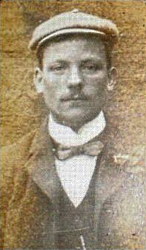 |
|
Edward Hopewell was born in Loughborough on 2nd November 1880 and baptised on 6th April 1886 at Emmanuel Church, Loughborough. He was the son of Charles Hopewell and his wife Maria (née Pegg) who were married at Emmanuel Church, Loughborough, on 13th January 1867. Edward had four brothers John, William, Henry and Thomas and three sisters Emma, Alice and Annie. Four other siblings Mary, John, Eliza Ann and Ann died young. Edward’s father was initially a shoemaker but subsequently became a labourer, firstly for a dyer, then at an ironworks. In his later years he became a gardener. In 1881 the family lived at Brown’s Yard, Ashby Square, Loughborough. By 1891 they were at 23 Mill Street and by 1901 at 127 Leopold Street. They then moved to 33 Station Street. On 28th August 1900 Edward enlisted and joined the Leicestershire Regiment as Private 5816. He was sent to the depot. On 11th February 1901 he was posted to the 2nd Battalion and sent to Egypt two days later. In January 1902 he was transferred to the 1st Battalion and sent to South Africa. He stayed in South Africa until November 1902 on garrison duty on the Standerton-Ermelo road. Edward was awarded the Queen’s South Africa Medal with clasps for the Transvaal and South Africa 1902. Following the end of the 2nd Boer War the 1st Battalion of the Leicesters was transferred to Fort St. George, Madras, India. They left Port Natal on 7th November 1902 on the SS Ortona and arrived in Madras in late November. In August 1903 he was confined to barracks for a week for being drunk and creating a disturbance. After two years in Madras the battalion moved to Belgaum, Karnataka. On 1st April 1904 Edward was permitted to extend his time with the colours. He returned home in November 1906 and transferred to Army Reserve until he received his discharge in August 1912. While a Reservist he was employed as a bricklayer and lived with his parents. He then became a fitter. On 12th October 1912 Edward married a widow Eliza Ann Henson (née Wildbur) at St. Peter’s Church, Loughborough. Eliza had three young children John, Cecil and Harold Henson and Edward and Eliza added three more to the family: Eveline, William and Harry Hopewell. |
|
|
Private 7121 Thomas Hutton |
|
2nd Bn, Royal Scots. |
|
|
|
Sergeant 260012 Herbert Jones |
|
2/5th Lincolnshire Regiment. |
|
|
|
Private 12089 Francis William Landon |
|
2nd Bn. Leicestershire Regiment. |
|
|
|
Private 4416 George Lattimore |
|
13th Bn. Royal Scots (Lothian). |
|
|
|
Lance Corporal 13289 Herbert Jacob Lee MM & Bar |
|
9th Bn, Leicestershire Regiment. |
|
|
|
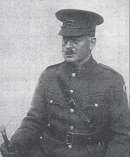
RSM 24003 Henry George Lovett MC DCM MiD |
|
1/5th Leicestershire Regiment. |
 |
|
|
|
|
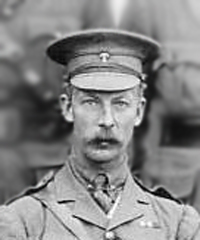
Major William Francis Martin |
|
C Sqdn, 1/1st Leicestershire Yeomanry. |
 |
|
|
|
|
Private 2204 Thomas Mills |
|
4th Bn, 7th (Leicestershire) Coy, Imperial Yeomanry |
|
Thomas Mills was born in 1872 in Shepshed, Leicestershire. He was the son of John Mills and his wife Elizabeth (née Martin) who were married at St. Botolph’s Church, Shepshed, on 4th July 1853. Thomas had one sister Ada.
Thomas’s father was initially a framework knitter but by 1881 the family was living at 60 Navigation Road, Shepshed, and John’s father had become a grazier and grocer. By 1891 they had moved to Charnwood Road and Thomas, aged 18, was a shoe hand. By 1900 Thomas was employed in farming and he had also joined the Leicestershire Yeomanry. On 8th January 1900 Thomas enlisted to join the Imperial Yeomanry. As Private 2204 he went to South Africa on 7th February 1900 as part of the 4th Battalion, 7th (Leicestershire) Company. He died of typhoid, aged 28, on 29th December 1900 in Mooi River, Natal. He was buried in Mooi River Military Cemetery. Thomas was awarded the Queen’s South Africa Medal with clasps for Wittebergen and Cape Colony. |
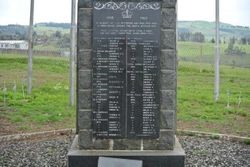 Memorial, Mooi River Military Cemetery |
|
Private L/7570 Arthur Newbon |
|
4th Bn, Middlesex Regiment. |
|
|
|
|
|
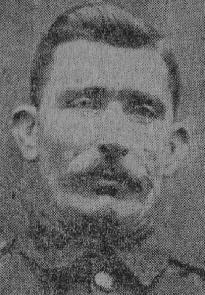
Sergeant 4425 Henry Fred Osborn |
3rd Dragoon Guards (Prince of Wales's). |
|
|
|
Captain Mark Lennard Paget |
|
4th Bn, 8th (Derbyshire) Coy, Imperial Yeomanry |
|
Mark Lennard Paget was born on 30th March 1874 in Loughborough. He was the son of Arthur Paget and his wife Rose Ellen (née Lakin) who were married on 12th September 1864 at St. James’s Chapelry, Birstall, Leicestershire. Mark had eight brothers Bertie, Robert, Lionel, Kenneth, Tom, Edgar, Harry and Gerald and three sisters Rose, Ellen and Ella. Bertie, however, died aged 24 in New South Wales, Australia, and Gerald was killed in Syria in the First World War.
Mark’s father had been a student in applied sciences at King’s College, London. He then served is pupillage of three years with Messrs. Sharp, Stewart, and Co., Manchester. In 1854 he came to Loughborough, and was for two years engineer and manager, and for five years managing partner, in the firm of Messrs. Paget and White. In 1866 he started business on his own account as an engineer and machinist, taking up a branch of engineering to which some of his ancestors had devoted much attention - the manufacture of knitting, weaving, and other textile machinery. He built a factory on Mill Street (now known as Market Street) and in 1870 introduced his self-acting machine for knitting hosiery by steam power. The success attained with this knitting machinery encouraged him still further in his experiments towards the constructions of the machine for warp weaving and knitting without weft, which was produced and shown at the Paris Exhibition in 1889. The mechanical ingenuity displayed, and the extreme accuracy and precision of the workmanship, gained for him the decoration of Chevalier of the Legion d’Honneur. When Mark was born the family was living at Victoria Villa, Victoria Street, Loughborough. Soon afterwards, between 1876 and 1881 they moved to the newly-built Radmoor House. In 1891 Mark, aged 17, was a bank clerk. When Mark was 20 his father, who had been in poor health for several years after suffering a stroke, died. Robert’s mother subsequently moved to The Ridgeway, Rothley, Leicestershire. On 4th May 1898 Mark was baptised at Holy Trinity Church, Milford, Derbyshire, and described as an engineer. On 9th January 1900 Mark attested at Derby to join the Imperial Yeomanry. He joined the 4th Battalion, 8th (Derbyshire) Company as Private 5069. On 29th January he went to South Africa. On 1st August 1900 he was commissioned. On 7th May 1901 he was promoted from Lieutenant to Captain. On 12th October 1901 he was invalided and granted three months leave in England on the recommendation of the Medical Board. He returned to Africa, disembarking at Durban, on 2nd February 1902 and served until the cessation of hostilities. He was awarded the Queen’s South Africa Medal with clasps for Cape Colony and the Transvaal and the King’s South Africa Medal with clasps for 1901 and 1902. On 12th September 1902 Mark relinquished his commission as Captain and was granted honorary rank of Captain in the Army. On 26th June 1903 he was listed in The Gazette as being in the Reserve of Officers. On 24th November 1903 Mark married Gertrude Mary Paget (possibly a distant relation) at All Saints Church, Loughborough. At the time of his marriage Mark was living in Sparkbrook, Birmingham. In 1911 Mark and his wife were living at 20 Ashbourne Road, Derby, with two children Humphrey and Gertrude. Mark was the managing director of a motor garage and repair shop. In 1922 his son Humphrey died, aged 17. By the family had moved to The Grange, Normanton, Derby. In October 1914 Mark was appointed a Captain in the Derbyshire Yeomanry. In 1939 he and his wife were living at Courtenay House, Winchester, Hampshire. Mark died on 14th March 1945 in Winchester, aged 71. |
|
Private 8108 Robert Harold Paget |
|
15th Bn, 59th (Oxfordshire) Coy, Imperial Yeomanry |
|
Robert Harold Paget was born on 28th November 1876 in Loughborough. He was the son of Arthur Paget and his wife Rose Ellen (née Lakin) who were married on 12th September 1864 at St. James’s Chapelry, Birstall, Leicestershire. Robert had eight brothers Bertie, Mark, Lionel, Kenneth, Tom, Edgar, Harry and Gerald and three sisters Rose, Ellen and Ella. Bertie, however, died aged 24 in New South Wales, Australia, and Gerald was killed in Syria in the First World War.
Robert’s father had been a student in applied sciences at King’s College, London. He then served is pupillage of three years with Messrs. Sharp, Stewart, and Co., Manchester. In 1854 he came to Loughborough, and was for two years engineer and manager, and for five years managing partner, in the firm of Messrs. Paget and White. In 1866 he started business on his own account as an engineer and machinist, taking up a branch of engineering to which some of his ancestors had devoted much attention - the manufacture of knitting, weaving, and other textile machinery. He built a factory on Mill Street (now known as Market Street) and in 1870 introduced his self-acting machine for knitting hosiery by steam power. The success attained with this knitting machinery encouraged him still further in his experiments towards the constructions of the machine for warp weaving and knitting without weft, which was produced and shown at the Paris Exhibition in 1889. The mechanical ingenuity displayed, and the extreme accuracy and precision of the workmanship, gained for him the decoration of Chevalier of the Legion d’Honneur. When Robert was born the family was probably living at Victoria Villa, Victoria Street, Loughborough. Soon afterwards, between 1876 and 1881, they moved to the newly-built Radmoor House. When Mark was 18 his father, who had been in poor health for several years after suffering a stroke, died. Robert’s mother subsequently moved to The Ridgeway, Rothley, Leicestershire. Robert became a writer and worked for a University Press. On 5th February 1900 he enlisted at Oxford for the Imperial Yeomanry. He joined the 15th Battalion, 59th (Oxfordshire) Company, as Private 8108. He was sent to South Africa on 8th March 1900 and remained there until 1st March 1901. He was in action at Frederikstadt and Swartzkopje. Robert was awarded the Queen’s South Africa Medal with clasps for Cape Colony, Orange Free State, Transvaal and 1901. After the Boer War Robert returned to publishing. In December 1903 Robert made the first of a number of business trips to New York, on the SS Umbria. On 20th July 1905 Robert, aged 28, married a 49 year-old widow Edith Bowman (née Paget) at St. Saviour’s Church, Pimlico, London. Edith may have been a distant relation. They settled at 1 The Acacias, Hampstead Square, London. In 1907 Robert visited New York twice, both trips on the SS Campania. Robert’s marriage was cut short by Edith’s death on 18th January 1908. Robert returned to New York in August 1908 on the SS Minneapolis and twice in 1909 in February and August on the SS Campania and SS Lusitania. His movements during the First World War are less clear but he returned from New York on the SS Lapland on 2nd April 1915. By 1917 he was back in New York, living at 111 West 57th Street as evidenced by a draft registration card in his name. Whether he actually served in the war is unknown. After the war he returned to making occasional transatlantic crossings. Robert died on 16th March 1926 in Manhattan, New York, USA, aged 49. |
|
Regimental Sergeant Major 3538 George Charles Parker |
|
1/1st Leicestershire Yeomanry. |
|
|
|
|

|
Private 6714 Harry Jennings Partridge |
Service Coy, 1st Bn, Leicestershire Regiment. Died Loughborough 15th March 1913. |
|
Harry Jennings Partridge was born in Westminster, London, in 1876. Harry was the son of Harry Partridge from Loughborough and his wife Mary Ann (née Jennings) who came from Cheshire. Harold's parents were married at St. Margaret's Church, Whalley Range, Manchester, in 1876, moved to London and then settled in Loughborough where Harry's father ran a hairdressing business at 23 Baxter Gate. In 1901 the Partridge family lived at 123 Nottingham Road but by 1911 had moved to 24 Glebe Street. Harold's parents later moved to 8 Ratcliffe Road. Harry had three brothers John, Walter and Harold and five sisters Gertrude, Annie, Alice, Kate and Lilian. Two other siblings died young. In 1891 Harry, aged 14, was an engine fitter’s apprentice. On 22nd January 1900 he attested to join the 1st Volunteer Battalion of the Leicestershire Regiment. On 17th February 1900 he was transferred to the 1st Battalion as Private 6714 and sent to join the battalion in South Africa. The 1st Battalion was fighting in the 2nd Boer War. They took part in the operations that carried the war into the Orange Free State, and the Transvaal, and was present at the storming of Laing’s Nek and the capture of Amersfort, Ermelo and Belfast, and in the operations around Lyndenberg. Towards the end of the war they did garrison duty on the Standerton-Ermelo road. John was awarded the Queen’s South Africa Medal with clasps for Belfast and Laing’s Nek. Harry returned to England on 25th May 1901 and was discharged a week later. He returned to civilian life and in 1906 married Gertrude Ellen Walker in Coventry, Warwickshire. In 1911 Harry and his wife were living at 24 Nicholls Street, Coventry, and Harry was employed as a mechanic and motor fitter. Since their marriage they had had three children but all had died in infancy. In 1912, however, they had a son Clifford who survived. In 1913 Harry, aged 36, died in Loughborough. He never saw his daughter Constance who was born in Coventry in 1914. Harry’s brother Harold who served with the Leicesterdhire Regiment in WW1 died of wounds in 1917. In 1920 Harry’s widow married Carl Christian Berthelsen, a Danish engine fitter, in Coventry and they had three more children Carl, Gertrude and Peter. |
|
Sergeant Major 2200 Charles Peach |
|
4th Bn, Imperial Yeomanry |
Charles Peach was born in Shepshed in 1858 and baptised at St. Botolph’s Church, Shepshed, on 22nd June 1858. He was the son of Samuel Peach and his wife Jane (née Griffin) who were married on 12th June 1848 at St. Botolph’s, Shepshed. Charles had one brother Samuel and three sisters Jane, Annie and Charlotte. Between 1861 and 1871 Charles’s father was a cattle dealer and grazier of 32 acres and the family lived in Belton Street, Shepshed. By 1881 they had moved to Thringstone, and his father farmed 300 acres. Charles was a keen cricketer. In 1878 Charles joined the 2nd Dragoon Guards (The Queen’s Bays) as Private 2441. Nothing is known about his service except that on 13th January 1883 he purchased his discharge. Charles’s father died on 31st December 1883. On returning home Charles became a farmer. He also joined the Leicestershire Yeomanry. His mother left Thringstone and moved to Oakley House, Shepshed, and in 1891 Charles, his mother and unmarried sister Annie were living there with one servant. On 8th January 1900 Charles attested to join the Imperial Yeomanry. On 7th February he was sent to South Africa as Private 2200 of the 7th Company, 4th Battalion. Once in the Cape the men were sent the five miles to Maitland Camp where conditions soon proved to be quite awful. The camp was understaffed and had few facilities for the huge influx of men it was meant to deal with, for many the journey up country would be a welcome change from the cramped conditions and ennui of the Base camp. When the Yeomanry eventually left Maitland a grand plan had been hatched to spread the various battalions around the zone of operations. Four battalions (3rd, 5th, 10th & 15th) were to head for Mafeking, ten battalions (1st, 4th, 6th,7th, 9th, 11th, 12th, 13th, 14th & 19th) were to serve in the Orange Free State and the 2nd Battalion were to join Sir Charles Warren in Griqualand. The 8th, 19th and 20th Battalions were to remain in the Cape Colony. This plan proved little more than a theory however as the huge demand for mobile forces meant that companies of yeoman were detached from their HQ elements for weeks at a time and some battalions never even formed as such. Charles’s battalion was not involved in the battle at Boshof, north-west of Kimberley on 5th April or at the end of May at Lindley. These pitched battles were rare events for the Yeomanry who rode hundred of miles over the veldt and met the Boer at infrequent times. The yeoman formed flying columns that moved constantly from dawn to dusk with only poor rations and little chance of shelter, hardly surprising that the rate of disease and death soared and the ranks of these men were thinned constantly. In July the Imperial Yeomanry were heavily engaged in the hunting of the Boer General De Wet in an attempt to stop his fleeing into the Transvaal. From 1st to 29th July the yeomanry were inside a line drawn from Harrismith to Bethlehem, then to Senekal and Clocolan, along the Basuto border and back to Harrismith. They failed, however, to capture De Wet. The story of the Imperial Yeomanry for the remainder of 1900 was of minor victories and some occasions where its volunteer status became all too obvious. In September 1900 word began to spread among the men about the decision to send another volunteer unit, the City Imperial Volunteers, home. Although this unit had been in South Africa since late January the decision to return them to England caused huge resentment and disillusion among the yeoman. The constant monotonous routine of patrolling was beginning to bite deeply into the enthusiasm that had brought these men to Africa. Another cause of resentment was the policy of farm burning that had been imposed by Roberts in the Summer of 1900, work that the educated men of the yeomanry found hard to stomach. This policy was eventually stopped in November. The morale of the men was low, men volunteered for service with the Transvaal Constabulary and other police forces to escape the monotony, regular units snapped up the ‘prime material’ of the yeoman as officers and various Government departments offered these literate men fine jobs. With these reductions and the men who perished or were medically discharged the numbers of yeoman began to fall to alarmingly low numbers. No policy had ever been agreed upon to reinforce the original contingent, as such by the end of 1900 there was barely a third of these men left serving. Charles returned to England on 9th June 1901 and was discharged from the Imperial Yeomanry on 15th June. He was the only soldier to bring back a horse from South Africa and it was a sad day for him when this horse died. On one occasion during the Boer War he lost his horse completely and gave up hope of ever seeing it again but one night he heard it whinnying over a stretch of water. Charles whistled and the horse swam across to the camp. The horse, when it was brought back to England, took over 100 prizes at military and local shows. Charles suffered from a severe handicap owing to his wounded hands, caused by being hurled down a mountain during a battle in South Africa. Charles was awarded the Queen’s South Africa Medal with clasps for Wittebergen, Cape Colony and the Transvaal. In the autumn of 1902 Charles married Ellen Billing in Northampton and in 1911 the couple were living at Whitwick. Charles was still a farmer. He later became a quarryman and he and his wife lived at Holly Hayes Cottage, Whitwick. Charles was too old to serve in the First World War but acted as an instructor for the drilling of non-commissioned officers. In this role he was promoted to Sergeant-Major. Charles died at Whitwick in 1933, aged 75, having been bed-ridden for a number of years. |
|
Sergeant 5341 Richard Maurice Poole |
3rd Bn, Leicestershire Regiment. Previously 2nd, 1st and 7th Bns. Died at Home 1st August 1917, Aged 36. Buried Loughborough Cemetery 31/171. |
|
|
|
Private 5305 John Potter |
|
156th Protection Coy, Royal Defence Corps. |
|
|
|
Private 2280 John Peberdy Roberts |
|
4th Bn, 7th (Leicestershire) Coy, Imperial Yeomanry |
|
John Peberdy Roberts was born in 1876 in Shepshed. He was the son of William Owen Roberts and his wife Mary Anne (née Peberdy) who were married by Licence at St. Mary’s Church, Houghton on the Hill, Leicestershire, on 1st May 1873. John had three brothers William, Richard and Francis and five sisters Annie, Constance, Margaret, Agnes and Dorothy. Another brother died in infancy.
John’s father was a farmer and corn merchant. In 1881 the family lived at Hurst Lodge, Ashby Road, Shepshed. Here john’s father farmed 300 acres and they employed a governess for the children as well as two general servants and two indoor farm labourers. Between 1881 and 1901 they moved to Holywell Farm, Garendon, Loughborough. On 8th January 1900 John, who was in the Leicestershire Yeomanry, attested to join the Imperial Yeomanry. He joined the 4th Battalion, 7th (Leicestershire) Company as Private 2280. He went to South Africa on 26th February 1900 and remained there until 3rd January 1901. He took part in the Battle of Biddulphsberg in the Orange Free State on 29th May 1900 and also served at Wittebergen between 1st and 29th July 1900. He was awarded the Queen’s South Africa Medal with clasps for Wittebergen and Cape Colony. John was discharged on 26th February 1901. In 1903 John married Laura Louise Oliver in the South Stoneham registration area of Hampshire. In 1911 John and Laura were running Holywell Farm, Garendon, Loughborough, and had two children Nancy and John. John’s father and mother had retired to Spring Valley, Braddan, Isle of Man, with John’s youngest sister Dorothy. John died in Loughborough in 1929, aged 53. |
|
Private 12016 Thomas Roper |
|
17th Bn, 65th (Leicestershire) Coy, Imperial Yeomanry |
|
Thomas Roper was born in Hoton, Leicestershire, in 1858 and baptised on 31st October 1858 at St. Leonard’s Church, Hoton. He was the son of William Roper and his wife Ann Jane (née Roadley) who were married at St. Andrew’s Church, Prestwold, Leicestershire, on 20th June 1847. Thomas had four brothers James, John, William and Joseph and one sister Mary.
Thomas’s father was a brickmaker and latterly an agricultural labourer. In 1863 the family lived at Red Hill Farm Cottage, Burton Bandalls, Burton on the Wolds. After Thomas’s father died in 1864, aged 47, the family moved to Hill Cottages, Hoton. In 1881 Thomas was a brickmaker and living with his mother in Nottingham Road, Hoton. On 1st May 1883 Thomas married Ann Jane Roper at All Saints Church, Rempstone, Nottinghamshire. In 1887 he joined the Leicestershire Yeomanry. By 1891 Thomas was a publican at John O’Gaunt, Twyford, Leicestershire. He and his wife now had four children Clara, Albert, Florrie and Donald. In 1892 they moved to Pickwell, Leicestershire. By 1901 they had seven more children Edith, Kathleen, Elsie, Frances, Gilbert and Idris. On 26th February Thomas, as a member of the Leicestershire Yeomanry, enlisted for the Imperial Yeomanry. As Private 12016 he joined the 17th Battalion of the 65th (Leicestershire) Company and was sent to South Africa on the SS Galeka on 6th April 1900. They sailed from Southampton and called briefly at Tenerife before proceeding to Beira in Portuguese East Africa, arriving about 5th May. Here they joined volunteer mounted infantry from Australia and New Zealand to form the Rhodesia Field Force (RFF) under General Sir Frederick Carrington. The RFF was tasked to cut inland from Beira to Marandellas, Rhodesia, via Bamboo Creek and Umtali (now called Mutare), and Marondera, in effect creating a second front to the north of the Boer forces. Once in Marandellas the force would split, some heading south to help relieve the siege at Mafeking, while others (including 65th Company) would initially maintain a presence in the north to deter Mashonaland natives who were again becoming restive while Britain had her hands full with the Boers. Unfortunately the railway from Beira to Umtali had not yet been completed in early May. Due to different rail gauges, a change of trains and a wait for the onward transportation was necessary at Bamboo Creek. This resulted in a slow transit of a couple weeks through the swampy jungles along the Pungwe River of Portuguese East Africa, during which time many members of the RFF contracted malaria, dysentery and other tropical diseases. Thomas remained in South Africa until 25th June 1901 when he returned to England on the SS Hawarden Castle. He was awarded the Queen’s South Africa Medal with clasps for Cape Colony, Orange Free State, Rhodesia and 1901. Thomas was discharged on 8th August 1901. While Thomas was in South Africa his wife lived at 11 Cromwell Street, Melton Mowbray, with the children. She later moved to 28 Algernon Street, Melton Mowbray. After the Boer War Thomas returned to South Africa to run a farm and was joined by his son Albert. When the First World War broke out Albert joined the South African infantry and was killed in October 1916 in France. Thomas remained in South Africa until 1920 when he returned to England because of sight problems. His wife Ann died in Melton Mowbray in 1922. Thomas died on 27th December 1927 in Long Eaton, Derbyshire, aged 69. |
|
Captain Robert Basil Stamford |
|
Royal Army Medical Corps Territorial Force |
Robert Basil Stamford was born in Tibshelf, Derbyshire, on 30th April 1872. He was the son of William Ackrill Stamford and his first wife Florence Louisa (née Walter) who were married at the Church of St. Mary and All Saints, Chesterfield, on 7th June 1871. Robert’s father was a General Medical Practitioner and Surgeon in Tibshelf for over fifty years before retiring in 1918. He was also a surgeon at the Chesterfield Hospital. He was an active member of the St. John Ambulance Association and had earned a long service medal granted by Queen Victoria. He was also a surgeon instructor for the Tibshelf Colliery Ambulance Association. In addition he was a well-known Derbyshire Freemason and was 1st Master of the St. Thomas’s Lodge, Tibshelf. Robert had one sister Grace who died at the age of thirteen in 1889. Another sister died, two hours old, in 1873. The Stamford family lived at Heathfield House, Tibshelf. In 1881, when Robert was eight years old, he was a boarder at Green Hall Unitarian Preparatory School in Belper, Derbyshire, and he was the youngest pupil in the school. From 1885 to July 1890 he then attended Repton School. After Repton, on 14th October 1890, he entered Guy’s Hospital Medical College, London, and in his spare time played in the Guy’s cricket eleven and football team. Robert’s mother died, aged 42, in 1891 and on 24th November 1896 his father was remarried to Sarah Oates at the Church of St. Mary and All Saints, Chesterfield. Robert was registered as a doctor and licensed by the Royal College of Physicians, London, on 3rd May 1897. In the same year he was also admitted as a Member of the Royal College of Surgeons (England). Robert’s first position was that of House Surgeon to Sir William Arbuthnot Lane at Guy’s Hospital and through Sir William’s influence he also became a Fellow of the Royal College of Surgeons (Edinburgh). On 8th March 1899 he was initiated, as his father had been, into the Freemasons at St. Thomas Lodge, Tibshelf. In 1898, while Robert was a House Surgeon at Guy’s Hospital, he gave medical evidence at the Old Bailey in the trial of George Williams for the murder of his wife Wilhelmina Williams. When the 2nd Boer War broke out in South Africa Robert offered his services as a civilian surgeon. He was attached to the Royal Army Medical Corps (RAMC) and sent to Cape Town. He sailed from Southampton on the SS Jelunga (British India Steam Navigation Company Ltd) on 21st December 1899. After only seven months in South Africa, however, he contracted typhoid fever. He was invalided home on the SS Bavarian (Allan Line), arriving at Southampton in July 1900. He recovered and returned to South Africa on 26th May 1901. He was awarded the Queen’s South Africa Medal, with clasps for Cape Colony, Paardeberg, and South Africa 1901. After the war Robert joined Dr. Arthur Benjamin Jackson Eddowes in his medical practice at 6 Market Place, Loughborough. Dr. Arthur Eddowes died in 1908 and by 1911 Robert had established a medical practice in partnership with Dr. Frank R. L. Atkins at Park View, 26 Leicester Road, Loughborough. By 1920 his partner in the practice was Dr. Cecil G. Richardson and Robert no longer lived on the premises – he had married and moved to The Red House, Burton Walks, Loughborough. Today Park View is still used by medical practitioners of the Park View Surgery. By 1914 Robert was an Honorary Medical Officer at Loughborough General Hospital. When the First World War broke out he was called up and, having been appointed a Captain in the RAMC Territorial Force, did very valuable work as a surgeon at the 5th Northern General Hospital in Leicester. In September 1916 he was fined 30 shillings in the Loughborough Petty Sessions Court for having a brilliant light shining from a window of his Park View premises. A nurse employed by his medical practice had been rather careless. Robert was an active member of the British Medical Association and became Chairman of the Leicester and Rutland Division, President of the Leicester Medical Society and was for many years a member of the Leicestershire Panel and other committees. He hunted with the Quorn Hunt and was a keen golfer. For several years he was president of the Loughborough Cricket Club and he also played for the Gentlemen of Leicestershire Cricket Club. On 4th December 1919 Robert married Emma Pauline Cunliffe-Owen, a widow, by Licence at Holy Trinity Church, Upper Chelsea, London. He had been friends with Emma Cunliffe-Owen and her first husband Edward, a barrister, for a number of years. Robert’s wife Emma was well-known in her own right. She was the daughter of Sir Francis Phillip Cunliffe-Owen and his wife Jenny (née Von Reitzenstein). Her father was the director of the prestigious South Kensington Museum, which would later become the Victoria and Albert Museum. In 1882 Emma married her first cousin, Edward Cunliffe-Owen, with whom she had four children, Francis (who died in 1912), Dorothy, Sybil and Alexander. By 1901 there seems to have been some distancing between Emma and Edward as they were not listed at the same abode. In the 1911 census Emma was a visitor with her younger son Alexander (a godson of Queen Alexandra) in the household of Robert Stamford in Loughborough. Any perceived differences between Emma and Edward seem to have been put to one side when war was declared between England and Germany. It was said that in early September 1914 Mrs. Cunliffe-Owen, on rallying some men-friends for not being in khaki, was challenged to raise a battalion of middle and upper class men up to the age of forty-five. She promptly went with them to a post-office and telegraphed to Lord Kitchener ‘Will you accept complete battalion of upper and middle class men, physically fit, able to shoot and ride, up to the age of forty-five?’ The reply was ‘Lord Kitchener gratefully accepts complete battalion’. Mr. and Mrs. Cunliffe-Owen then proceeded to set up a recruiting office in the Indian Room at the Hotel Cecil on The Strand in London. From this point forward they worked together as a highly effective team, often visiting different cities in England on recruiting drives. They successfully raised two battalions, the Sportsman’s Battalions. These battalions were also known as the 23rd (Service) Battalion (1st Sportsman’s) and 24th (Service) Battalion (2nd Sportsman’s) of the Royal Fusiliers (City of London Regiment). A third Sportsman’s Battalion, the 30th (Reserve) Battalion, Royal Fusiliers, was formed in July 1915. According to an article in The Sportsman’s Gazette blogspot (sportsmansgazette.blogspot.com), in 1916, while two of the Sportsman’s Battalions were fighting in France, Emma and her son Alexander took a ship bound for Morocco. It seems that Alexander was with the Welsh Fusiliers, stationed in Gibraltar, although quite why his mother chose to travel with him is unclear. What is clear, however, is that a Robert Basil Stamford, surgeon, was travelling to Gibraltar on the same ship. In 1918, at the age of 61, after a period of illness, Edward Cunliffe-Owen, CMG, died in Loughborough, leaving Emma a widow with an uncertain future. Edward’s estate had only amounted to £14 0s 3d. One year later she married Robert Stamford and the couple went for their honeymoon to the French Riviera, sailing to Marseilles on the SS Morvada. Afterwards Emma came to live in Loughborough and in January 1920 she was awarded the OBE for her war initiatives. Robert and Emma Stamford lived at The Red House, Burton Walks, Loughborough, and for a time between 1920 and 1927 Robert’s father who had retired and was widowed for the second time, lived with them. Robert Basil Stamford died suddenly on 4th May 1935, aged 64. He had outlived his father by only one year. His funeral was held in two parts, a service at St. Peter’s Church, Loughborough, followed by a service and burial at the Church of St. John the Baptist, Tibshelf. The coffin was draped with the Union Jack and the Last Post was sounded at the graveside. An obituary for Robert Basil Stamford in the British Medical Journal included the following tribute: ‘The sudden passing of Mr. Robert Basil Stamford whilst in active practice at Loughborough has left a gap in the profession in that town which will be difficult to fill. ‘Tall, elegant, of soldierly appearance, a fine sportsman in many branches of sport, he was very popular, and it is not too much to say that he was beloved by all classes; and though this is not usually the highest praise which can be given to a man it was true of Stamford in every sense of the word. ‘Of especially charming manners and a very agreeable disposition, he had at the same time a mentality which showed a character of great decision in medical and other matters. He was a very capable surgeon, and his opinion was frequently sought by his colleagues in the town and neighbourhood.’ Robert’s widow Emma, who had suffered throughout her life from rheumatoid arthritis and consequent reduced mobility, died at The Red House in Loughborough on 13th November 1950, aged 87. All her children by her first husband had predeceased her but Robert had left her his entire estate of £9998 8s 4d. There were no children from her marriage to Robert Stamford. The Red House, where Dr. and Mrs. Stamford spent their married life is now part of Loughborough Grammar School. The 2nd Boer War medal of Dr. Robert Basil Stamford is in the collections of the Carillon War Memorial Museum. |
|
Sergeant 01920 Edward Staniforth |
|
Royal Army Service Corps |
|
Edward Staniforth was born on 4th May 1876 in Shepshed and baptised on 14th January 1877 at St. Botolph’s Church, Shepshed. He was the son of Alfred Staniforth and his wife Sarah (née Tapp) who were married on 4th April 1876 at St. Botolph’s Church, Shepshed. Edward had two brothers Jack and Alfred and two sisters Ida and Alma. Alma however, died, aged 4.
In 1881 the family lived at 28 Moorfields, Shepshed, and Edward’s father was a framework knitter. Ten years later the family was living in Factory Street, Shepshed, and Edward had also become a framework knitter. By 1901 the family had moved to Field Street, Shepshed and both Edward and his father had become butchers. On 20th January 1902 Edward attested for the Imperial Yeomanry. He joined the 39th (Berkshire) Battalion as Private 43411 and was then transferred to the 34th (Middlesex) Battalion on 1st February 1902. He was sent to South Africa on 14th May 1902, but seems to have arrived in the Cape about the time the peace treaty was signed on 31st May. He stayed in South Africa until 5th December 1902, helping with the stabilisation process. He was discharged on 19th January 1903 but did not qualify for any medal as the war was over when he arrived in South Africa, On 5th October 1907 Edward married Lucy Mary Richards at Loughborough Register Office. In 1911 Edward was a hosiery hand and he and Lucy were living with two children Thomas and Alma in Hall Croft, Shepshed. Another daughter Edna was born in 1912. On 18th May 1912 Edward’s parents emigrated to Perth, Western Australia. They sailed on the SS Australind for Fremantle with his brothers Jack and Alfred, and his sister Ida and her husband Samuel Corbett and their three children. On 23rd August 1913 Edward travelled alone on the SS Ajana to Fremantle to visit his family in Perth. Edward returned to England and took up butchery again, working for Harry Caldwell, butcher of 60 Church Gate, Loughborough. He moved his family to Cotton Mill, Shepshed. On 19th October 1914 Edward enlisted and joined A Coy of the Supply Branch of the Army Service Corps as Private S2/SR/01920. He underwent training at Aldershot and Burnham, Somerset, and was promoted to Acting Corporal on 8th March 1915. As part of the 19th Division Field Butchery he left Southampton for Le Havre, France, on the SS Empress Queen on 16th July 1915. During the war Edward worked in the 19th and 9th Field Butcheries and at the Medical Board Depot. From January to July 1919 he was with the Lines of Communication Supply Company. He was promoted to Corporal on 2nd May 1916 and to Acting Sergeant on 21st January 1919. He was transferred to Army Reserve on 16th July 1919 and returned to his family in Moorfield Place, Shepshed. On 1st March 1928 Edward and his family emigrated to Perth, Western Australia, on the SS Beltana. They firstly settled in Rose Avenue, Marylands, Perth. In the 1940s Edward worked as a miner in Kalgoorlie. Edward died on 21st November 1958 at the Royal Perth Hospital, Perth, Western Australia, aged 82. |
|
Trooper 20483 Edwin Tilley |
|
4th and 1st Bns, Imperial Yeomanry |
Edwin Tilley was born in Whitwick, Leicestershire, on 29th January 1879. He was the natural son of Annie Tilley and his father is unknown. Edwin was brought up by his grandparents William and Ann Tilley. In 1881 his grandparents were living in Leicester Road, Whitwick, and Edwin’s grandfather was an agricultural labourer. Edwin’s mother was working as a servant in the household of Elizabeth Harrison, a widowed grocer, in Vicarage Street, Whitwick. By 1888 Edwin had moved with his grandparents to 23A Regent Street, Loughborough. His grandfather was now a carpenter and his grandmother a grocer. On Christmas Day 1888 his mother had married George Thomas Hillyard at All Saints Church, Loughborough, and moved with her husband, a carpenter and joiner, to 19 Filbert Street, Leicester. Edwin, meanwhile, remained in Loughborough with his grandparents. In 1891 Edwin’s mother was a dressmaker. Annie and George Hillyard had four children Beatrice, Cecil, Edith and Elsie, half-siblings to Edwin. In 1901 the Hillyard family was living at 68 Noel Street, Leicester, and between 1901 and 1911 they moved to 84 Highfield Street, Coalville. When Edwin left school he became a commercial traveller. On 21st January 1901 Edwin attested at Leicester to join the Imperial Yeomanry in the 2nd Boer War. As Trooper 20483 in the 7th Company of the 4th Battalion he went to South Africa on 16th March 1901. He was later transferred to the 2nd Company of the 1st Battalion. Edwin saw his first action at Vlakfontein on 29th May 1901, when four companies of Imperial Yeomanry were, along with a company of regular infantry and two guns of the Royal Artillery, part of a rear guard commanded by Brigadier-General H. G. Dixon. An attack by 1,500 Boers caused a significant portion of the yeomanry to break and fall back on the infantry, causing confusion and casualties, before a counter-attack by the infantry and one company of yeomanry forced the Boers to retire. Although only one 200-strong company of yeomanry was involved in the counter-attack, suffering nine casualties, the yeomanry suffered in total 30 per cent casualties, while the regular infantry suffered very heavily, losing 87 out of an estimated strength of 100.] The yeomanry's inexperience in defence and convoy protection was repeatedly exposed in Boer attacks. At Moedwil (also known as Rustenburg) on 30th September, the Boers inflicted nearly twice as many casualties as they sustained and killed or wounded all of the yeomanry's horses. In the Battle of Groenkop (also known as Tweefontein) on 25h December, 1,000 Boers surprised and practically annihilated the 400-strong 11th Battalion as the men slept, inflicting casualties of 289 killed, wounded and captured, for the loss of 14 killed and 30 wounded. Edwin left South Africa on 18th March 1902 and was discharged from the Yeomanry. He was awarded the Queen’s South Africa Medal 1901 with clasps for Cape Colony, Orange Free State and the Transvaal. Edwin’s grandfather died in 1901 and his grandmother in late 1906. On 5th February 1906 Edwin emigrated to the USA, leaving Liverpool on the RMS Carmania for New York, his stated destination being the city of Howell, Michigan. By 1909 he was working for the publisher Crocker-Langley, 1628 Pine, San Francisco, California. In1910 he was boarding in the household of Louise Demore in Berkeley, Alameda, California, and working as a manager for an asbestos firm. In 1917 Edwin was drafted by the US Army. At the time he was living at 505 Offerell, San Francisco, and working as a factory superintendent. Whether he came to Europe in the First World War is unknown. In 1930 he was still in San Francisco and working as a manufacturing manager. On 7th June 1932, at the age of 53, Edwin married a divorced Canadian nurse, Gladys Ada McIvor (née Patterson), in Redwood City, California. In 1933 Edwin’s wife applied to become a US citizen and Edwin applied the following year. Edwin and his wife lived at 235 Teresita Boulevard, San Francisco and Edwin now was President of his own company, manufacturing gaskets. Edwin died on 18th October 1941 at Whispering Pines, Lake County, California, aged 62. |
|
Private 5066 Arthur William Underwood |
|
|
1st Bn, Leicestershire Regiment. |
|
Arthur William Underwood was born in Loughborough on 12th July 1880. He was the son of George Underwood and his wife Emily (née Herbert) who were married on 21st May 1866 at St. Mary’s Church, Barwell, Leicestershire. Arthur had one older brother Herbert and one older sister Sarah. His sister, however, died aged 7 in 1882. Arthur’s father was a framesmith who later became a machine fitter and then a machinist in the cotton industry. In 1881 the family lived at 21 Chapman Street, Loughborough, but by 1891 they had moved to 24 New King Street. In 1892, when Arthur was 12, his mother died. When he left school he became a fitter and when he was a bit older joined the Leicestershire Militia. On 8th March 1897 Arthur’s father was remarried to Janet Clarke at St. Peter’s Church, Radford, Nottinghamshire. Not long afterwards, on 1st September 1897, Arthur enlisted on a full-time basis with the Leicestershire Regiment. At the time of his enlistment he was living at 14 Hudson Street, Loughborough. When Arthur was sent, as Private 6066, to join the 1st Battalion in South Africa is unknown but he appears to have been there when the 2nd Boer War broke out in 1899. The 1st Battalion of the Leicesters was stationed at Glencoe, north of Natal, when the 2nd Boer War began. It thus formed part of the brigade of General Penn Symons, the other battalions being the 1st King's Royal Rifles, 1st Royal Irish Fusiliers, and 2nd Dublin Fusiliers. There were also at Glencoe the 18th Hussars and the 13th, 67th, and 69th Batteries of the Royal Field Artillery. Fighting commenced on 20th October 1899. A force led by General Sir William Penn Symons attacked the Boer position on Talana Hill. Then came the hurried retirement on Ladysmith. For four months the Battalion fought throughout the stubborn defence of Ladysmith, during which the garrison was reduced to almost starvation rations. After the siege began the Leicesters occupied posts on the north side. After Ladysmith had been relieved, Sir Redvers Buller moved north and the Leicesters were brigaded with the 1st Liverpool, 1st Royal Inniskilling Fusiliers, and 1st King's Royal Rifles in the Natal Field Force. The 1st Battalion took part in the operations that carried the war into the Orange Free State, and the Transvaal, and was present at the storming of Laing’s Nek in May 1900. Arthur was wounded at Vanwykes Vlei on 21st August 1900. He was invalided home in September 1900. He was awarded the Queen’s South Africa Medal with clasps for Belfast, Talana, and Laing’s Nek. In 1901 Arthur was listed at the Glen Parva Barracks near Leicester. In 1904 he married, Elizabeth Ellen Dexter in Loughborough and in 1907 his father died. By 1911 Arthur was employed as a general labourer and he and Elizabeth were living at 8 Lower Cambridge Street, Loughborough, with two children Emily and Olive. Arthur’s wife died in 1929 and in 1939 Arthur was living with his married daughter Olive Shaw and her husband at 19 Chapman Street, Loughborough. Arthur died in Market Harborough in 1951, aged 71. |
|
|
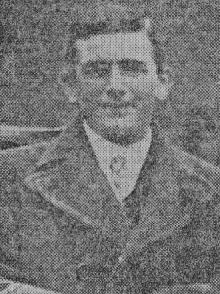
Lance Corporal 8428 John Lawrence Varley |
|
|
2nd Bn, King's Own Scottish Borderers. Died Doeberitz Prisoner 12th April 1917, Aged 33. Buried Berlin South Western Cemetery, Brandenburg, XX. B. 2. |
 |
|
|
|
|
Private 290582 John Warren |
|
|
Labour Corps. |
|
|
John Warren was born in Leicester in 1869 and baptised in Newport Pagnell, Buckinghamshire, on 18th March 1875. He was the son of Henry Edward Warren and his wife Louisa (née Ward) who were married at St. George’s Church, Leicester, on 27th November 1864. John had three brothers Henry Edward Junior, Albert and Thomas and three sisters Lucy, Mabel and Louisa. Two other siblings died young and his sister Louisa died, aged 20, in 1910. John’s father was a coachbuilder and a member of a well-established coach-making family in Loughborough. Between 1864 and 1881, however, he was travelling in search of work, including to Leicester and Newport Pagnell. By 1881 the family had returned to Loughborough and were living at 33 Russell Street. It is possible that John’s father returned to the town to work again in the family business. John left home in October 1888 and joined the Northumberland Fusiliers as Private 2209. In December 1888, however, his mother paid £10 to buy him out of the Army. After WW1 his mother was refunded £6 13s 4d which was part of the cost towards this. In 1889 John joined the Leicestershire Regiment and in 1891 was in Warley Barracks, near Brentwood, Essex. Details of John’s military career between 1891 and 1902 are unclear although he appears to have been recalled to the Colours under special order between 20th December 1899 and 2nd June 1902. John does not appear on the 1901 census and it seems likely that he was sent to South Africa to join the Leicestershire Regiment in the 2nd Boer War. Strangely, however, his name is missing from the Boer War Medal Rolls. John was discharged from the Leicestershire Regiment on 24th June 1902. In 1911 John was living with his parents and sister Mabel at 32 Meadow Lane, Loughborough. He was unmarried and employed as a machinist. His parents later moved to 3 Park Road, Loughborough. On 19th August 1915 John, now aged 45 and an iron works labourer, re-enlisted with the Royal Engineers 6th Labour Battalion as Pioneer 117392. He was sent to France shortly afterwards on 3rd September 1915. During June 1915 both Royal Engineer and infantry labour battalions had been formed in England and sent overseas for work in army areas, mainly on road maintenance work. These units were formed from men of the navvy class and from men who were over military age or from men who, because of wounds, injury or illness, were no longer fit for front line combat service. For many months this battalion remained on road making but by 1916 it was also engaged on quarrying and forestry. In July 1916 John was punished for leaving the ranks and being absent for nine hours. In January 1917 the Labour Battalions were absorbed into the Labour Corps and John became Private 290582 in 165 Company. John was finally demobbed on 9th March 1919 and returned to Loughborough to live at 142 King Street. He suffered from shell-shock, sometimes went missing and was brought home by the police. A claim for an Army pension on the grounds of mental deficiency and heart trouble, however, was refused. In 1920 John married a widow Mary Jane West (née Bramley) in Loughborough but the marriage was short. John’s health rapidly deteriorated, his mind began to wander and he was unable to finish speaking a sentence. He became dangerous to others and violent towards his wife and was admitted to the Leicestershire and Rutland Asylum at Narborough on 15th November 1922. John died at the asylum on 18th March 1923, aged 54. After a Post-Mortem it was confirmed that he died from general paralysis, the third and final stage of having been infected with syphilis. He was buried in Loughborough Cemetery. |
|
|
Colour Sergeant 4258 George Albert Wesson |
|
|
1st Bn, Leicestershire Regiment. | 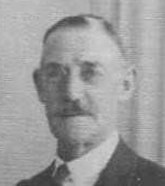 |
George Albert Wesson was born in late 1877 or early 1878 in Warwick and baptised on 3rd March 1878 at St. Paul’s Church, Warwick. He was the son of Robert Wesson and his wife Martha Jane (née Hodgetts) who were married in Warwick in 1868. George had three brothers David, Walter and Robert and two sisters Mary Jane and Sarah Annie. Walter, however, died aged 1. George’s father was a brewer. In 1879 the family lived in Parker Street, Warwick but by 1881 had moved to 36 Parkes Street in Warwick and by 1891, the year George’s mother died, to Chapman’s Cottage, Brooke Street, Leamington Priors, Warwickshire. When George left school he became a labourer and also joined the 4th (Militia) Battalion of the Warwickshire Regiment. George’s father died in 1893. On 29th November 1894 at Market Harborough George joined the Leicestershire Regiment. He stated that he was 18 years old when in fact he was a year younger. As Private 4258 he was sent to the Depot and on 8th December 1894 transferred to the 2nd Battalion. On 16th May 1896 he was transferred to the 1st Battalion and posted to Cape Colony, South Africa. On 1st October 1898 George was appointed a Lance Corporal. The 1st Battalion of the Leicesters was stationed at Glencoe, north of Natal, when the 2nd Boer War broke out in 1899. It thus formed part of the brigade of General Penn Symons, the other battalions being the 1st King's Royal Rifles, 1st Royal Irish Fusiliers, and 2nd Dublin Fusiliers. There were also at Glencoe the 18th Hussars and the 13th, 67th, and 69th Batteries of the Royal Field Artillery. Fighting commenced on 20th October 1899. A force led by General Sir William Penn Symons attacked the Boer position on Talana Hill. Then came the hurried retirement on Ladysmith. For four months the Battalion fought throughout the stubborn defence of Ladysmith, during which the garrison was reduced to almost starvation rations. After the siege began the Leicesters occupied posts on the north side. After Ladysmith had been relieved, Sir Redvers Buller moved north and the Leicesters were brigaded with the 1st Liverpool, 1st Royal Inniskilling Fusiliers, and 1st King's Royal Rifles. The 1st Battalion took part in the operations that carried the war into the Orange Free State, and the Transvaal, and was present at the storming of Laing’s Nek and the capture of Amersfort, Ermelo and Belfast, and in the operations around Lyndenberg. Towards the end of the war they did garrison duty on the Standerton-Ermelo road. On 1st June 1901 George was promoted to the rank of Corporal. He was awarded the Queen’s South Africa medal with clasps for Talana, the Defence of Ladysmith, and Laing’s Nek and Belfast and the King’s South Africa Medal with clasps for 1901 and 1902. While in South Africa George enjoyed relatively good health apart from suffering from a fever at Maritzburg in December 1897 and from contracting enteric fever at Ladysmith in March 1899. In October 1902 George was promoted to Sergeant. On 7th November 1902 George went with the 1st Battalion to Fort St. George, Madras, India. They left Port Natal on the SS Ortona and arrived in Madras in late November. After two years in Madras the battalion moved to Belgaum, Karnataka. George returned to England on 10th November 1906. He was awarded a Long Service and Good Conduct Medal with a gratuity. George was then posted to Shorncliffe, Kent, and promoted to the rank of Sergeant. On 22nd July 1907 George qualified in musketry at Hythe, Kent. He remained at Shorncliffe until at least February 1909 before proceeding to Talavera Barracks, Wellington Lines, Aldershot. On 23rd October 1911 he was promoted to Colour Sergeant. He left the 1st Battalion after eighteen years’ service and became recruiting sergeant at Loughborough. He was also noted as a regimental cricketer. On 1st October 1907 George had married Lilian Stevens at Folkestone Register Office, Kent. Between 1908 and 1924 George and Lilian had three sons George, Donald and Sidney and five daughters Violet, Ivy, Edith, Iris and Beatrix. During the First World War George’s wife and family were based in Devonport. George had rejoined the 1st Battalion in 1914 and served throughout WW1. Details of where he served, however, have been lost. In WW2 George was employed by the War Department as a civilian clerk. In 1939 George’s wife was listed as living at 110 Pasley Street, Plymouth. All three sons of George and Lilian lost their lives in WW2. George died in Plymouth, aged 68, on 12th August 1946. |
|
|
Private 32046 Arthur Webster |
|
|
17th Bn, 65th (Leicestershire) Coy, Imperial Yeomanry |
|
Arthur Webster was born in Loughborough in 1878. His parentage is uncertain. In 1891, aged 12, he was living at 11 School Street, Loughborough, with John Webster, a 89 year-old widowed painter, John Webster’s widowed daughter Emma Preston, and his widowed son-in-law William Martin and William’s four-year old daughter Florence Martin. It seems likely that Arthur was the natural child of one of John Webster’s eight daughters. Arthur became a boot hand and on 5th March 1901 attested to join the Imperial Yeomanry. By 23rd March 1901 he was in South Africa as Private 32046. He was in the 17th Battalion and part of the second contingent, the 65th (Leicestershire) Company, mainly of new recruits, many of whom had little or no military background. Arthur returned to England on 18th October 1901. He was discharged from the Imperial Yeomanry on 19th October 1901. He was awarded the Queen’s South Africa Medal with clasp for South Africa 1901. His entry in the medal rolls indicates that he was not a natural soldier as it carries the note ‘Inefficient’. What happened to Arthur after the Boer War is unknown. |
|
|
Sergeant 38041 Harry George Wheway ISM |
|
Wiltshire Yeomanry. |
|
Harry George Wheway was born in Leicester on 7th April 1878 and baptised on 24th July 1879 at St. Andrew’s Church, Leicester. He was the son of George Wheway and his wife Elizabeth (née Weston) who were married on 1st July 1876 at the church of St. Mary de Castro, Leicester. Harry had three brothers Thomas, Ernest and Joseph. Two sisters Ellen and Edith and one other unidentified sibling died in infancy.
|
|
Trooper 25660 Charles Edward Whitlock |
|
South African Mounted Irregular Forces |
Charles Edward Whitlock was born in Loughborough in the spring of 1867 and baptised on 18th June 1867 at All Saints Church, Loughborough. He was the son of Thomas Oliver Whitlock and his wife Mary Ann (née Taylor) who were married on 6th December 1857 at St. Peter’s Church, Stretton-on-Fosse, Warwickshire. Charles had three brothers Frederick, George and Arthur and five sisters Jane, Mary, Edith, Ethel and Nina. Charles’s father was a bank manager and the family lived at Bank House, 27 and 28 Market Place, Loughborough, for much of Charles’s childhood. After Charles’s father left the bank in the mid-1880s and set up as an accountant and insurance agent the family moved to Herrick Road, Loughborough. By 1891 Charles’s parents were living at 14 Charnwood Road, and in 1901 at 61 Sparrow Hill. On 23rd April 1887 Charles, who had already joined the 1st Leicestershire Volumteers, attested to join the 3rd Battalion of the Leicestershire Regiment. He was accepted as Private 2567. On 24th June 1887 he was transferred to the 17th (Duke of Cambridge’s) Lancers as Private 3290. One year later, on 17th July 1888, he was transferred to the 16th (the Queen’s) Lancers as Private 2894 and joined them at Aldershot. On 18th June 1889 he was absent without leave but was apprehended on 22nd July and given fourteen days imprisonment. On 3rd September 1890 Charles left for India with his regiment. From 1890 to 1895 he was stationed at Lucknow. While at Lucknow he suffered from debility but received two good conduct pay awards. He left India in January 1895 and was transferred to Army Reserve. He was discharged on 23rd June 1899 and became a clerk. On 4th January 1900 Charles re-enlisted at Nottingham to join the Imperial Yeomanry. He was accepted for the 12th Company of the 3rd Battalion and left for South Africa on 28th January 1900. The battalion’s first action came in the Battle of Boshof on 5th April when when the 3rd and 10th Battalions surrounded and defeated a small force of European volunteers and Boers commanded by the Comte de Villebois-Mareuil. This success was overshadowed by a disaster the next month which tarnished the Imperial Yeomanry's reputation, when its 13th Battalion was ambushed and surrounded by 2,500 Boers at Lindley on 27th May. The yeomen were besieged for four days before they finally surrendered, losing 80 killed and 530 captured. Although the defeat at Lindley reflected poorly on the yeomanry, the yeomen had fought as competently as any regular soldier, and much of the blame lay with poor leadership by Lieutenant-Colonel Basil Spragge, the regular officer commanding the battalion, and the failure of Major-General Henry Colvile to come to the aid of the yeomanry with his Guards Brigade. On 14th December 1900 at McKenzies Farm, Cape Town, Charles was discharged from the Imperial Yeomanry at his own request as he had been accepted for a transfer to the South African Mounted Constabulary. He joined his new force as Trooper 25660. The South African Constabulary (SAC) was a paramilitary force set up in 1900 under British Army control to police areas captured from the two independent Boer republics of Transvaal and Orange Free State during the Second Boer War. Until peace was agreed in 1902 the SAC was involved in military rather than policing duties, being engaged in field operations and on blockhouse lines. Once hostilities were over each troop took up its assigned position in the two new colonies as soon as possible. In this way a network of posts and patrols was established in a very short space of time. With the SAC patrolling in every direction, including the Portuguese and Tongaland frontiers. They also visited all the farms at least once a week. By the beginning of August 1902, 28 districts, 64 sub-districts and 210 stations across South Africa were occupied and the force had over 10,000 men. A medical structure was set up, with a first-aid corporal attached to each 100-man troop, a surgeon for any area where a number of troops might be stationed and an SAC hospital for each district. In November 1902, the size of the force was reduced to 6 000 men and after further reductions it was down to 4,000 men in 1906. It is not known how long Charles stayed with the SAC. Charles was awarded the Queen’s South Africa Medal with a clasp for Cape Colony. There is no evidence that Charles ever returned to England. He became a bookkeeper and accidentally drowned at sea, aged 46, on 2nd August 1913 in Zitzikama District, Humansdorp, Cape Province, South Africa. He was unmarried. |
|
Sergeant Ch192(S) William Alfred Yeomans |
 1st Bn, Royal Marine Light Infantry |
William Alfred Yeomans was born in Loughborough on 5th February 1874. He was the son of Thomas Yeomans and his wife Rachel (née Clarke) who were married on 29th October 1854 at Christchurch, Liverpool. William had three brothers Thomas, Leonard and Arthur and three sisters Mary Jane, Josephine, and Henrietta. William’s father was an engine smith. Between 1881 and 1891 the family lived at 23 Cambridge Street, Loughborough. After he left school William served a five-year apprenticeship with H.F.Young in Loughborough and became a draper. On 29th August 1897 William married Elizabeth Hannah Crooks at All Saints Church, Loughborough and in 1901 William and Elizabeth were living in Hall Croft, Shepshed, with their young daughter Dorothy. Later in 1901 they moved to Nottingham where their son Alfred was born. William attested at Nottingham on 8th January 1902 to join the Imperial Yeomanry in South Africa and was appointed Private 39795. He was sent to South Africa on 8th May 1902 and remained there until 7th January 1903. He was promoted to the rank of Corporal on 14th May 1902 and to the rank of Sergeant on 18th September 1902. He was discharged at Aldershot on 14th January 1903. He was awarded the King’s South Africa Medal with clasps for Cape Colony and South Africa 1902. While William was in South Africa his wife lived at Castle Cottage, Baxtergate, Loughborough. On his return from South Africa William was appointed manager to the Midland Warehouse Company which had shops in Broadmarsh and Chamber Street, Nottingham and the family went to live at 75 Trent Road, Sneinton. Between 1906 and 1910 they had three more children George, Edith and Ronald, but Ronald died in infancy. They later moved to 15 Trent Road, Sneinton and then to Mount Pleasant, Sneinton Hill. William was a member of the Sneinton Parish Church choir and the Sneinton Social and Musical Society. He also joined the Nottingham Branch of the National Reserve when it was formed. When war was declared in 1914 William enlisted on 10th September. Initially he joined the ranks of the Sherwood Foresters but was transferred to the Royal Marine Light Infantry (RMLI) and sent to Chatham on 17th November 1914. There he was given the number Ch192(S) and sent to the Chatham Battalion which was in intensive training at Gravesend. The battalion stayed there until the end of January 1915. During the last week of January all the Royal Marine battalions were ordered to Blandford, where the new Royal Naval Division camp was now up and running. There was still insufficient accommodation, however, at Blandford Camp, Dorset. and the marines were billetted in Iwerne Minster. Chatham Battalion were only there for a week before embarking at Devonport (with Plymouth Battalion and Brigade HQ) for the Mediterranean on 6th February 1915. They were temporarily known as the Royal Marine Special Service Force. Plymouth Battalion and the headquarters of the Royal Marine Brigade sailed on the SS Braemar Castle and Chatham Battalion on the SS Cawdor Castle. Both ships arrived at St. Paul’s Bay, Malta, on 14th February 1915, leaving on 19th February. By 25th February they had arrived at Tenedos, Greece. On 26th February they sailed for the Dardanelles where a naval bombardment of the Straits forts and emplacements was underway. The ships returned to Tenedos but were then ordered to Imbros. On 6th March the ships moved to Lemnos. On 12th March the Royal Marine Brigade was reorganised and the Royal Marine Special Service Force ceased to exist. On 18th March a contingent of Chatham Battalion (4 officers and 200 men) together with 2 officers and 20 men from Australian forces boarded Cawdor Castle in preparation for a landing. They sailed to Tenedos but this force was not used and only watched a demonstration off Gaba Tepe before returning to units on Lemnos. On 24th March the Royal Marine Brigade sailed for Port Said, Egypt, arriving on 26th and 27th March. They stayed in a tented camp at Port Said before reembarking at Alexandria for Lemnos on 7th April. On 11th and 12th April they reached Lemnos. On 16th April they moved to Trebuki Bay, Skyros, where the Division was concentrating, and on 23rd April sailed for the Gulf of Xeros. On 25th April the Royal Naval Division carried out a feint landing at Bulair while the British 29th Division landed at Cape Helles beaches and Australian and New Zealand forces at a beach near Gaba Tepe / Ari Burnu, afterwards called Anzac Cove. On 27th April ships carrying the brigade arrived of Cape Helles and on 28th April the Gloucester Castle and the Cawdor Castle were ordered to move and anchor off Gaba Tepe. Chatham and Portsmouth Battalions then disembarked and came under orders of 1st Australian Division on arrival. On completion of disembarkation the Brigade was ordered to take over No 2 Section of defences held by Australian and New Zealand forces on the western edge of Lone Pine plateau. On 2nd May the Chatham Battalion was relieved by the Australians and went into a bivouac camp. On 3rd May the battalion was ordered to move to trenches on a ridge east of Main Gully. These trenches were being enfiladed by hostile machine gun fire. Three companies advanced up the minor gullies leading off to the east of the main gully. They then charged up the steep slope of Razor Back Hill coming under machine gun and short range rifle fire from front and both flanks. Late during the forenoon the support trenches were gained and held for about 2 hours, but had to be evacuated after this period as they were closely enfiladed from the left flank, the trenches on that flank either not having been seized by our troops or having been evacuated by them. Casualties between 29th April and 3rd May were estimated at close on 300. On 4th May the battalion went into bivouac in the main gully and assisted in holding the position until 6th May. Chatham Battalion remained in the area throughout May and on 28th May achieved an advance against the enemy of about 210 yards. This advance was one of the few at Helles that did not result in a massive slaughter. Things would never be so easy again. They were then relieved by Anson Battalion. On 5th June the Chatham Battalion was ordered to reinforce the 42nd (East LancashireTerritorial Force) Division. The march was begun in the forenoon over half mile of open ground and a small nullah, the Kandli Dere, running directly towards the enemy position, and consequently enfiladed. This was apparently registered by hostile artillery, and though the advance was by sections and groups at about 200 yards distance there were a good many casualties. The battalion moved into a disused fire trench about half mile south west of a junction of nullahs called Clapham Junction before moving forward at night. They remained in the area of Anzac and Cape Helles until August when, after suffering crippling losses, the four RMLI battalions were amalgamated to form two new RM Battalions. Chatham and Deal Battalions became the 1st Battalion, Royal Marine Light Infantry, Chatham forming A and B Companies. William appears to have been wounded on 16th September and left the Dardanelles. On 1st January 1916 he was discharged from the Navy. He claimed a pension on the grounds of having heart disease. William’s wife had died, aged 45, in early 1916 leaving William with their four children aged 16 to 6. In the summer of 1917 William married Elsie Williamson in the Basford registration area of Nottinghamshire. In 1939 William was a licensed victualler and landlord of the Smiths Arms, 5 Radford Road, Hyson Green, Nottingham. With him were his wife Elsie and his widowed brother-in-law William Williamson, a barman. William Yeomans died, aged 82, in August 1958 in Nottingham. He was buried in Church (Rock) Cemetery, Nottingham, with his first wife. |