|
H. Orton |
|
|
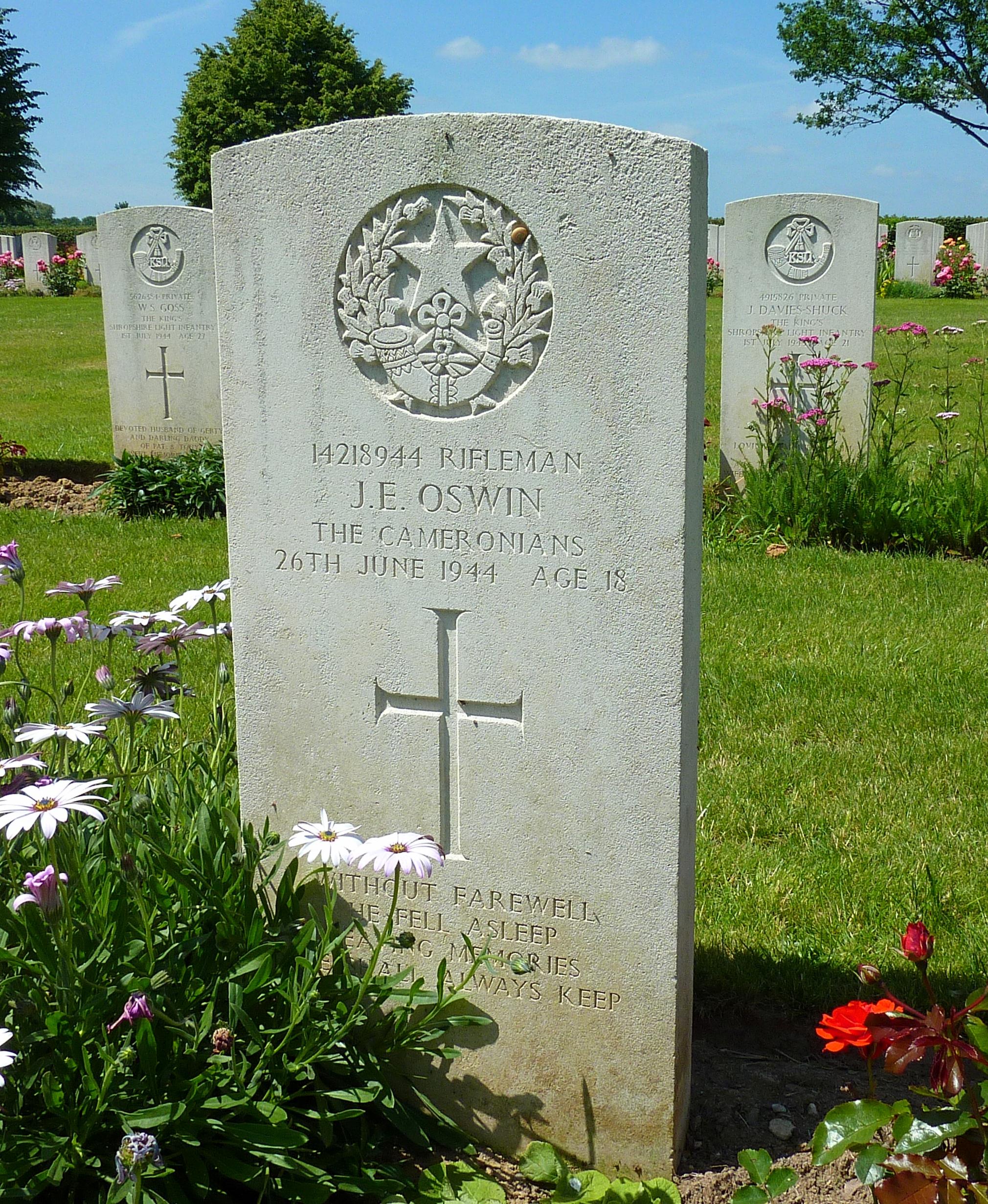
Rifleman 14218944 John Edward Oswin |
|
|
9th Bn., Cameronians (Scottish Rifles) Died on 26th June 1944, Aged 18. Buried St. Manvieu War Cemetery, France, VI. H. 8.
|
|
|
John Oswin was born in Q4 of 1925, to parents John and Lilian (née Tomlinson). He had a sister, Dorothy, who served in the ATS. At the time of John’s death the family home was in Woodhouse Lane, Nanpantan. John worked at the Brush before joining up; he volunteered aged only 16. He also served as a part-time fireman. He was one of 18 men from his regiment killed in Normandy between 26th and 29th June 1944. His parents were informed of his death by a friend also serving in the war. |
|
 |
|


|
R. Overton |
|
|
Major 47690 Peter William Paget M.C. |
|
|
Royal Scots Greys (2nd Dragoons), Royal Armoured Corps Died on 11th July 1944, Aged 35. Buried Banneville-La-Campagne War Cemetery, XI. C. 1.
|

|
|
Peter Paget was a member of a Loughborough gentry family, born in 1909. In 1911 he, his parents William and Beatrice, and sister Joan, lived at Nanpantan Hall with eight servants to look after them. William Paget was a keen huntsman, and for several years was joint Master of the Quorn Hounds, and young Peter was taught to ride to hounds from the age of three. His father was killed in a hunting accident in 1928. Peter Paget attended Kent House School in Eastbourne, then Eton College, where he represented the school at rugby and played polo. He followed this with Trinity College Cambridge, where, like his father, became Master of the Trinity Foot Beagles. He also continued to play polo. There were big celebrations in 1930 when Peter turned 21, an event that was reported in local newspapers. Tenant farmers, cottagers and estate workers attended a two day party at Loughborough Town Hall. Hunting with the Quorn continued to be a passion. He later became Master of the North Atherstone. After leaving Cambridge, Peter Paget served with the Royal Scots Greys and later, on taking up residence at Nanpantan Hall, served with the Leicestershire Yeomanry, where he was a popular officer. When the war broke out he rejoined his old regiment. He served in the eighth Army in the North African campaign, was awarded the Military Cross, and was wounded at El Alamein. Peter’s sister Joan, who like him remained single, served with the Red Cross during the war. She died in 1985.
|
|
|
Sergeant 366401 Alfred Hubert Payne |
|
|
53 Sqdn., Royal Air Force Died on 27th May 1940, Aged 30. Buried Faumont Churchyard, France.
|
|
|
Born in Huddersfield in 1910, Alfred was one of the three sons of Arthur and Clara Payne, who came from Leicester and Nottingham respectively. Arthur Payne was a factory manager. At some point Arthur and Clara relocated to Loughborough and lived in Albert Promenade. Arthur died in 1923 and Clara later moved to 112 Station Street. Albert Payne was killed flying in a Blenheim bomber while serving in 53 Squadron of the RAF. It took off on a recce mission over northern France and Belgium and was shot down around 06.30 hours by a Luftwaffe aircraft. It crashed near Faumont, north of Douai, killing all three crew.Clara Payne outlived all three of her sons, dying at the age of 100 in 1971.
|
|
|
Sergeant 1583937 Geoffrey Oswald Payne |
|
|
623 Sqdn., Royal Air Force Volunteer Reserve Died on 8th November 1943, Aged 20. Commemorated Runnymede Memorial
|
|
|
Geoffrey was born on 15th July 1923 to parents Ernest and Hilda Payne. Their younger son was called Neville. Ernest Payne was assistant justices clerk in Loughborough and in 1939 Geoffrey was working as a laboratory assistant. Serving in Bomber Command, based at Downham Market, Geoffrey Payne died when the Stirling in which he was flying was lost without trace off the French coast, en route from Brest to Biscay. The aircraft was on a mine-laying sortie. All seven crew were killed.
|
|
|
Corporal 4972537 Edward Vernon Peacock |
|
|
2nd Bn., Sherwood Foresters (Notts and Derby Regiment) Died on 24th April 1943, Aged 29. Buried Massicault War Cemetery, Tunisia, III. L. 18.
|
|
|
Edward was born in Loughborough in 1914 to Walter and Martha Peacock. Walter had been a baker but on the 1921 Census was listed as 'disabled soldier'. Edward had three older sisters and two older brothers. Edward joined the regular army around 1931, serving in a wide range of postings including India, Jamaica, Channel Islands, Egypt and the Sudan. After leaving the Army he worked for a short time at Wright & Sons in Loughborough, but was recalled to the army when war broke out. He took part in the Dieppe raid and had been evacuated from Dunkirk. He was well liked and was described as a typical soldier who saw no danger. Just before Christmas 1942 he married Kathleen Grace Palmer. Edward Peacock took part in the Tunisian campaign of 1943. At the end of April, fighting was fierce as the Allies struggled to break through the Axis line. Edward Peacock was just one of 37 men from his regiment alone who were killed on 24th April.
|
|
|
Signalman 2595202 Sydney Peat |
|
|
Royal Corps of Signals
|
|
|
Sydney was born on 19th June 1912 in Loughborough, to parents John and Millicent Peat. He married Florence Busby in 1939, they lived at 164 Eltham Road in Nottingham, and Sydney was a newspaper reporter. He served in the Royal Corps of Signals but died in Ransom Sanatorium in Mansfield at the age of 30. This was a hospital for treating those with tuberculosis so it’s almost certain this was the cause of Sydney Peat’s early death. |
|
 |
|
|
Trooper 10600119 John Herbert Peaty |
|
|
56th Regt., Reconnaissance Corps, R.A.C.
|
|
|
Born on 27th February 1914, in Loughborough, John’s parents were Charlie and Annie Peaty It was a big family with nine children. Aged 21, John Peaty incurred the wrath of the Lord Mayor, when he and three others were fined £1 for speeding on their motorcycles; doing more than 30 mph. He married Kathleen Pearl Brookes in 1936, their daughter Marion was born later that year, and son John in 1943. By 1939 the couple were living in St Albans, John employed as a hosiery machinist. Little is known about John’s service in the 56th ‘Recce’ Corps, but a war diary of the regiment posted on a forum on ww2talk.com shows that during the last days of November 1944 the men were in billets carrying out maintenance work. Therefore, it could be that Trooper Peaty’s death was due to accident or illness. |
|
 |
|
|
Trooper 14489619 John Geoffrey Peberdy |
|
|
15th/19th The King's Royal Hussars, Royal Armoured Corps
|
|
|
John was born in Loughborough in 1926 to parents Howard and Lucy Peberdy. He was their only son, but they had daughters Peggy and Sheila. Howard Peberdy was a bus driver. John attended Loughborough Grammar School from 1937 to 1942. He had come from Cobden Street School on a Government scholarship. His Grammar School record was described as ‘solid’. After school he immediately joined the army, serving with The King’s Royal Hussars, Royal Armoured Corps. After the war ended, he remained in Egypt where his regiment was protecting the Suez Canal. John Peberdy was killed there during riots when anti-British resentment escalated on 16th March 1946. |
|
 |
|
|
Craftsman10559601 James William Pegg |
|
|
6 Tank Bde. Workshops, Royal Electrical and Mechanical Engineers Died on 24th June 1944, Aged 24. Buried Lenham Cemetery, UK, Grave 35.
|
|
|
Born in Loughborough on 30th September 1920, James's parents were William and Winifred Pegg. His older sister was Minnie May, his younger sister Frances, and in 1921 the family lived at 6 Railway Terrace. William Pegg worked at the gas works. By 1939 James Pegg was working as a switch trolley fitter at Herbert Morris. The family had moved to 41 Falcon Street. James joined the army in 1941 and served in the Royal Electrical and Mechanical Engineers. In 1944 he was in the Tank Brigade Workshops, which had just moved from Worksop to Lenham in Kent. The men were preparing tanks for service in Europe and had high levels of technical skill. In June 1944 the Germans unleashed the first of the V1 flying bombs, or ‘doodlebugs’ over the south east of England. The Tank Brigade Workshop was directly in their flight path. Around 6am on 24th June, a V1 was shot down by the RAF over nearby Charing Heath. It landed on the Tank Workshop, immediately killing 46 men, fatally injuring six more and injuring many others. This ’incident’ was handled in secrecy to avoid damaging public morale. A mass burial was carried out the following day and took place in darkness, lit only by lanterns. The dead were put into a mass grave in Lenham village cemetery, but the positions of the bodies were noted. The bomb killed about a third of the unit, many of them skilled and experienced craftsmen, such as James Pegg would have been. A permanent memorial to the dead men was constructed in 1963.
|
|
|
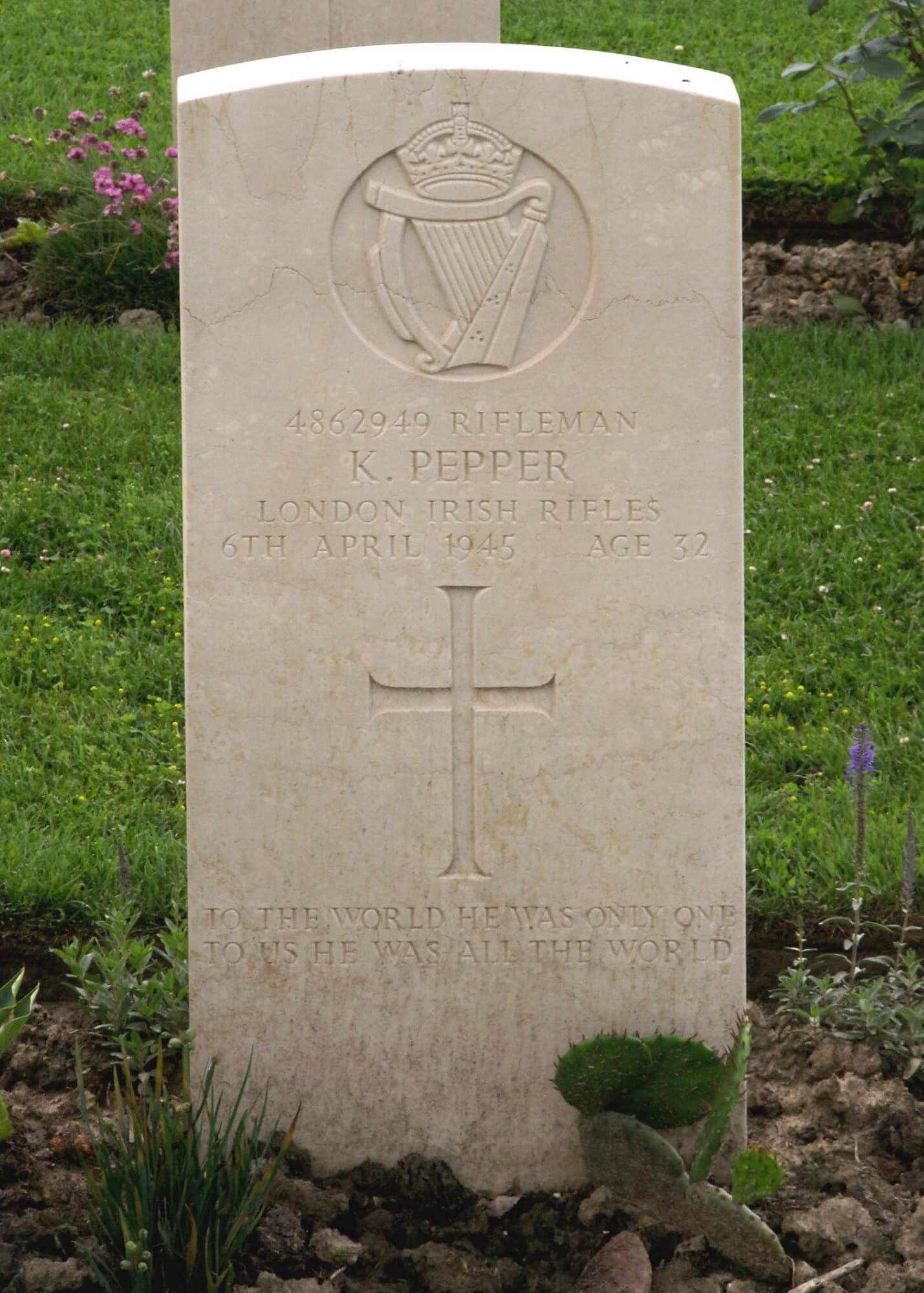
Rifleman 4862949 Kenneth Pepper |
|
|
1st Bn. The London Irish Rifles, Royal Ulster Rifles
|

|
|
Born on 13th December 1913, Kenneth's parents were Frederick and Beatrice Pepper. He had sisters Muriel and Marjorie. In 1921 the family were living in Barnsley in Yorkshire, where Kenneth was born. Father Frederick, a colliery manager, had been born in Coalville, while Beatrice came from Hampstead, London. By 1939 the Peppers had moved to 6 Garton Road, Loughborough. Frederick was described as a chronic invalid, and died that year, aged 52. Kenneth was by now working as an assistant at MacFisheries in Loughborough High Street. In the army, Kenneth Pepper took part in the invasion of Sicily and the landings at Salerno. After that he served in the Italian campaign with the Fifth Army and then in the Middle East. He was killed in the Battle of Argenta Gap in northern Italy, one of ten men from his regiment who died on 6th or 7th April 1945. |
|
 |
|
|
Driver T/221193 Samuel Pepper |
|
|
Royal Army Service Corps Died on 6th May 1944, Aged 33. Buried Loughborough Cemetery, 373/25.
|
|
|
Samuel, born 2nd November 1910 to Frederick and Eliza Pepper, was one of a family of seven. He was born in Loughborough but by 1921 the family had moved to Hoton. He married Fanny Freeman in 1934 and they lived at 9 Regent Street, Samuel working as a lorry driver for a fruit supplier. It was ironic that his death while serving in the RASC was due to an accident involving a lorry. Samuel was not driving, but the circumstances of the accident do point to personal negligence on his part. He apparently liked to keep his khaki army blouse clean, and on the fatal journey attempted to stow it safely under his seat in the driver’s cab. To do this, he climbed out onto the running board of the moving 50-ton, fully laden tank transporter, lost his balance and fell under the wheels of the huge vehicle. He was killed instantly. There was an inquest at Hatfield, where the accident happened. The transporter driver, Leonard Sharp, said that he did not pay much attention as he was intent on driving, and “the next time I looked at him he was disappearing as he fell back out of the door.” |
|

|
J. C. Pitt |
|
|
Gunner 326685 John (Jack) Pollard |
|
|
154 (The Leicestershire Yeomanry) Field Regt., Royal Artillery Died on 29th June 1941 Aged 22. Buried Loughborough Cemetery, 346/3. |
 |
|
John Pollard was born in Q4 of 1918. His mother was also called Pollard, so she was not married to her son’s father at the time. In 1921 little John (Jack) Pollard was living in the home of his grandparents John and Clara Pollard at 72 Albert Promenade, Loughborough. Their daughter Annie, aged 28, was another member of the household and she was John’s mother. Annie married Charles Joliffe in 1925, and they had a daughter, Phyllis, born in 1930. At the time of John’s death a newspaper report named Mrs. Joliffe as living at Rectory Place. He was her only son. Jack served in the Leicestershire Yeomanry and may also have been in the Territorials. In 1940 he married Mabel Sharpe. He died in Aldershot Hospital; a newspaper report said that he had been ill for some time, and that Mabel had been at his bedside for five weeks. |
|

|
Flight Sergeant 546681 Alexander Philip Price D.F.M. |
|
|
106 Sqdn., Royal Air Force. |
|
|
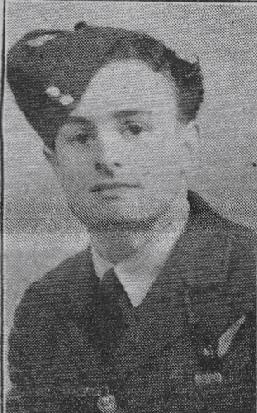
Born in 1919 to parents Harry and Dorothy Price in Hathern, Alexander had an older sister, Margaret. Harry Price worked for the Board of Guardians, and later became a solicitor’s clerk. Alexander attended Loughborough Grammar School from 1930 to 1934, where he was a valued member of the school’s 1st X1 soccer team. His academic record however left something to be desired. ‘Too talkative’….not good enough….must improve’ were some of the comments on his reports. He joined the RAF in 1937, when he was 19. Unlike his school years, his career with the air force was marked with great success, and he qualified in various examinations and tests for his responsible duties. He continued his sporting activities and was successful in long distance running in RAF competitions. He was engaged in operational flying from the beginning of the war, first on leaflet raids and reconnaissance. He was awarded the Distinguished Flying Medal for gallantry, when his plane received serious engine damage from gun fire when only 500 feet from the ground. He and his crew managed to bring the plane across the North Sea and landed safely on the coast. He was reported missing on 6th August 1942 after leaving RAF Coningsby. His aircraft, a Handley Page Hampden, had been shot down by a night fighter near Arnhem during a raid on Mannheim. It crashed onto a house and two Dutch civilians were killed. His father received a letter from the Officer Commanding the Squadron to which Sergeant Price was attached, saying: "Your son was one of the outstanding members of my Squadron, which, in the capacity of wireless instructor, he had served well for the past nine months and his loss leaves a space not easily filled. He only recently returned to flying duties and I have no doubt that he would have again displayed the characteristics of efficiency and courage which marked his first tour of operational flying and deservedly earned him the Distinguished Flying Medal. He was a most popular member of the Sergeants' Mess and had many friends everywhere who were all deeply sorry to hear of his loss and all hope that there will soon be some good news concerning him". Sadly, his parents and friends did not receive any good news; Alexander Price was killed on 6th August 1941 |
|
 |
|
|
Private 14892356 A. J. Priestley |
|
|
|
|
|
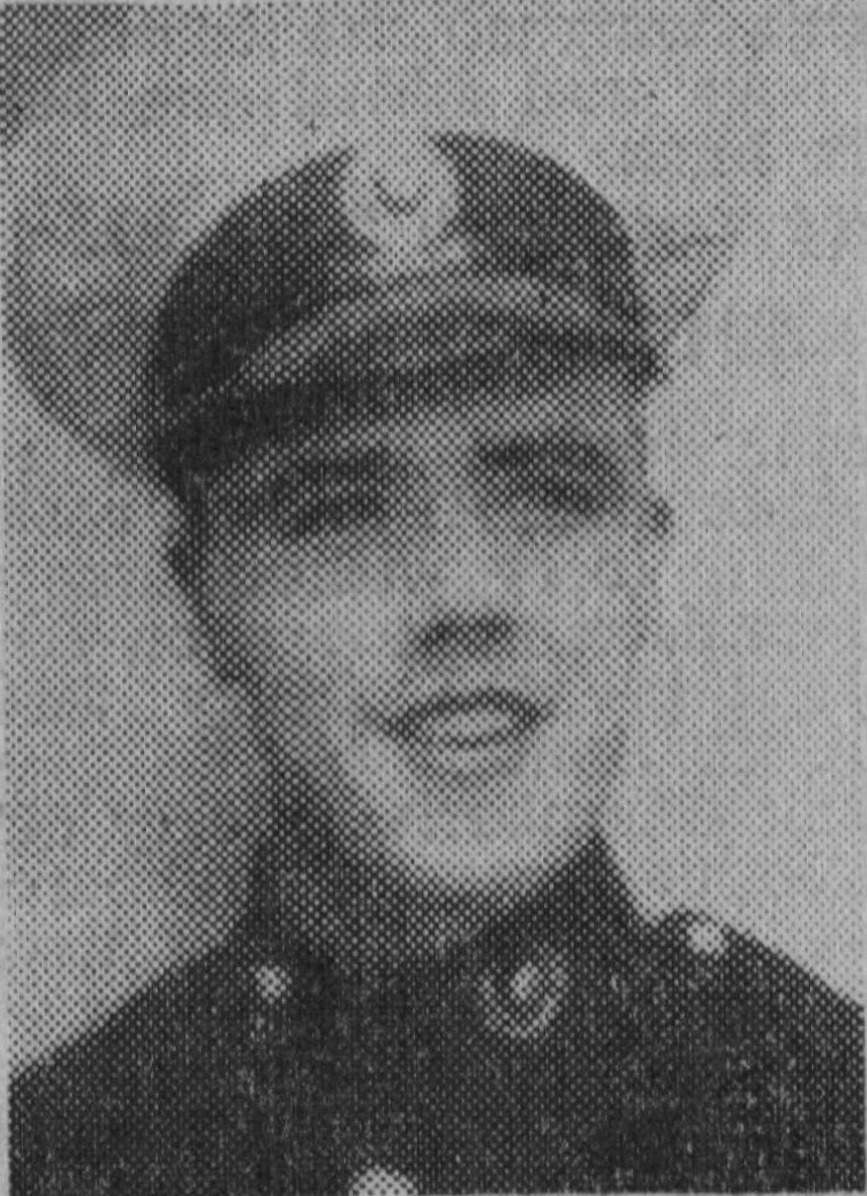
Albert was born on 16th November 1926 in Ashby-de-la-Zouch. His parents were John Priestley and Harriet (née Johnson). In 1939 he was a college student, aged 13, living with his widowed mother at 20 Palmer Avenue Loughborough. At some point he also worked at the Brush, where he continued with his sports by playing in their cricket and bowling teams. He died after the war ended but it is not known when he joined up. He wouldn’t have been conscripted for National Service as it was not compulsory until 1949. The 2nd East Lancashires were certainly in India in 1947 during Partition. There was much violence and bloodshed and we can assume that Private Priestley was caught up in this. |
|
 Photo courtesy of Asia War Graves.com |
|
|
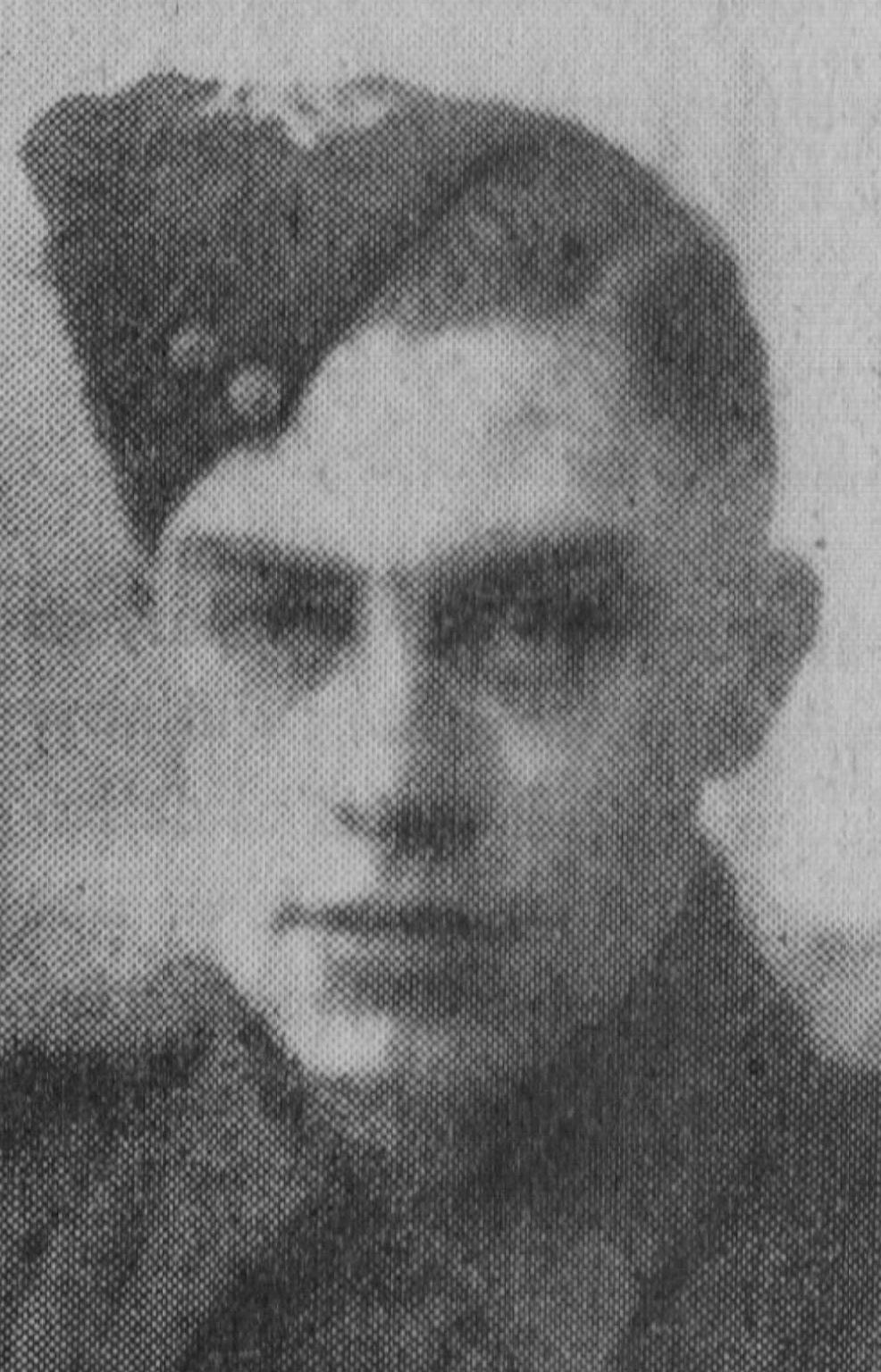
Private 4859773 John Norman Priestley |
|
|
1st Bn., Leicestershire Regiment Died on 12th February 1942, Aged 23. Commemorated Singapore Memorial, Column 66.
|
|
|
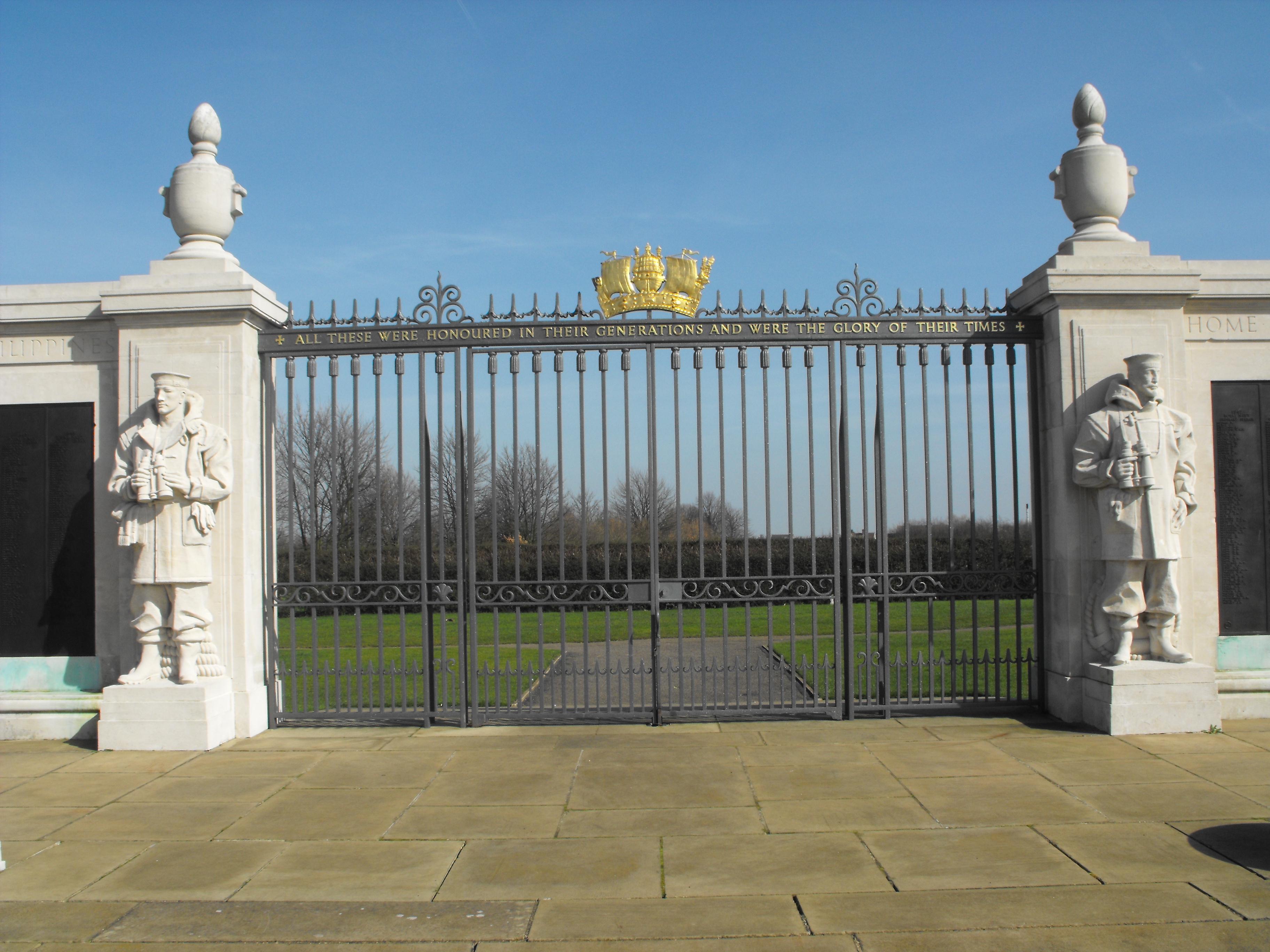
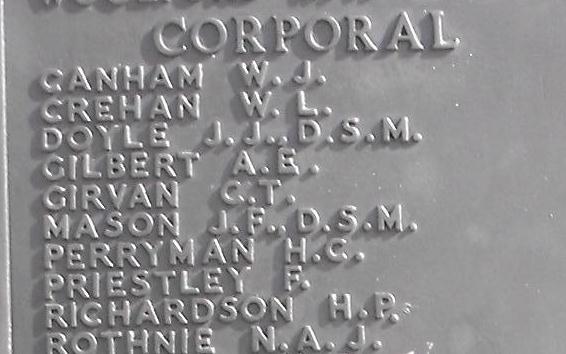
John was born in Loughborough in 1919 to parents John and Nellie Priestley. His father was a compositor and in 1921 they lived at 137 Derby Road. Young John went to Rosebery School and Loughborough College School of Art. Later the family moved to 84a Knightthorpe Road. He enlisted in the Leicestershire Regiment in July 1939 and served in Norway. He was reported as missing but managed to escape into Sweden, where he was interned for several months. Later he served in India and Malaya, and was reported as missing, presumed dead, after the fall of Singapore. |
|
 Photo courtesy of Asia War Graves.com |
|

|
Sapper 2117196 Frederick James Purdy |
|
|
626 Field Sqn., Royal Engineers Died on 9th May 1945, Aged 25. Buried Udine War Cemetery, Italy, II. C. 12. |
|
|
In 1921, Fred Purdy, aged 1 year 5 months, was living in Shepshed with parents James and Elsie and older sisters Elise and Florence. His father was a millwright and Fred was later employed by William Moss. In 1941 Fred married Loughborough girl Olive Priestley and their daughter Caryll was born in 1943, in Manchester. Olive’s brother Frank was in the Royal Marines and was killed in action on 20th November 1942. He too is commemorated on the Carillon.Fred joined the Army around 1941, serving with the Royal Engineers. At the tail end of the war he was serving in Italy with 626 Field Squadron. A fellow soldier from the squadron remembered the upbeat mood amongst the men on VE Day, “everybody thinking that there would be no more trouble and looking forward to peacetime again.” However, the following day some of them were put to work repairing a bridge near the village of Pontebba, northern Italy, which had been damaged by enemy action. Part of the bridge collapsed as they worked, killing Frederick Purdy and 22 others.
Diary entries from another sapper in the squadron record the events in stark detail.
Fred Purdy and his fellow Royal Engineers who perished in this accident are buried in Udine War Cemetery, Italy. |
|