|
Flying Officer 150263 John Francis Anthony Rayns
|
|
Pilot 148 Sqdn. Royal Air Force Volunteer Reserve
Died on 28th November 1944, Aged 21.
Buried Udine War Cemetery, Italy, I. B. 3.
|
|
John (‘Jack’) Rayns was born in 1923, but possibly not in the UK. On 25th November 1926, 3-year-old John embarked on the Prins de Netherlanden bound for Batavia, Java. He travelled with his father Alfred Horace Rayns (‘planter’), his mother Johanna, sisters Wilhemina, Katherine, Mabel and brother Donald. Their UK address was given as Bedford Park, London W4, but they were headed for Sumatra.
Given the names of his mother and one of his sisters, plus the fact that Sumatra was under Dutch control at the time, it’s possible that John was born in the Netherlands or in Sumatra. His father managed a rubber plantation there.
The family obviously returned to the UK as John was educated at Rawlins Grammar School in Quorn and, from 1934 to 1939, Loughborough Grammar School. He played in the Grammar School cricket team where he was ‘at times very effective….but unreliable in the field.’
In 1939 the family were living in Barrow-upon-Soar (although John was not on the Register).
At the time of John’s death his parents had moved to Barkestone-le-Vale, Nottinghamshire.
He received his pilot’s training in the U.S.A. and Canada and was granted a commission immediately on gaining his wings in February, 1943.
On his return to the UK he served for some months at various aerodromes and then volunteered for special service overseas. He left for Italy in April 1944, when he joined 148 Squadron. Much of his work entailed landing behind enemy lines, especially in Greece, and for some time he was stationed in Corsica.
148 was a special duties squadron. It was assigned to the Balkan Air Force where it dropped arms and agents into the Balkans in support of the partisans. When the squadron was not involved in special duties, it carried out bombing operations with No. 205 Group against Italy and southern Europe. The squadron would go on to supply resistance groups in Poland including drops during the Warsaw Uprising.
The RAF Commands website gives details about John Rayns’s final mission. It was to “deliver 3 passengers to enemy territory, Northern Italy.” The word passengers suggests civilians; perhaps resistance or partisan members? The aircraft, a Mustang, although escorted by Australian Air Force ‘planes, met with what we would now call friendly fire when it was shot down by an over-zealous USAF pilot in a Mustang. It was 20 miles north east of Venice. All its occupants were killed.
|
|
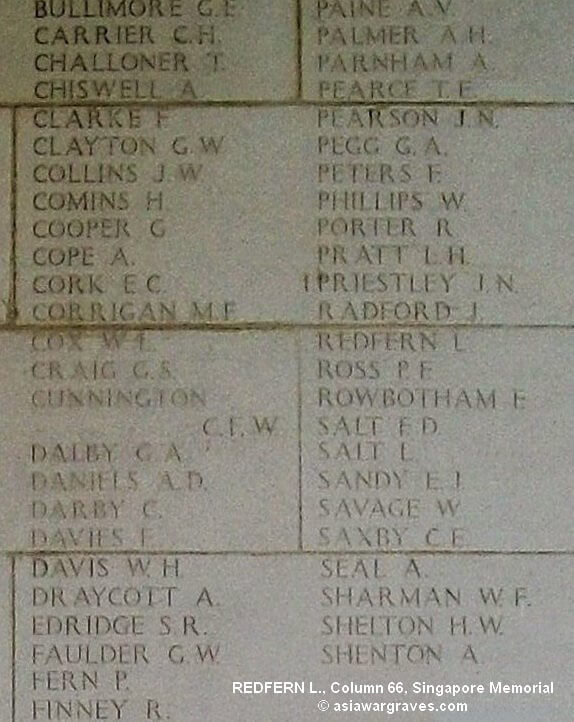
Private 4858120 Leonard Redfern
|
|
1st Bn., Leicestershire Regiment
Died on 14th December 1941, Aged 24.
Commemorated Singapore Memorial Column 66.
|
|
The small amount of information available about Leonard Redfern is that he was born in Nottingham in 1917, enlisted in the Leicestershire Regiment on 7th August 1936, and was serving from 1st September 1939. He served in India and Malaysia, dying in the Malaya Campaign.
|
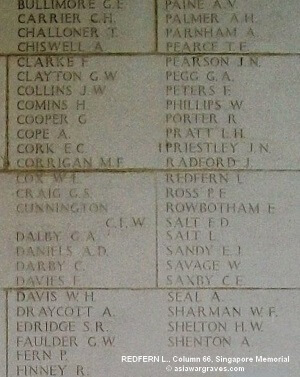 Photo courtesy of Asia War Graves.com
 |
|
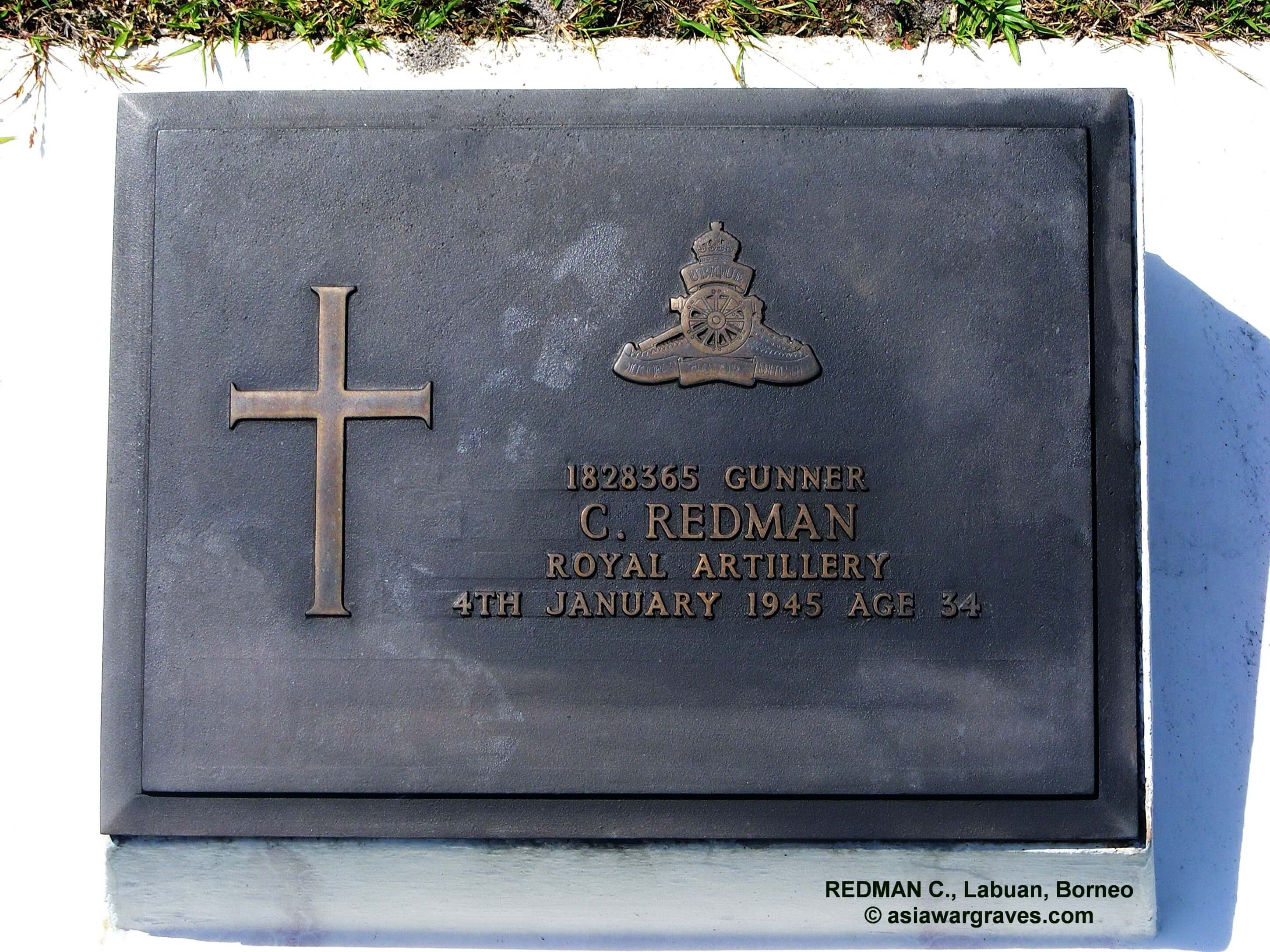
Gunner 1828365 Cyril Redman
|
|
21 Lt. A.A. Regt., Royal Artillery
Died on 4th January 1945, Aged 34.
Buried Labuan War Cemetery, Malaysia, U. C. 13.
|
|
Cyril was born in Loughborough on 22nd August 1910, to parents Alfred and Beatrice Redman, living at 35 Tyler Avenue. He had a brother and a sister.
In 1937 he married Joyce Soars, their son Brian was born in 1938, and in 1939 they were living in Loughborough at 9 Edward Street, Cyril employed as a hosiery machinist making art silk stockings.
Serving in the Royal Artillery, Cyril became a prisoner of war in Java, courtesy of the Japanese. He died of malaria at a place called Sandakan. This POW camp was established in July 1942, and in 1943, 770 British soldiers (amongst others) were sent there. Cyril Redman may have been amongst them. The prisoners suffered much cruelty at the hands of their captors, one punishment being to be locked into a cage about the size of a dog kennel for up to 30 days. Diseases such as malaria, dysentry and beriberi were standard.
The prisoners were set to work building an airfield, but in January 1945 work on the airstrip was completely stopped after bombing by allied forces. Also in the same month, a group of about 470 prisoners were sent from there by the Japanese on a forced march toward the town of Ranau, and it’s likely that Cyril Redman was included. The unfortunate men were those deemed fit enough to carry supplies over marshy and jungle terrain.
This march and others became known as the Sandakan Death Marches and 2,434 allied POWs died as a result of these atrocities. The Japanese camp commanders were tried for war crimes and hanged or shot in 1946.
|
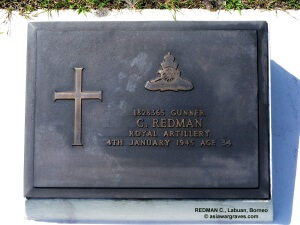 Photo courtesy of Asia War Graves.com
 |
|
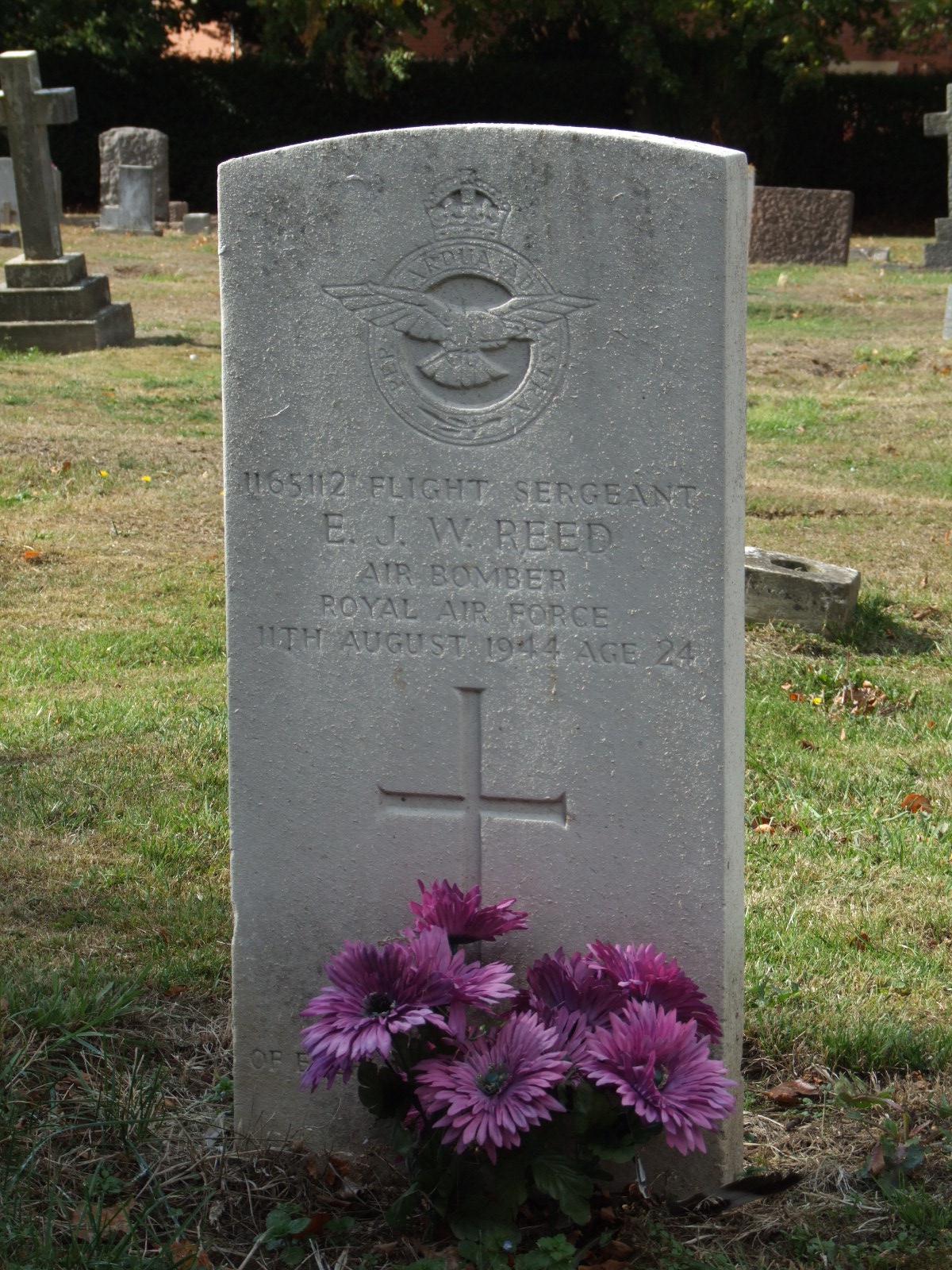
Flight Sergeant 1165112 Ernest John Watts Reed
|
|
12 Sqdn., Royal Air Force Volunteer Reserve
Died on 11th August 1944, Aged 24.
Buried Loughborough Cemetery,379/42.
|
|
Ernest Reed was born in 1920 to John Henry and Nellie Reed (née Swann), in Southgate, London. In 1921 they were living at 22 Frederick Street, Loughborough, John working as a wholesale draper.
Ernest attended Loughborough Grammar School from 1931 to 1936. His report said he made a ‘good start….must be higher next term.’ He left to become a hosiery apprentice with Downings in Leicester.
In 1939 Ernest was at the same address with his parents and Constance Swann (a relative of his mother?). In 1943 he married Nancy Margaret Chappell and they may have had a child.
Serving in Bomber Command, he took off from Wickenby on a mine laying operation over the Biscay ports, flying in a Lancaster. The aircraft returned but crashed on attempting to land at Aston Down airfield in Gloucestershire. Two of the crew survived, but sadly, not Ernest Reed.
|
|
|
|
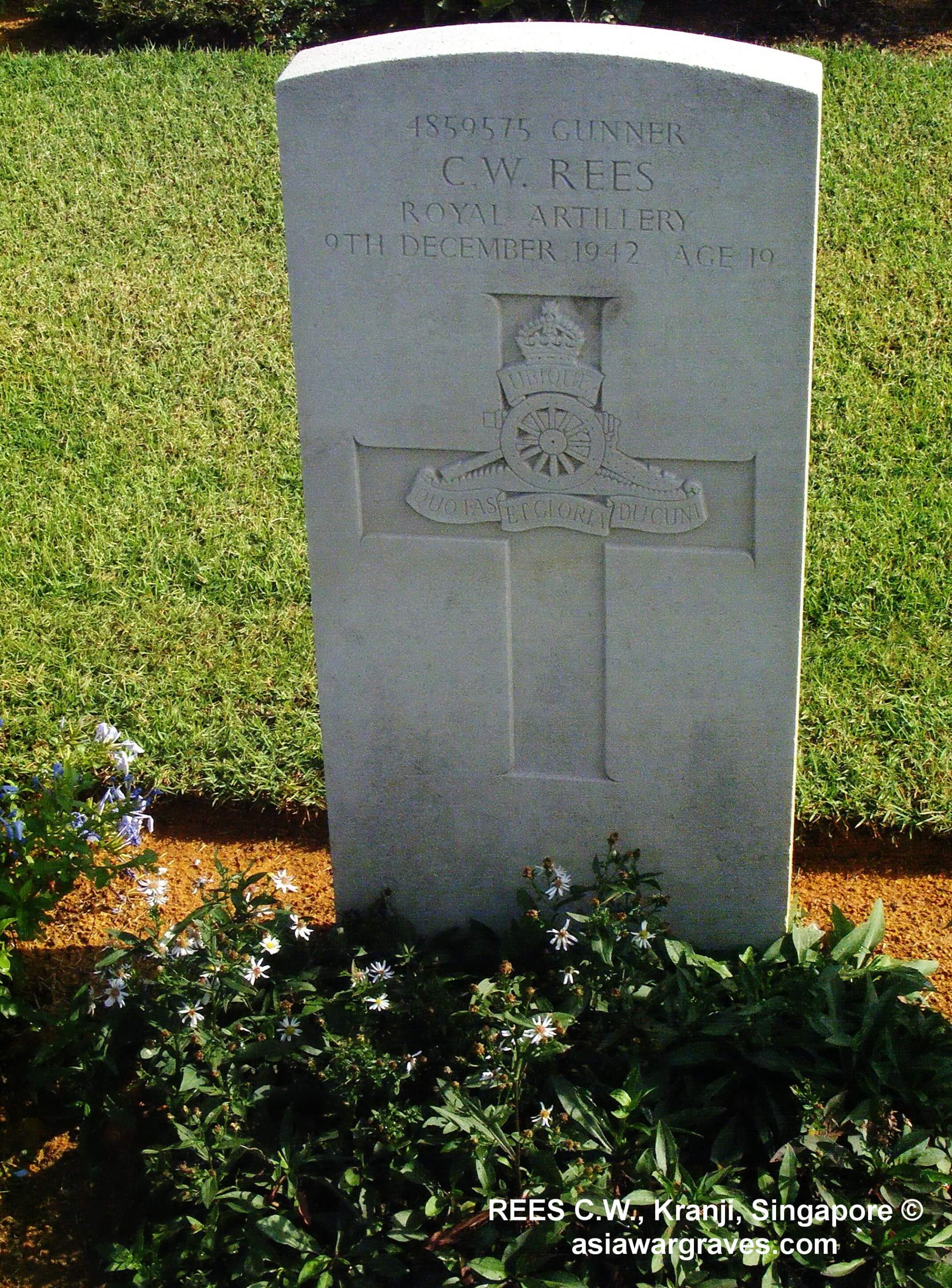
Gunner 4859575 Clifford William Rees
|
|
Royal Artillery, 9 Coast Regt.
Died on 9th December 1942, Aged 23.
Kranji War Cemetery, Singapore, 13. B. 10.
|
|
|
Clifford William Rees was born in Glamorgan in 1919. Details of his parents are lacking, except that his mother’s maiden name was Thomas.
By the time Clifford died his parents had moved to 2 Holmfield Avenue, Loughborough. From 1935 he was employed at M. Wright and Sons.
He enlisted in the Royal Artillery in 1939, and was taken prisoner after the fall of Singapore in 1942, dying in a Japanese POW camp.
|
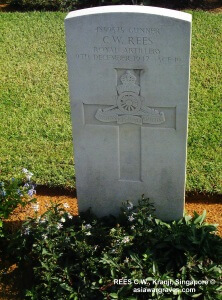 Photo courtesy of Asia War Graves.com
 |
|
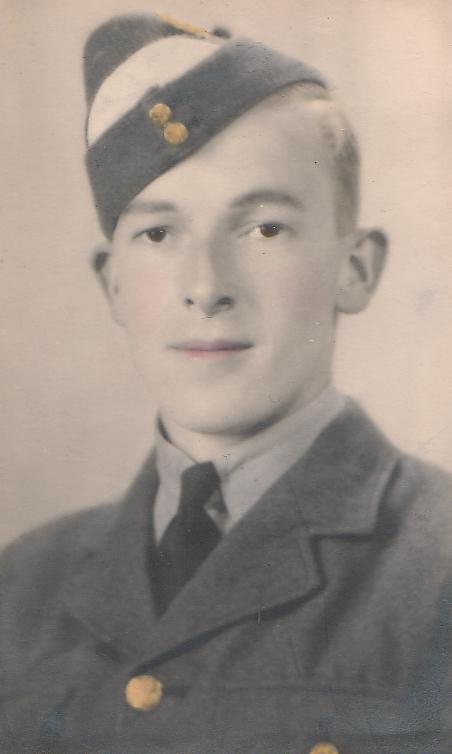
Flight Sergeant 1232122 George Stephen Roadley
|
|
102 Sqdn., Royal Air Force Volunteer Reserve
Died on 24th August 1943, Aged 20.
Buried Loughborough Cemetery, 379/17.
|
|
|
George was born in Loughborough on 27th January 1923, to Leon and Gertrude Roadley. He had two brothers and two sisters. Gaining a Storer Scholarship, George was able to leave Cobden Street School and attend Loughborough Grammar School from 1934 to 1939.
In 1939 the Roadleys lived at 5A Peel Street. Leon Roadley was a dairyman and young George was an apprentice engineer at the Empress Works. In the early years of the war he was a cycle messenger for the Auxiliary Fire Service.
He began his pilot’s training in Brough in 1941 when he was just 18, learning his skills in a tiny Tiger Moth. Further training took place in the USA, and he reached America via Canada by sea, as part of convoy. This in itself was highly dangerous, with U-boats prowling and attacking allied shipping.
He returned to 24 Operational Training Unit in the UK before being posted to No. 102 (Ceylon) Squadron, a Halifax unit based at Pocklington, Yorkshire, in May 1943.
Serving in Bomber Command, his first pilot’s mission was on 26th-27th March, to Orleans, 80 miles from Paris, to drop nickel strips to distort enemy communications. On 23rd-24th May he went on a raid to Essen, followed a few weeks later by more raids on Essen, Wuppertal, Aachen, Cologne, Essen, Gelsenkirchen and Hamburg.
This young pilot – still only 20 – had some close escapes in the following weeks.
During a trip to Mont Bielliard, he was compelled to land at Harwell ('Pilot hatch blew open'). On his next operation to Nuremburg on the night of 10th-11th August, he was forced to land at Ford, after the starboard engine of his Halifax was hit and set on fire. His penultimate sortie, on the night of 17th-18th August 1943, was the famous strike against the enemy rocket research establishment at Peenemunde, where the V2 rocket was being developed. George Roadley piloted a Halifax JD-176, one of 595 bombers sent on the mission.
His final and fatal mission was to Berlin, on one of 727 aircraft (of which 56 were lost). Mistakes were made en route and Berlin’s flak and fighter defences were formidable. Nothing was heard from him or the crew after they took off from Pocklington at 20.26 hours. George’s body was later recovered from the North Sea, so it’s assumed he was shot down on returning from Berlin. His was the only body to be found.
In his short life and RAF career this young man survived some hair raising experiences. Perhaps he felt invincible; he was certainly very brave.
A 2004 newspaper article about George Roadley gives us some further clues about him. On his call up in July 1941 he was sent to the Air Crew Receiving Centre in Lord’s Cricket Ground. While in London he was able to see some of the devastation wrought by the Blitz and this motivated his ambitions to serve.
|
|
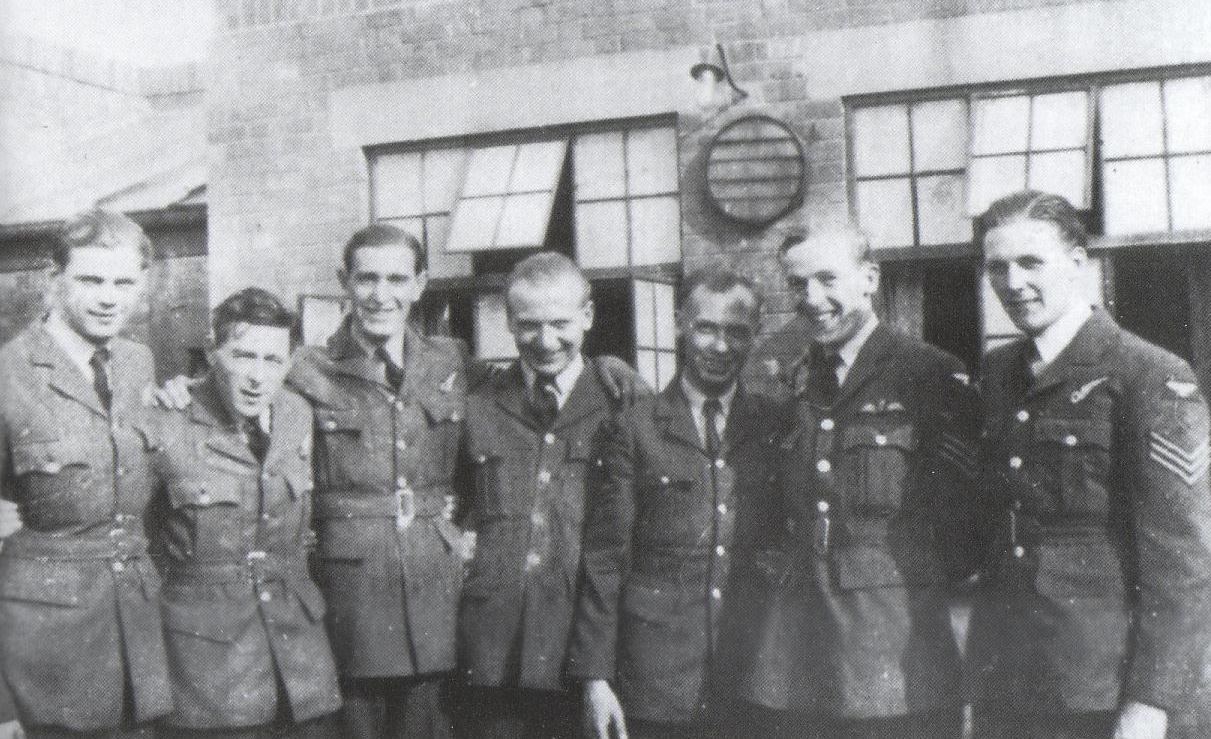
George's crew on the last flight. From left to right;
Bill Jennings (Navigator), Norman Webb (Gunner), Bert Roberts, (Engineer), Eric Woodrow (Gunner), Johnny Chalkey (Wireless Operator), George Roadley (Pilot) and Ron Roberts (Bomb Aimer).
|
|
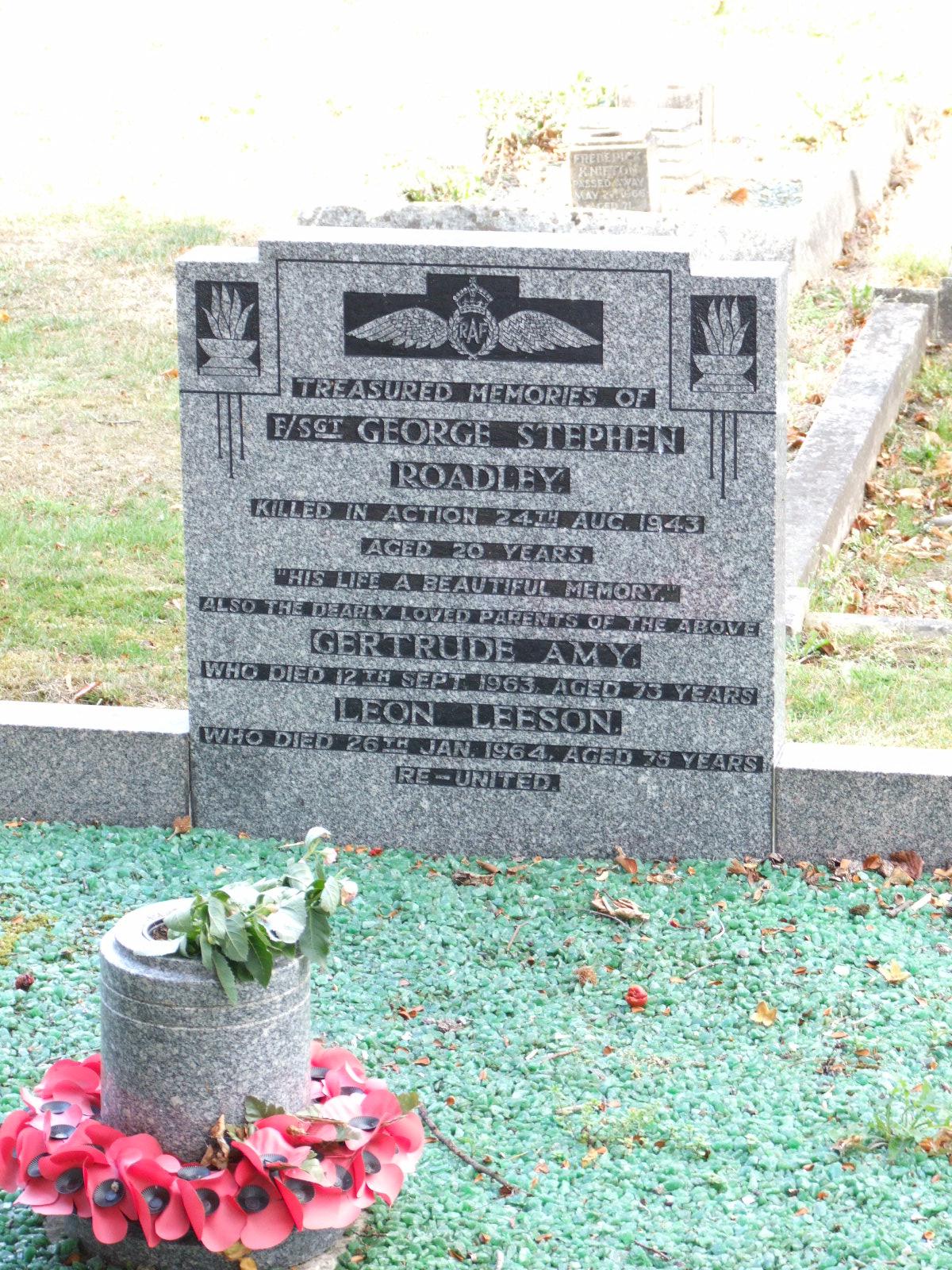
George's grave Loughborough Cemetery
|
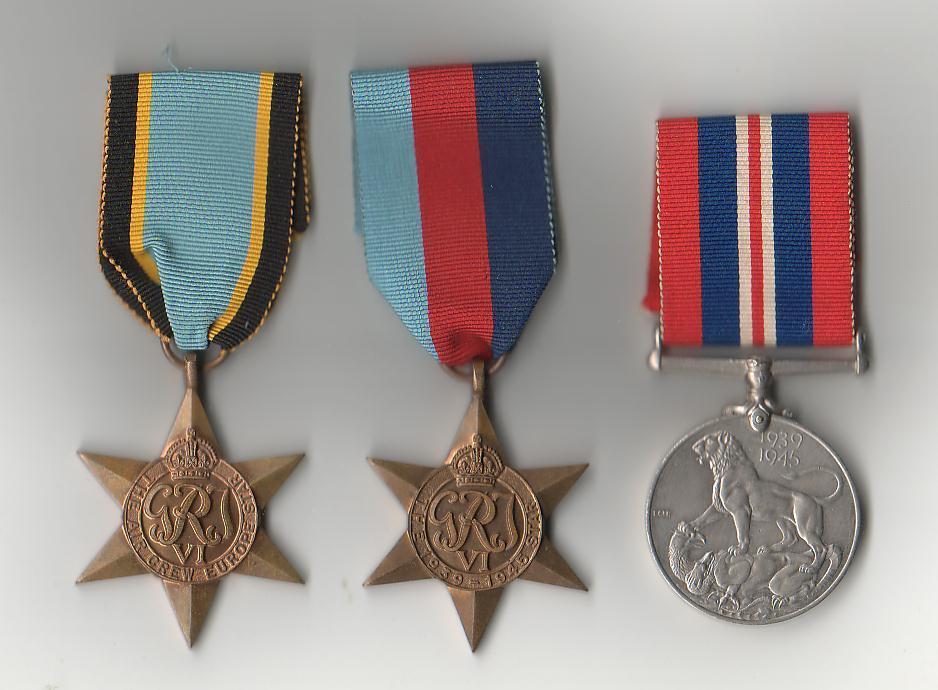
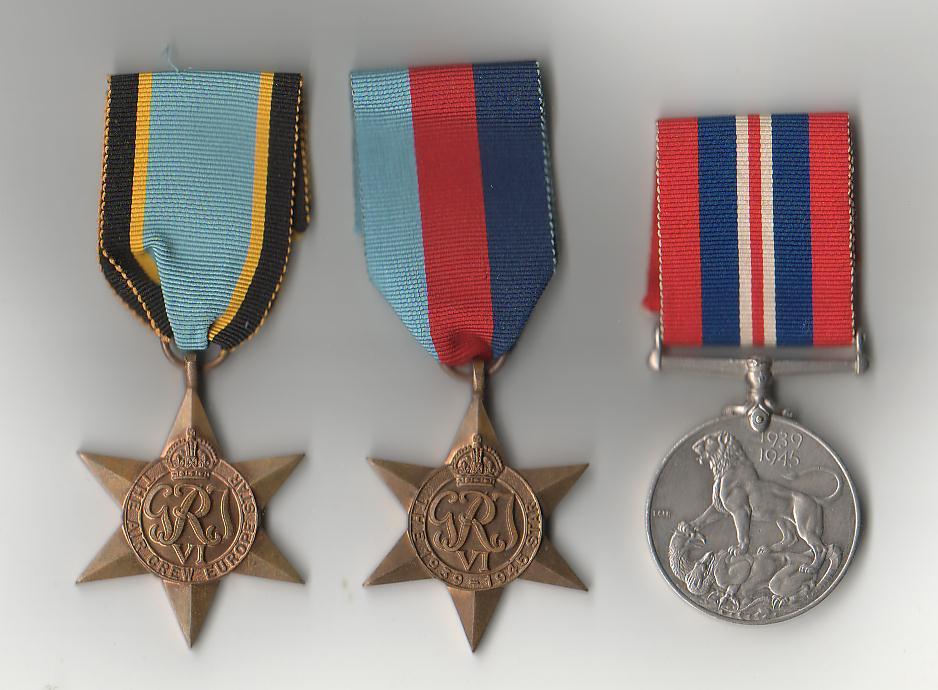
George's medals.
|
|
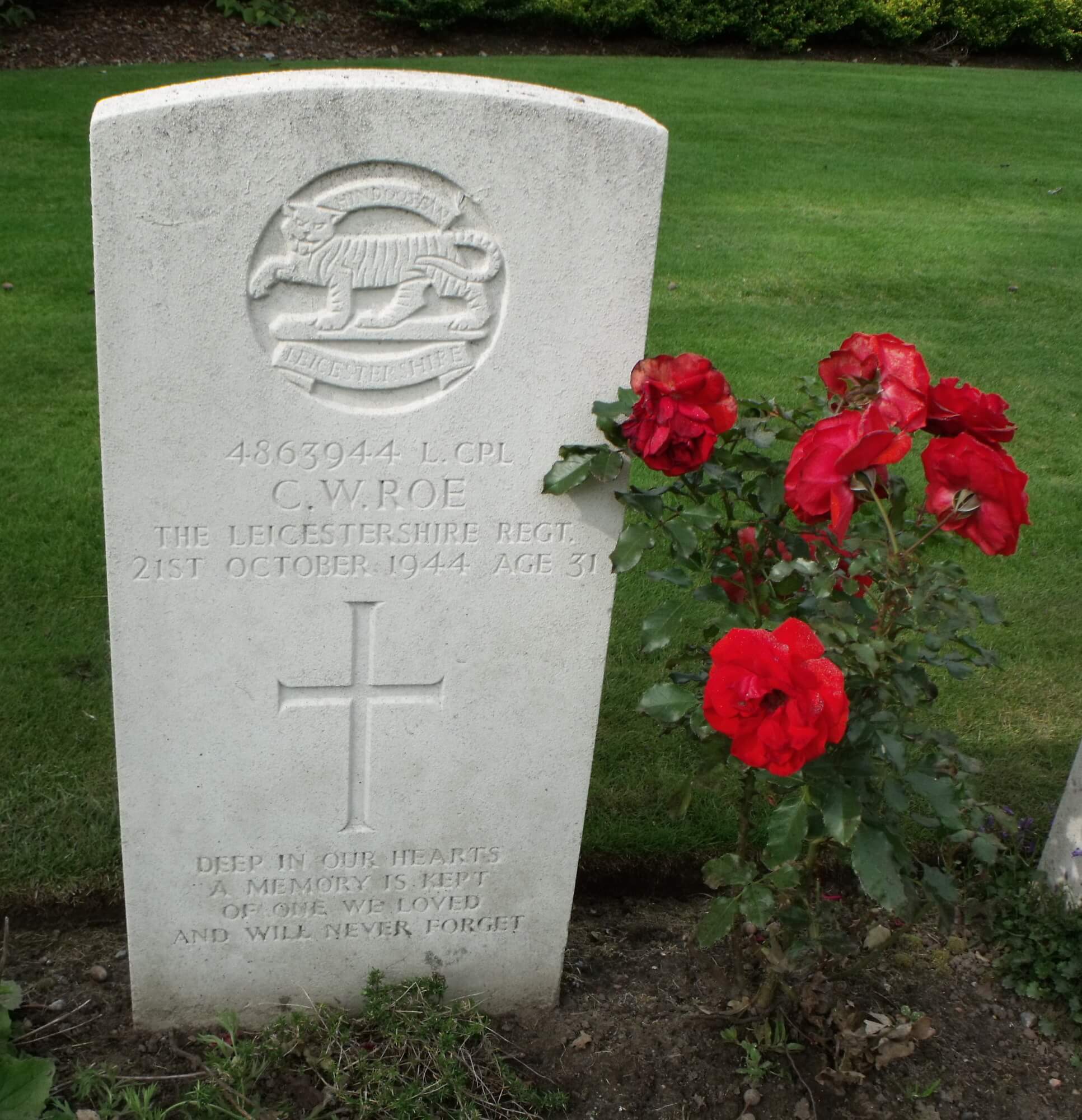
Lance Corporal 4863944 Clifford William Roe
|
1st Bn., Leicestershire Regiment
Died on 21st October 1944, Aged 31.
Buried Geel War Cemetery, Belgium, III.D.7.
(His brother Jack Roe also fell see below)
|
|
Clifford was born in Shepshed on 16th March 1913. He was one of the three sons of William Roe and Edith (née Harrington). Their youngest boy, Jack (born 1920) was also killed in the war in 1943. William Roe was a quarryman and in 1921 the Roe family were living in Springfield Road, Shepshed.
Clifford married Lily Hall in 1936 and they had a daughter, and in 1939 lived at 57 Cambridge Street, Shepshed. Clifford was a process worker at Genatosen chemical works, while Lily was in the hosiery industry.
He enlisted on 27th June 1940 and died on active service in Holland.
|
|
|
|
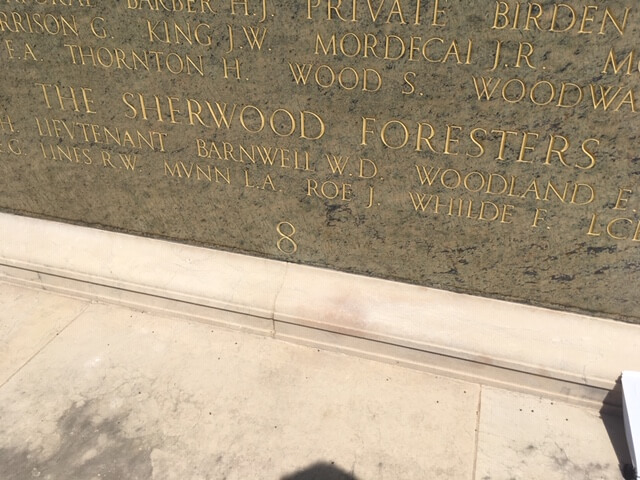
Corporal 5889720 Jack Roe
|
|
5th Bn., Sherwood Foresters (Notts and Derby Regiment)
Died on 10th September 1943, Aged 23.
Commemorated Cassino Memorial, Panel 8.
(His brother Clifford William Roe also fell see above)
|
|
|
Jack was born in Shepshed in 1920, one of the three sons of William Roe and Edith (née Harrington). Their oldest boy, Clifford (born 1913) was also killed in the war in 1944. William Roe was a quarryman and in 1921 the Roe family were living in Springfield Road, Shepshed.
Before enlisting, Jack Roe worked at the Nottingham Manufacturing Co, Trinity Street, makers of underwear and hosiery.
His parents received news in September 1943 that Jack was missing and wounded while serving in Italy. At this point they were living at 132 King Street Loughborough. They were later informed by the War Office that 20-year-old Jack must be presumed dead.
|
|
|
|
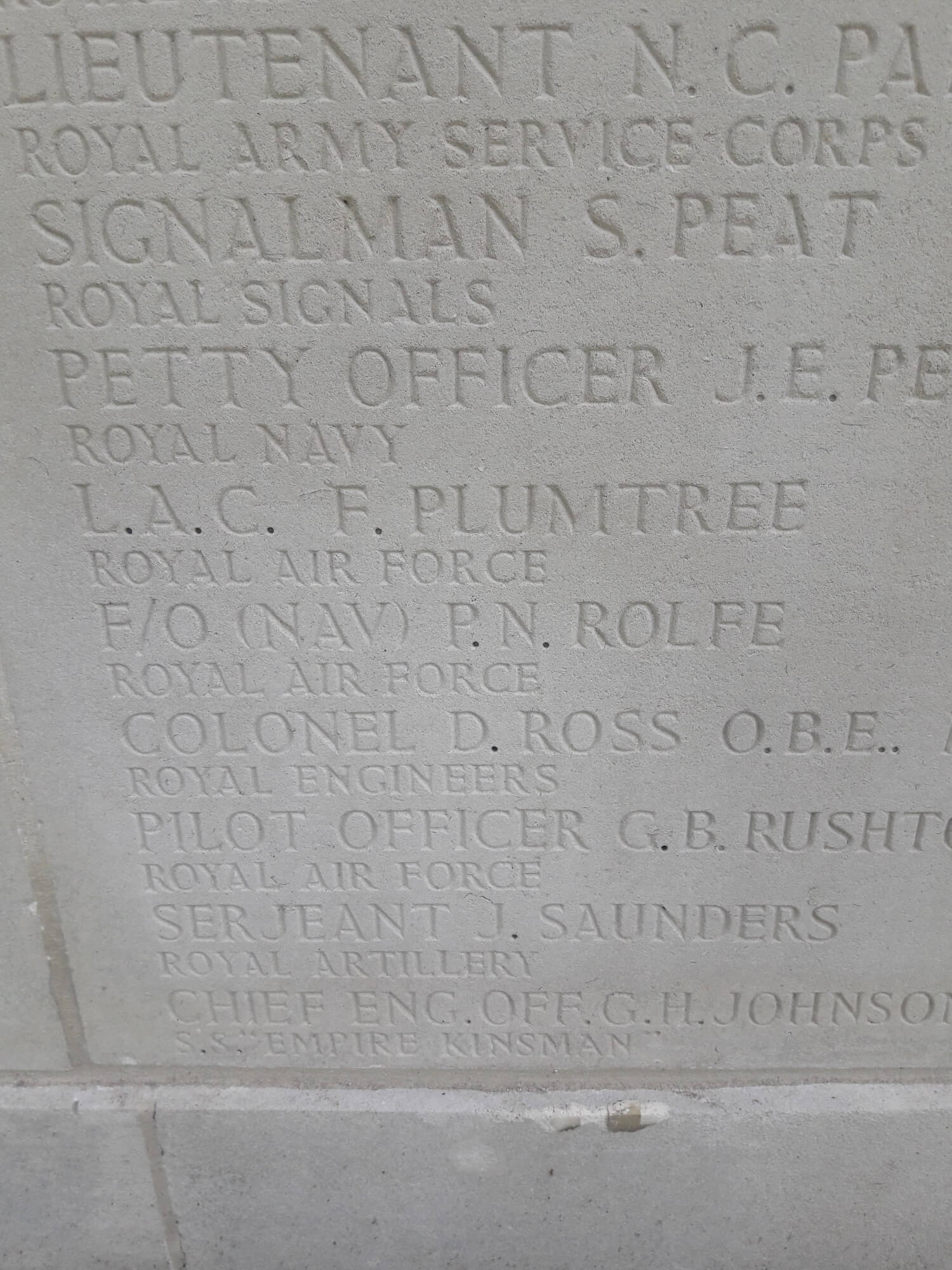
Flying Officer 136361 Phillip Neville Rolfe
|
57 Sqdn., Royal Air Force Volunteer Reserve.
Died on 23rd September 1943, Aged 21.
Commemorated Nottingham Crematorium Panel 4.
|
|
He was born in Basford, Nottinghamshire, on 16th December 1921, the son of Frank and Hilda Rolfe. He had a younger sister, Margaret. In 1939 the family lived at Westminster Bank House, Long Eaton; Frank Rolfe was the bank manager.
Phillip Rolfe was educated at Loughborough Grammar School from 1934 to 1940, where he was house captain and an excellent sportsman, setting new school records in the mile, half mile, and quarter mile events, all in the same year, as well as playing in the school cricket and football teams. His obituary in the school magazine said that he was modest about these achievements, ‘…and he remained always a quiet, good-hearted friend to all. The ease and efficiency with which he carried out those duties which, as a prefect and house captain, fell upon him, were a tribute to the popularity, affection and respect which he had won throughout the School and staff.’
He later studied at Nottingham University College, and after passing his Inter. BSc. examination, joined the University Training Force.
He joined Bomber Command, took part in several raids over Germany, and was stationed at East Kirby when he died. On a mission to Hannover, Phillip was the navigator on a Lancaster. The mission was successfully carried out but when returning to base and preparing to land, the Lancaster was attacked by a German night-fighter intruder at 00:43hrs. It hit the ground six miles north of Spilsby, Lincolnshire. Two of the crew survived by parachuting out.
|
|
|
|
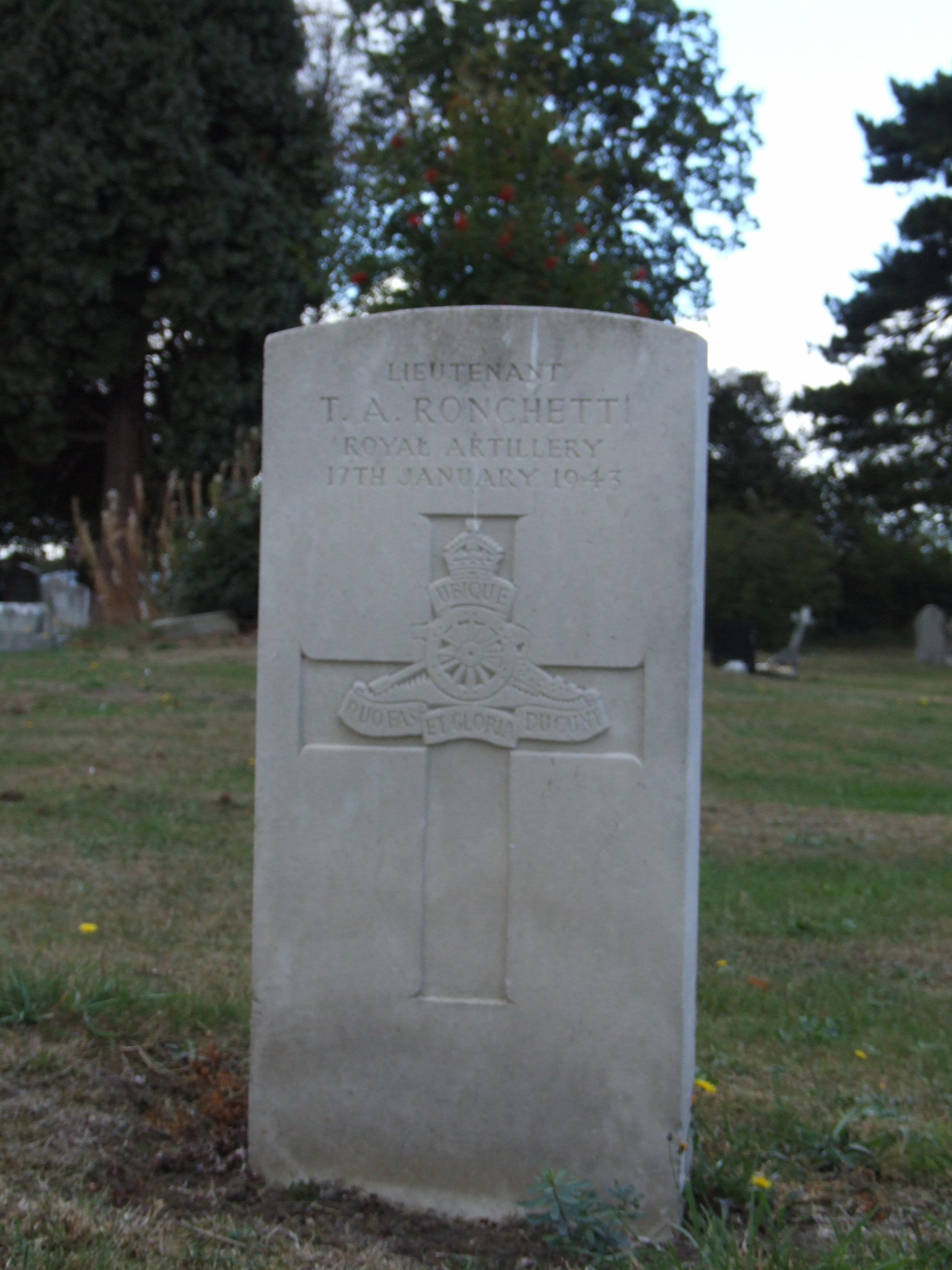
Lieutenant
229083
Thomas Anselo Ronchetti
|
|
24 Field Regt., Royal Artillery
Died on
on
17th January 1943.
Buried
Buried Loughborough Cemetery, 199/45
|
|
Thomas Ronchetti was born in Thornaby-on-Tees in 1917. His father was also called Thomas Ronchetti, while his mother was born Mary Thompson. Thomas senior was a retail chemist and a wine merchant. There was one girl and two other boys in the family.
By 1939 Thomas had moved to Loughborough and was living at 23 Westfield Drive with the Kidger family, maybe as a lodger. He had qualified as a teacher and had a post at St Mary’s Boys Elementary School, where by accounts he was much loved by the pupils. His athletics teaching was especially popular.
He volunteered for the army in 1941 and first served as a private. He joined the Cadet Training Corps and eventually obtained his commission.
In 1942 he married Emma Kirby. She served as a Land Girl for Mr and Mrs Coltman at Burleigh Hall, Loughborough.
Army records suggest that Thomas did not serve overseas. Royal Artillery 24 Field Rgt was based in the UK from June 1940 to January 1943. He came home on weekend leave to 24 York Road but died suddenly on Sunday night. He had been married for less than a year.
|
|
|
|
Private101436 Thomas Rushton
|
|
Aux. Mil., Pioneer Corps
Died on 17th June 1940, Aged 32.
Buried La Bernerie-En-Retz Communal Cemetery, France, A. 15.
|
|
Thomas was born in Burton on Trent in 1908, to J W and Violet Ann Rushton. In 1928 he married Cassie Willmore in Loughborough, and they had four (possibly five) children, the eldest being 12 when their father died. Cassie had not had the best start in life. She had been born in Loughborough Union (i.e. workhouse) and her mother was already a widow by the age of 26.
In 1939 Thomas and his family were living at 3 Rutland Street. Before serving in the army he worked at the Empress Works in Loughborough.
He volunteered for the Pioneer Corps soon after the outbreak of war, together with his friend Herbert Gibbons, who was well known in Loughborough boxing circles, and also worked at the Empress Works. (He died at Dunkirk and is commemorated on the Carillon).
The Auxilliary Military Pioneer Corps was part of the British Expeditionary Force to France in May 1940. Thomas sent his wife a field card from France in May, but she heard nothing more from him. After the evacuation of Dunkirk between 27th May and 4th June 1940, large numbers of British troops remained in France and there was a great deal of fighting. Further evacuations of troops and British nationals took place.
One was Operation Aerial, two weeks after the first Dunkirk evacuation. One of the vessels taking part was RMS Lancastria, a civilian liner which could carry 2,200 peacetime passengers. Troops – perhaps as many as 9,000 but at least 5,500 - were ferried out to the ship in smaller boats under machine gun fire. It is known that Pioneer Corps personnel were amongst them. In the afternoon of 17th June, Lancastria was bombed by enemy aircraft, one bomb going straight down her funnel. The ship sank in 15 minutes.
There were 2,477 survivors but Thomas Rushton was not amongst them. Over 1,700 were known to have been killed but there may have been far more and the exact number may never be known. It was one of the biggest losses of life in maritime history. Churchill ordered a news blackout, and many families were not aware how the men had died. In late July the American press published accounts of the disaster, but it was not until 2010 that details of the ship’s sinking were made available.
There is a sad postscript to the story. In February 1941 Cassie Rushton was sentenced to three months’ imprisonment for child neglect and one month for assaulting a female officer of the NSPCC by hitting her in the face and throwing pots and pans at her. One of the children had died after Cassie failed to take him/her to hospital for urgent medical treatment. The others were ‘taken to a place of safety’. The newspaper item noted that she had been widowed at Dunkirk; not entirely accurate as we now know.
|
|
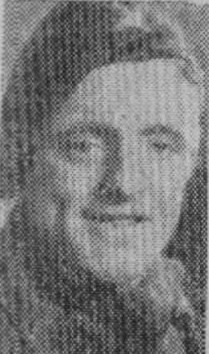
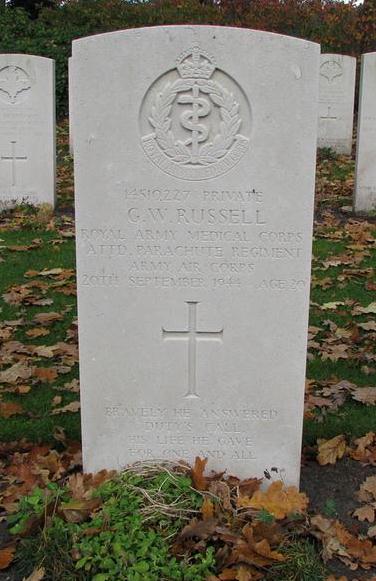
Private 14510227 George William Russell
|
|
Royal Army Medical Corps
Died on 20th September 1944, Aged 20.
Buried Arnhem Oosterbeek Cemetery, Holland, 22. A. 13.
|
|
|
George was the youngest son of Harold and Jessie Russell and was born in Loughborough in 1924. He had a younger sister, June. The family lived at 9 Shakespeare Street. He went to Limehurst School and before joining the army at 18, worked at a building firm, Barkers.
He served in the RAMC and was wounded at Arnhem. A report from a member of his unit said that he was seen for the last time lying wounded.
|
|
|
|
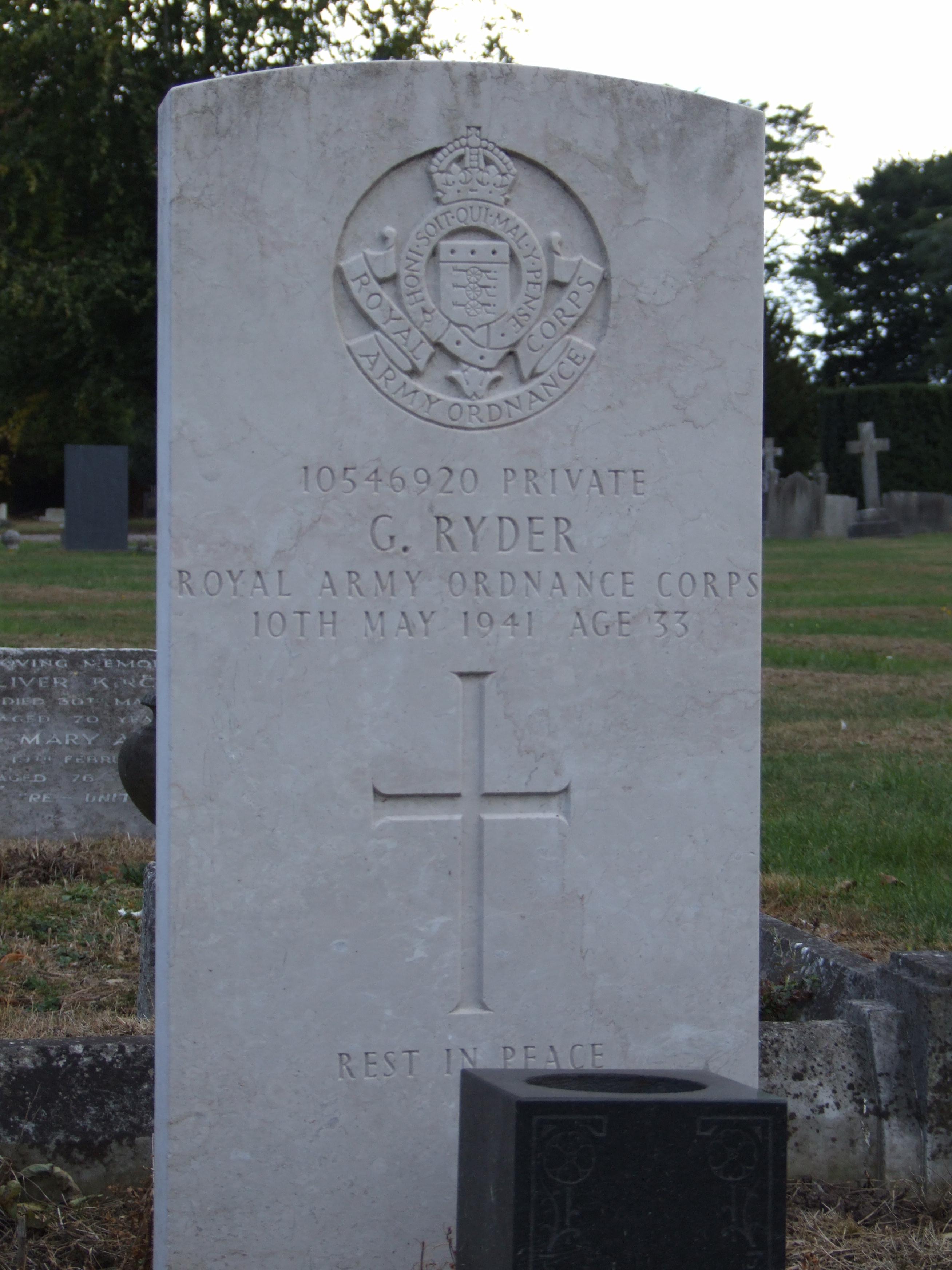
Private 10546920 George Ryder
|
|
Royal Army Ordnance Corps
Died on10th May 1941, Aged 33.
Buried Loughborough Cemetery, 173/2
|
|
George was born in Barrow-upon-Soar in 7th December 1907, to parents Arthur and Elizabeth Ann Ryder. He had a brother and two sisters. In 1921 the family had moved to 14 Mill Lane, Loughborough, and Arthur Ryder, a labourer, was out of work.
In 1939 George was living with his parents (father now ‘incapacitated’) and sister Mabel, and working as a hosiery warehouseman.
In 1941 he married Hilda Gertrude Thurman. The marriage can only have lasted a few weeks as it was registered in April-May-June and George died on 10th May.
He was serving in the Ordnance Corps but at the time of his death was attached to the Infantry Training Centre of the South Staffordshire Regiment. He died on the same day as another ROAC Private at the training centre, George Tanner. George Ryder’s death was registed in Lichfield and he was buried in Loughborough. Together these facts suggest he died as a result of an accident in training. Army records say he ‘died’ and not ‘killed in action’.
|
|
|
|
|